
Family in Dreams: What Your Subconscious Is Really Telling You
You didn't dream about your family because you miss them. You dreamed about them because they are the parts of you currently running your life.
You're back in the old house. Your mother is in the kitchen doing something with her hands, your father is in the other room and you can hear him but not see him, and a brother or a sister you haven't spoken to properly in years is sitting right there like no time passed at all. Everyone is younger than they should be. The rooms are almost right and slightly wrong. You wake up and your first thought is that you must be missing them, or that something's about to happen to one of them, or that you have unfinished business with the people who raised you.
That's the wrong drawer.
Here's what makes family dreams so strange to explain away. People whose families are perfectly fine dream about them constantly. People who cut contact twenty years ago dream about them constantly. People whose parents died decades back still sit at that table at three in the morning. If these dreams were about the actual relatives, they would track the actual relationship. They don't. Which means the family in the dream was never a report on your family. It was a report on you.
Why Does Your Dream Family Show Up Even When Your Real Family Is Fine?
Start with the mechanic, because it explains everything downstream. Your subconscious mind does not have a camera. It has a vocabulary. When it needs to show you something about yourself, it reaches for the most vivid, most emotionally loaded image you own that performs the same function as the thing it's describing. And the most vivid image of "a set of characters that live together, know each other's habits, and cannot be separated" that any human being owns is their family of origin.
So the faces get borrowed. That's all. Your mother's face in the dream is a costume your own mind put on, because that face carries a meaning inside you so specific and so instant that no other image could deliver it as fast. The dream is not commenting on her. It is using her.
Once that lands, the strangeness disappears. Of course you dream about a parent who has died -- the aspect of you that they represent is very much alive, and it is doing something in your inner life this week. Of course you dream about the sibling you're estranged from -- there is a part of you at roughly your own level of development that is out of communication with the rest of you. The dream family updates as your inner household updates, which is why the same relatives keep reappearing in different rooms, different ages, different moods.
So stop asking why you dreamed about your family. Start asking which parts of you were in the room, what they were doing, and who was talking to whom. That single swap turns the dream from nostalgia into a floor plan.
What Does a Family Actually Mean in the Universal Language of Mind?
The Universal Language of Mind is the picture-language every human mind uses while it dreams. It doesn't change with culture, era, or vocabulary, because it isn't made of words -- it's made of form and function. A symbol means what it does, not what you feel about it. That's the whole grammar.
Apply that to family. What does a family do? It is a group of distinct individuals who share an origin, live under one roof, know each other without effort, and operate as a unit whether or not they get along. Nobody in a family chose the arrangement. Everyone in it was formed by it. And the arrangement runs on rules nobody ever wrote down.
That function maps onto exactly one thing inside you: the cluster of self-concepts you were formed by and never consciously chose. The way you handle authority. The way you decide whether you deserve rest. The voice that arrives when you've made a mistake. These are not random reflexes -- they are a household, and they were assembled early, and they still hold meetings without inviting your conscious mind.
This is what Tarak Uday points at throughout Life is But a Dream: your subconscious never wastes a night on sentiment. When it stages a family scene, it is giving you an inventory of the identity you're actually operating from, in the only language it has. The house they're standing in matters too, because a house is your mind itself -- which is why so many of these dreams put your family inside a building you half-recognize. You are being shown your own interior with the residents visible.
Find out which part of you was in the room
CHITTA decodes your dream in the Universal Language of Mind, symbol by symbol, so you know which aspects of yourself just showed up instead of guessing at your own mind.
Decode Your Dream Now →Who Are Your Mother, Father, and Siblings Inside the Dream?
The individual members are not interchangeable. Each one carries a defined role, and once you know the roles, most family dreams read themselves.
Your mother in a dream is your superconscious mind -- the nurturing, intuitive, knowing aspect of you that holds the blueprint of who you're built to become. She is the part that feeds you without being asked, that knows something is wrong before you can name it, that offers the answer you can't argue your way to. When she appears warm and present, you're in contact with your own inner knowing. When she's cold, absent, searching for you, or shut behind a door, the message is about your access to that faculty, not about her.
Your father in a dream is your protective, authoritative, reasoning aspect -- the part of you that sets structure, draws the line, decides what is permitted, and defends what matters. When he is strong and fair in the dream, your inner authority is functioning. When he is angry, absent, weak, or unreachable, you're being shown something about how you currently govern yourself. Not about how he governed you.
Your siblings are aspects at roughly your own level of development -- peers inside you, the parts you actually compete, negotiate, and cooperate with day to day. A brother or sister in a dream is usually the part of you that shares your resources and wants a different outcome. That's why sibling dreams so often carry rivalry, protection, or an old score: those are real internal dynamics wearing a familiar face.
And a child in the family scene is something else entirely -- a new idea, a developing part of you, something recently created that cannot yet look after itself. If you want the fuller mechanics of that one, the child symbol has its own grammar and it's worth learning separately.
Notice what's absent from all four readings: blame. There is no verdict in a family dream. There is only an accurate picture of which aspects of you are present, which are missing, and how they're currently getting along.
What Do the Common Family Dream Scenarios Reveal?
The specific staging narrows the message considerably. Pay attention to who was there, who was missing, and what the emotional weather was, because those three details carry most of the meaning.
If the whole family is gathered and it's warm, you're being shown integration. The aspects of your identity are in communication and working as a unit. People undervalue this dream badly and treat it as mere comfort. It's a status report, and it's a good one. Take the win -- your mind rarely flatters you.
If the family is arguing, you're watching an internal conflict staged in the open. Two parts of you want different things and neither will stand down. The content of the argument in the dream is usually the actual content of the conflict, which is why these dreams feel so pointed. Look at which two members were fighting, translate them into their aspects, and you'll have named the tension you've been carrying around all week without words for it.
If you're back in the childhood home, you're operating from an old identity structure. Some current situation has pulled you back into a set of self-concepts you formed before you had any say in them. That's not regression for its own sake -- it's your subconscious telling you which rulebook you're running, and the rulebook is old.
If someone is missing from the table, that aspect is currently out of play. The father absent means your inner authority isn't at the meeting. The mother absent means you're proceeding without consulting your own knowing. Missing is not lost. It's just not being used.
If a family member dies inside the dream, resist panic. Death in the Universal Language of Mind is change, not ending -- an aspect of you is transforming into a new expression. The grief you feel inside the dream is the honest emotional cost of that change, and it is worth feeling. It is almost never a prediction.
And if the same family scene runs night after night, the message hasn't landed yet. That's the same mechanism behind every recurring dream: repetition isn't malfunction, it's your subconscious re-offering the material until you receive it. If the scene also involves being tested or judged by a parent, read the examination symbol alongside it, because you're being measured as well as inventoried.

Bindu says: "You did not dream about your mother. You dreamed with her face, about the part of you that already knows the answer you keep asking other people for."
How Do You Work With the Household Your Subconscious Just Showed You?
So what do you actually do with it? Start with the roll call. Within a few minutes of waking, before the images go soft, write down exactly who was present, who was absent, and what each person was doing. Not the plot -- the cast and their actions. That list is your inner household as it stands today.
Then translate one member at a time. Mother becomes inner knowing. Father becomes inner authority. Sibling becomes a peer aspect. Child becomes something newly created in you. Now reread the dream with those substitutions in place and watch what happens. Most people find the dream becomes almost embarrassingly direct -- it was describing a situation they had been circling for weeks.
Then look at the emotion you felt inside the dream, because emotion is navigation, not noise. Warmth points to integration. Irritation points to an aspect you keep overruling. Longing points to a faculty you've stopped using. Fear points to a part of yourself you've disowned and pushed to the edge of the house.
Then do the only thing that ever converts information into understanding. Use the aspect. If your inner authority was absent from the table, exercise it today -- make one decision you've been outsourcing. If your inner knowing was locked behind a door, act on one intuition before you've finished justifying it. Reading about your inner household has never reorganized anybody's inner household. This part is non-negotiable, and it is where the whole practice lives.
Then keep a dream journal, because the household changes and you'll want the before picture. When the missing father returns to the table, when the argument at the kitchen counter finally ends, when the childhood home stops appearing at all -- those shifts are your real report card, and they are more honest than any self-assessment you could make while awake.
So welcome the family scene. Genuinely. It is one of the most generous symbols your subconscious owns, because it shows you the entire cast at once -- everyone you have been, everyone you are still running on, sitting in one room where you can finally see them. Read it as a message about your relatives and you'll spend years homesick. Read it as a floor plan of yourself and every one of those dreams becomes an act of self-knowledge.
Stop guessing at your own dreams
Bring your family dream to CHITTA and get it decoded properly: which aspects showed up, what the scene means, and what to do about it today.
Decode Your Dream Now →
Frequently Asked Questions



LUCID
You've tried every lucid dreaming technique. Most miss the root cause. LUCID reveals what they all skip.
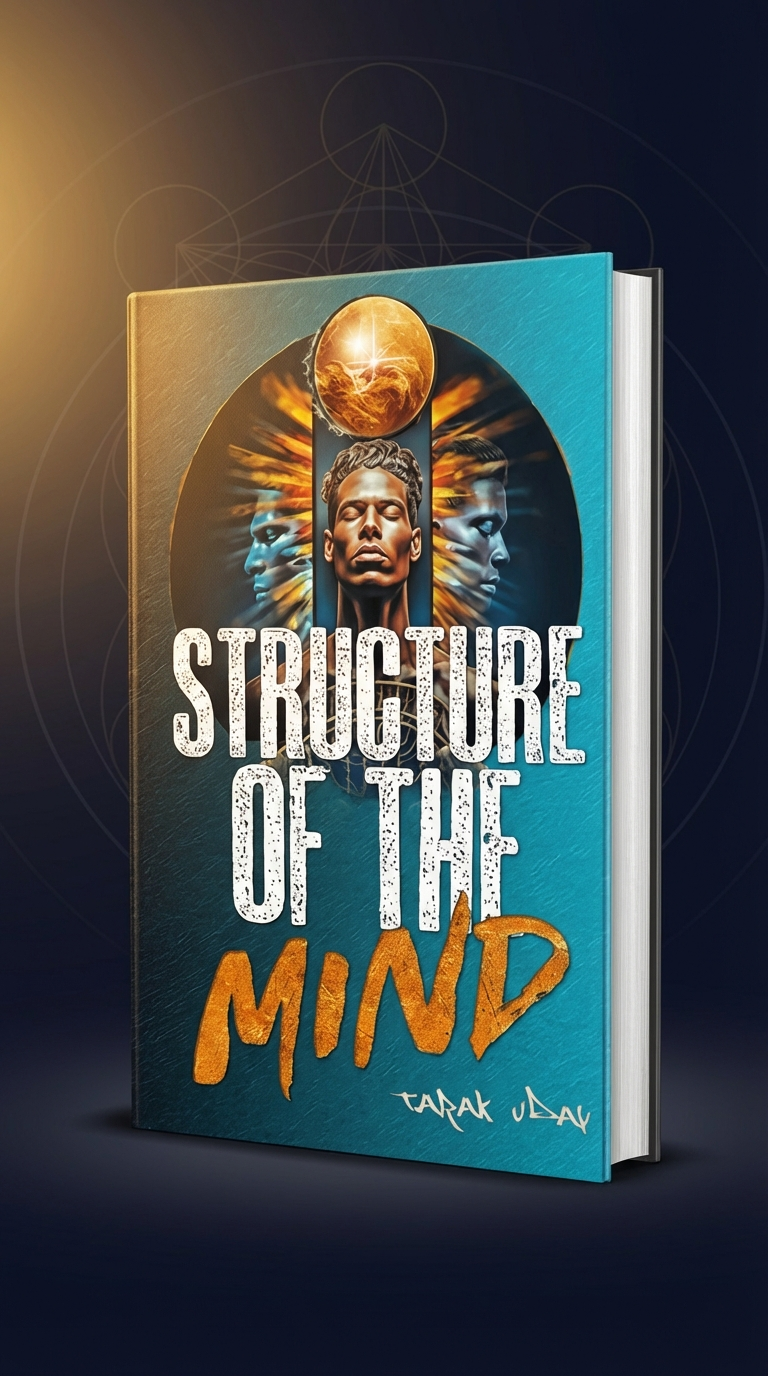
Understand Your Own Mind
"Structure of the Mind" reveals the three divisions of mind, seven levels of consciousness, and powers of mind that most people never learn to develop.