
Grandfather in Dreams: The Meaning Nobody Told You
Sometimes he truly comes to see you. Most nights, he's the part of you that has never stopped generating your life.

So you dreamed about your grandfather and somebody told you he was visiting you.
Here's the actual answer. In the Universal Language of the Mind, a grandfather in a dream represents the aggressive quality of your superconscious mind — the part of you that supplies the rest of your mind and body with lifeforce energy. Unless the dream carries the marks of a true visitation, he's your own power source filing a report on how much of it is reaching you.
Now let's deal with why you were told something else.
What does a grandfather in a dream actually mean?
The popular answer is that every grandfather dream is a visitation — he came to check on you, to reassure you, to say goodbye. Visitation dreams are very real, and some grandfather dreams are exactly that. But if you read every dream of him that way, look at what it costs you.
If every dream of him is a visit, there's never anything for you to do. You feel something for an hour and then you go back to your life exactly as you left it. And you miss the regular dreams, where your own mind is sending the most powerful communication it's capable of.
A true visitation is spare, and we'll get to its marks below. A crowded, multi-sensory dream with him in it is your subconscious mind talking to you about you.
So here's what's actually happening at the level of mind. According to the Universal Language of the Mind that Tarak Uday teaches, your mind has three divisions — conscious, subconscious, and superconscious. The conscious mind is the part reading this sentence. The subconscious is the receptive inner part where your thoughts gestate. And the superconscious is your inner authority: it holds the blueprint for your entire existence and it feeds lifeforce energy inward so you have what you need to build that blueprint out.
Every authority figure in a dream reports on that third division. And grandparents specifically sit at the top of that reporting structure, because functionally, a grandparent is the source behind the source.
Think about form and function. Your father came from your grandfather. Whatever your father is, your grandfather is the origin of it. He's one full generation further back toward the beginning. So in the language of mind, he pictures your inner authority at its most essential: what's upstream, the generative source. The place the energy comes from before it gets shaped into anything.
What makes a grandfather different from a father in a dream?
Less than most people think — and getting this right changes the whole interpretation, so slow down here.
A father in a dream is not a conscious-mind figure. In the Dream Symbol Dictionary he represents the aggressive quality of the superconscious mind — the same quality a grandfather represents. Neither of them is about steering. Both are about supply. What changes is the face: your subconscious mind picks the authority figure that matches how you're perceiving your inner authority right now, and a grandfather pictures it as the source behind the source.
And there's a pair inside the superconscious itself. A grandmother represents the receptive quality of the superconscious — she holds the blueprint, the design for what your existence is meant to become. A grandfather represents the aggressive quality — he moves that energy outward and delivers it. She holds the plan. He powers the build.
So when a grandfather shows up, the dream is almost never asking you about your direction. It's asking you about your fuel. Are you connected to your own source, or are you running your life on borrowed energy — caffeine, deadlines, other people's approval, fear?
That's a very different question than the one most people bring to a dream about a family member.
There's one more piece of structure worth knowing, because it stops you from misreading the gender. In the Universal Language of the Mind, all males in a dream represent aspects of the conscious mind and all females represent aspects of the subconscious — that's the outer mind, the two halves that work together to create. The superconscious sits apart from that pairing. It's whole in itself, and it has its own set of symbols, and authority figures are how it speaks. So a grandfather isn't "a male symbol" the way a friend or a coworker is. He's an authority symbol that happens to be male, and the maleness tells you which quality of the superconscious is reporting — the aggressive, projecting, energy-delivering one rather than the receptive, holding one.
Miss that and you'll read a superconscious message as a conscious-mind message, and you'll go looking for a decision to make when the dream was asking about your fuel.
Find out which division of your mind is actually speaking
CHITTA reads your dream through the Universal Language of the Mind and identifies whether the message came from your conscious, subconscious, or superconscious mind — and what it's asking for.
Decode Your Dream Now →What does it mean when your grandfather has already died?
So this is the version that brings people to tears, and it's the version that gets misread the hardest.
First, check whether it was a visitation, because visitation dreams are very real. A visitation has its own marks: not much else going on, his presence the main focus of the dream, communication that's telepathic — his mouth doesn't move — often a message of love and appreciation, and he appears as his happy, healthy self, usually younger and well even if illness took him. If that's what you had, it was him.
If it wasn't — if he was one figure in a busy dream — your subconscious mind reached for the clearest available image of a quality, and whether he's alive has nothing to do with the casting. The quality he represents is inside you right now, and it's the only reason your heart beat while you were asleep.
And notice that in a regular dream the casting makes perfect sense. Your mind needed a face for "the authority I trust that has never had to earn my trust." Not a boss. Not a teacher. Someone whose authority preceded you and never asked anything of you. For most people there's exactly one face in memory that fits that description, and it belongs to a grandparent. Your subconscious mind didn't summon him. It filed him — accurately — under the right heading, years ago, and pulled the folder when it needed to talk about your source.
In a regular dream, the grief reading and the ULM reading usually point the same direction anyway — a departed grandfather tends to appear when you're running on empty and have forgotten you have a source.
And if the grandfather in your dream is sick, weak, or dying, don't read that as a premonition. Read it as an energy report. Something in how you're living has cut you off from your own lifeforce. That's burnout described in the language of mind, and it usually shows up in dreams weeks before it shows up in your body.

Bindu says: "Unless he came with the marks of a visitation, you didn't dream about a dead man. You dreamed about the part of you that has never once stopped generating power — and you've been ignoring it."
What is your grandfather doing in the dream telling you?
The action is the message. So take the scene apart.
If he's giving you something — food, money, a tool, a key — energy is actively being supplied and you're in a position to receive it. Food specifically represents knowledge, so a grandfather handing you a meal is your superconscious feeding you understanding you're finally ready to digest.
If he's teaching, instructing, or telling you a story, your inner authority is transmitting directly. Pay attention to what he says, because that content usually maps onto a decision you're avoiding.
If he's silent, turned away, or won't look at you, you're not drawing on your source. Not because it's withheld — because you stopped asking. That's the most common version and it's almost always accompanied by a period of grinding.
If he's angry with you, there's a misuse of energy happening. Your lifeforce is going somewhere that contradicts the blueprint, and the part of you that supplies it knows.
If he's in a house, look at the house, because a house represents your state of mind. A grandfather in a beautiful, orderly house is a very different report from a grandfather in a collapsing one.
If you're looking for him and can't find him, that's a search dream, and it's specific. You know the source exists. You've felt it before. You've just lost the address. That usually follows a stretch where you handed your sense of purpose to a job, a relationship, or an algorithm, and the dream is walking you back through the house asking where you left yourself.
Tarak Uday takes this further in Structure of the Mind, his map of the three divisions of mind and the powers of attention, memory and imagination.
And if you're caring for him — feeding him, carrying him, keeping him alive — you've inverted the relationship. You're trying to power your own source instead of drawing from it. That's exhaustion with a specific cause, and it's fixable.
How do you actually work with a grandfather dream?
Interpretation without application is entertainment. So here's the practice.
First, write down the single verb. What was he doing? Giving, teaching, watching, leaving, dying, waiting. One word. That verb is the entire status of your energy supply.
Second, do an honest energy audit for the last week. Not a to-do list — an audit. Where did your lifeforce actually go? Name the three biggest expenditures. Be specific enough to be uncomfortable.
Third, ask the blueprint question: does any of that spending build the life I'm actually here to build? That's the exact question the superconscious asks all night long, and it's the reason grandfather dreams tend to cluster around periods when you're busy but drifting.
Fourth, give the energy one clear channel in the next twenty-four hours. One deliberate act that serves the blueprint rather than the noise. It doesn't have to be large. It has to be aimed.
That's the whole method. And it works because you stopped treating a message from the deepest division of your mind as a sentimental event and started treating it as data.
The same reading logic runs through the rest of the family symbols. Dreaming of your family as a whole, a brother, or a daughter shifts which division of consciousness is reporting in, and each one asks a different question of you.
Your superconscious mind files a report every single night
CHITTA translates it in the Universal Language of the Mind — symbol by symbol, in your own language, in seconds. Stop guessing what your grandfather came to say.
Decode Your Dream Now →So unless the dream carried the marks of a visitation, here's what happened. The part of you that has been quietly generating your life since before you had language stepped forward wearing the most trustworthy face you know, and it wanted you to notice it's still running.
It's been waiting for you to draw on it.
Tarak Uday is the founder of CHITTA and the author of Lucid and Life is But a Dream, which lay out the Universal Language of the Mind as a complete system for reading the metaphysical mechanics behind every dream you have.
Frequently Asked Questions


Books by Tarak Uday
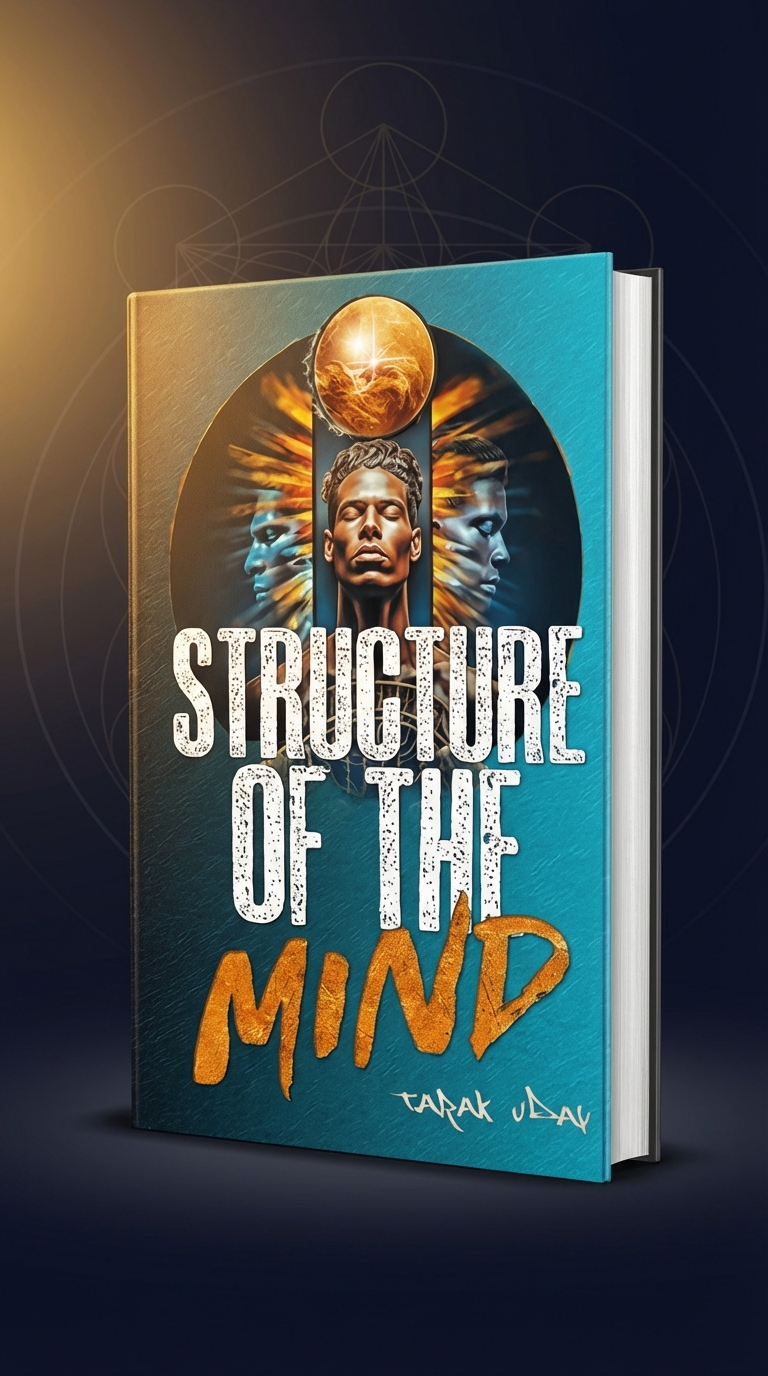
Understand Your Own Mind
"Structure of the Mind" reveals the three divisions of mind, seven levels of consciousness, and powers of mind that most people never learn to develop.

Learn The Language Your Dreams Speak
"Life Is But a Dream" teaches the Universal Language of the Mind — how to read any dream symbol by what it is and what it does, so every dream becomes a message you can act on.

LUCID
You've tried every lucid dreaming technique. Most miss the root cause. LUCID reveals what they all skip.