
How to Dream About Someone Who Passed Away
Why the message already arrived, and how to read it
You've asked for it. Some nights you've almost demanded it — lights off, eyes closed, one name repeating in your chest until you fell asleep. And then nothing. Morning came, the bed was empty, and the person you wanted to see stayed exactly as far away as they were the night before. So you assumed you were doing it wrong.
You weren't doing it wrong. You were doing it backwards. In the Universal Language of Mind, a dream about someone who has died is a letter — and you've been standing at the mailbox trying to summon the sender instead of opening the mail. The letter has probably already arrived. More than once. It came in a form you weren't taught to read, so you filed it under grief and moved on.
You don't dream about someone who passed away by reaching harder for the person. You do it by making your mind a place where the message can land — and by learning to read what it says when it does.
Why does someone who passed away appear in your dreams at all?
Start with the mechanics, because the mechanics are what everyone skips. Your subconscious mind doesn't store people. It stores meaning. When someone lived beside you for years, your mind built an entire structure out of what they meant to you — their steadiness, their humour, their disapproval, the particular way they made you feel safe or small. That structure doesn't get buried with the body. It stays in you, fully intact, doing exactly what it always did.
So when they appear in a dream, your subconscious isn't performing a séance. It's using the most efficient symbol it has for a quality that's live in your life right now. Your grandmother shows up the week you're deciding whether to be generous with someone who doesn't deserve it. Your father shows up the night before you tell your boss the truth. The dream isn't reaching into the afterlife. It's reaching into you, and it's picked the clearest picture available.
That's the form-and-function principle Tarak Uday built the entire Universal Language of Mind around. Every image in a dream is chosen for what it does, not for what it is. The function of that person in your inner life is the message. The face is just the envelope.
Is it really them, or is it a part of you?
Here's where most people want a single answer, and here's why they don't get one: both things are true, and they're true at different levels.
At the everyday level — the level where almost every one of these dreams lives — the figure is an aspect of you. It's built from your own mental material, animated by your own subconscious, and it's telling you about your own condition. Treating that as a lesser experience is the mistake. An aspect of you wearing your mother's face is not a consolation prize. It's the part of you that learned from her, and it's still teaching.
The face is the envelope. The function is the letter. You've been grieving the envelope.
Then there's the rarer experience, and you'll know it because it doesn't feel symbolic at all. It's short. It's unusually vivid. Nothing in it is strange — no shifting rooms, no dream-logic. They look well. They say something specific and often practical, and you wake up settled rather than wrecked. People who have had one don't argue about whether it was real. Notice the difference in texture and stop trying to force every dream into that category, because forcing it is exactly what keeps the ordinary letters unopened.
There's a practical test that settles this faster than any debate. Look at the week the dream arrived rather than at the dream itself. What decision were you sitting on? What did you avoid saying out loud? These dreams cluster around thresholds — the night before a hard conversation, the week you take over a responsibility they used to carry, the month you become the oldest one in the room. So when you find the threshold, you've found the subject of the letter. They came because that quality was being called for, and your mind reached for the clearest example it owned.
How do you prepare your mind to meet them tonight?
Preparation isn't a ritual. It's a change in what your mind is set to receive. Four things do the actual work.
First, ask a real question instead of making a demand. "Let me see her" is a demand, and it aims at a body. "What did she give me that I'm not using?" is a question, and it aims at meaning. Your subconscious answers questions. It ignores demands, because a demand has no place to put an answer.
Second, spend the last ten minutes before sleep with them deliberately. Not scrolling photos while half-watching something. Sit with one specific memory — a kitchen, a car ride, a sentence they used to say — and let it be detailed. You're loading the channel. Whatever occupies your attention at the threshold of sleep is what your subconscious has to work with all night.
Third, deal with what's unfinished. The single most common reason these dreams don't come is that the dreamer is holding something they won't look at — anger at the person for leaving, guilt about the last conversation, relief they feel ashamed of. Say it out loud in the dark. It sounds too simple to matter. It isn't. Unspoken material blocks the channel it's trying to come through.
Fourth, write it down the instant you wake, before your feet hit the floor. Most of these dreams do arrive and then dissolve inside ninety seconds. So the practice that changes everything isn't a better bedtime routine. It's a pen within reach.
CHITTA is built for exactly this handoff — capture the dream the second you wake, and get it read back to you in the Universal Language of Mind instead of a generic symbol lookup. Start your dream journal free.
What should you do the moment they appear?
Almost everyone does the same thing, and it ends the dream. You realise who you're looking at, the feeling surges, and you grab — emotionally, sometimes physically. The intensity spikes and you wake up. You got three seconds and spend the rest of the day mourning the other five minutes.
So practise the opposite now, while you're awake, because you won't invent it in the moment. When they appear, stay still and let the scene continue. Don't announce that they're dead. Don't ask them to prove anything. The question that opens these dreams instead of closing them is plain: "What do you want me to know?"
Tarak Uday takes this further in Life Is But a Dream, his guide to reading every dream in the Universal Language of Mind.
Then listen to everything, not just the words. Where are you standing? What's in their hands? Are they arriving or leaving, well or unwell, dressed for work or for weather? In the Universal Language of Mind every one of those details carries meaning. A person handing you something is giving you a quality. A person walking away calmly is showing you a completion. The scene is the sentence.
And when you wake, record before you interpret. Write the raw scene first — the room, the light, what they wore, the exact words, what you felt in your body — and leave the meaning for later in the day. Most of what people lose isn't the dream itself, it's the detail they edited out on the way to a tidy conclusion. The interpretation will still be there in an hour. The texture won't.
Why do they sometimes refuse to come?
Because the demand itself is the obstruction. A mind gripping for one specific outcome is a closed mind, and a closed mind is exactly the condition in which the subconscious can't deliver anything. You've experienced this with names you couldn't remember until you stopped trying.
There's a second reason, and it's kinder than it sounds. Sometimes they don't come as themselves because you're not ready to meet what they represent — so your subconscious sends it in a gentler costume. A house you grew up in. A voice from another room. A stranger with their exact patience. Those are the same letter in a softer envelope, and people throw them away by the hundreds while waiting for a face.
So loosen the grip. Ask, prepare, then let the night do what it does. The dreams tend to arrive in the week after someone genuinely stops demanding them, and that's not a coincidence — it's the mechanism.
What happens after you finally read the letter?
Something shifts that has very little to do with the supernatural and everything to do with how you're actually built. When you stop treating the dream as a visit and start treating it as a message, the person stops being something you lost and becomes something you carry. The steadiness was never only theirs. It's in you, or your subconscious couldn't have rendered it so accurately.
That's the strange mercy inside this whole thing. You wanted five more minutes with them. What you get, if you read the letter, is the part of them that's permanently yours — available on an ordinary Tuesday, in your own handwriting, for the rest of your life. So keep asking. Keep writing them down. The mail's been coming the whole time.

Frequently Asked Questions


Books by Tarak Uday

Learn The Language Your Dreams Speak
"Life Is But a Dream" teaches the Universal Language of Mind — how to read any dream symbol by what it is and what it does, so every dream becomes a message you can act on.

LUCID
You've tried every lucid dreaming technique. Most miss the root cause. LUCID reveals what they all skip.
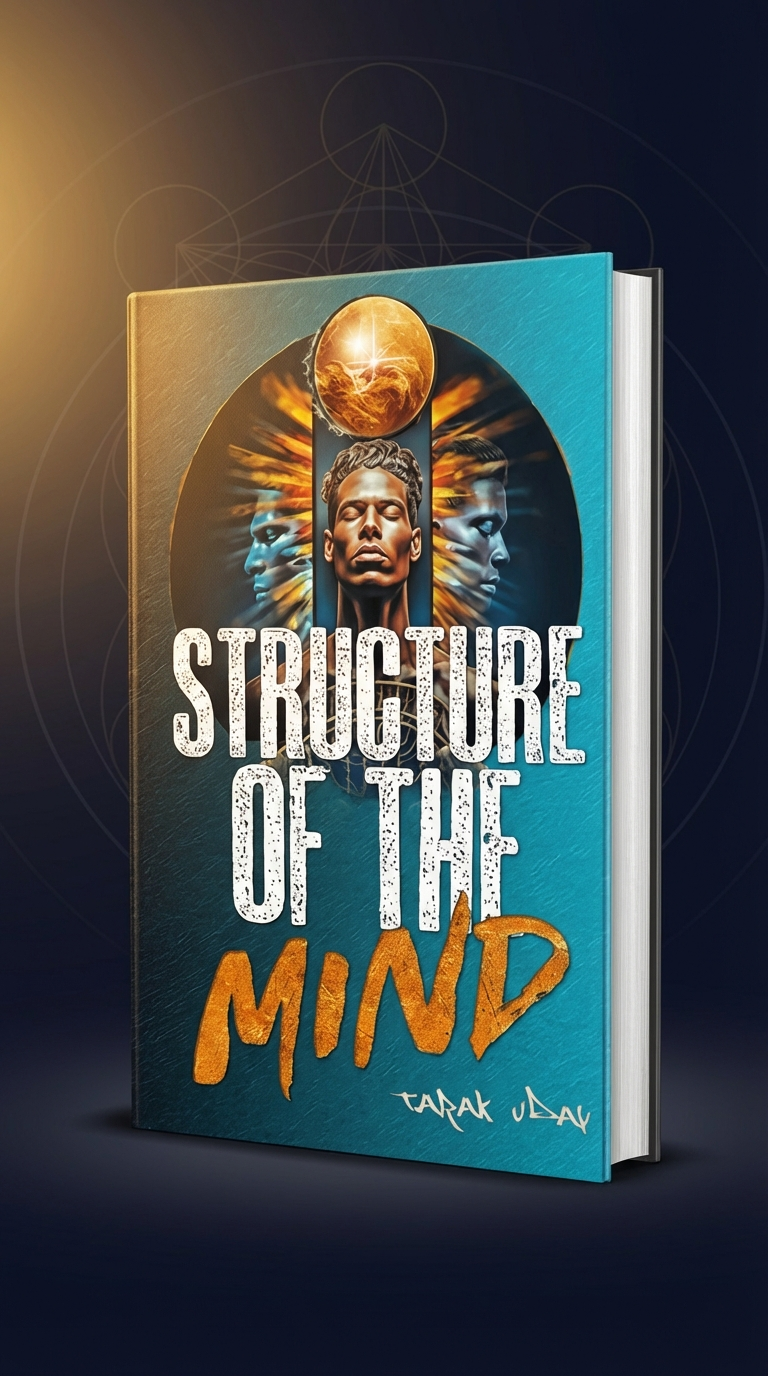
Understand Your Own Mind
"Structure of the Mind" reveals the three divisions of mind, seven levels of consciousness, and powers of mind that most people never learn to develop.