
How to Stop Imagining the Worst Case Scenario
One worried thought becomes a full movie. Here is how to burn it up and build the picture you actually want.
Your teenager is forty minutes late and not answering. By minute five you had already pictured the wet road. By minute twenty, you'd pictured the phone call, the hospital corridor, the way you'd have to say it out loud to someone. Now the whole scene plays again, in color, with sound, and you're standing at the window with your arms folded, watching an empty driveway. You can't switch it off. You've tried reasoning with it, and the reasoning only gave the film a better script. So here's the question that matters: if you're the one running the projector, why can't you stop it?
To stop imagining the worst case scenario, don't argue with the image. Burn it up in a wall of flames the moment you catch it, then use the energy in the ashes to form a moving image of what you do want. Attention can't hold two pictures at once, so it has to be given one.
Why does your mind play the worst case like a movie?
Because that's what the imagination does. In the Structure of the Mind as Tarak Uday teaches it, imagination is the power that forms images, and it doesn't ask whether an image is wanted. It forms whatever attention hands it. One worried thought arrives, attention rests on it for a second, and imagination does its job: it fills in the road, the headlights, the sound of the phone. Then attention rests on the film it just made, and the loop closes on itself.
Most of us believe the opposite. We believe that picturing the worst is a kind of preparation, that running the scenario keeps us safe, that if we imagine it first it can't surprise us. But look at what you actually got from forty minutes of the film. Nothing was prepared. Nothing was solved. You just spent forty minutes living through an accident that hadn't happened. The image didn't protect you from the event. It made you live the event in advance, in your body, with nothing to show for it.
So the problem isn't that you have a vivid imagination. A vivid imagination is the tool you'll use to get out. The problem is that the tool is aimed at what you don't want, and nobody ever taught you to aim it somewhere else.
What does it mean that every thought seeks to manifest?
This is the part that makes the exercise worth doing, and it's the part people skip. In the Universal Language of the Mind, thought is cause. That's the Law of Cause and Effect: every thought seeks to manifest. It doesn't promise that every passing worry will happen. It says that a thought is a seed, and a seed that's watered keeps reaching for the surface.
Look at that through the metaphysical mechanics. Attention is the water. An image you keep looking at is an image you keep feeding with attention, with breath, with the tight feeling in your chest. The energy that was available for your day has been moved, piece by piece, into a picture of the thing you fear. When we become distracted, as the teaching puts it, we feed energy into that thought form instead of our desired goal.
That's why the exercise has two moves, not one. If you only push the image away, you've spent effort and left a vacuum, and the mind fills a vacuum with whatever's nearest, which is usually the same film. The teaching doesn't ask you to suppress anything. It asks you to end the unwanted image completely, and then give its energy to an image of what you do want. Nothing is thrown away. It's turned around.
How do you burn the image and build a new one?
This is Tarak Uday's exercise, "Burn that image up in a wall of flames," from the Conclusion of The Structure of the Mind. It takes a few seconds to a minute each time, needs no tools, and works anywhere, with your eyes open or closed. It also works in bed at night, where the worst-case film loves to start. Here it is in full.
Step 1. The moment you ever find yourself imagining or entertaining a thought of something you do not wish to experience, burn that image up in a wall of flames.
Step 2. Then take the energy within the ashes to form a moving image of what it is that you do want to experience.
That's the whole exercise. Two steps. Let me show you what they look like in the scene you started with.
You're at the window and the film starts: the wet road, the lights, the phone. The moment you notice it, you stop watching and act. You see that image go up in a wall of flames, the whole frame burning from the edges inward to ash. Don't negotiate with it. Burn all of it.
Then, from the ashes, you form a new picture, and you make it move. Headlights swing into the driveway. The engine goes quiet. The door opens, and your teenager climbs out muttering something about a dead battery. Give it motion, because what's asked for is a moving image, not a still. Give it the sound of the car door and the gravel under the tires. You hold it. Your breath slows. When the real headlights come, you're already at the door, calm enough to listen to what actually happened instead of what you've been watching for forty minutes.
One thing makes the second step much easier: knowing in advance what you want. If you have to hunt for the replacement image while the fear is loud, you'll hunt in the wrong place. So decide beforehand. The calm ending, the call that goes well, the test result that comes back fine, whatever the thing is, have the picture ready.
What if the old image keeps coming back?
It will, at first. That doesn't mean the exercise failed. It means the habit is older than the exercise. The teaching's answer is simple: burn it again, every time, without arguing with it. Arguing feeds it attention, and attention is exactly what it's after.
If no new image comes, you haven't yet decided what you want, so go back and name it. If the new image is flat, give it movement and bring in the senses, since a moving image is what's called for. And if the thought comes back with strong feeling, then look under it. You can't think away fear and pain. Bring the cause of those distracting thoughts into the light of your awareness, then transform them, replacing weak, negative thoughts with positive, productive ones. This exercise replaces a thought. It isn't a way to push a feeling down, and it isn't meant for the moment you need to feel something heavy all the way through. Where the same thought returns with strong emotion, find its cause as well.
The library also gives the same move without the flames, for the days the fire image doesn't land. Notice you're picturing what you don't want, then name what you choose instead. Or notice your habitual thinking, and follow it with a reasonable thought you create right now. Pick the version you'll actually use.
As a discipline, practice it daily for a minimum of thirty days, and shoot for ninety days straight. As an emergency tool, use it every single time the unwanted image appears. Both count.
Tarak Uday takes this further in Structure of the Mind, his map of the three divisions of mind and the powers of attention, memory and imagination.
How does CHITTA accelerate this practice?
The hardest part of this exercise is step two, because the replacement image has to be ready before you need it. That's where the CHITTA tools come in. The Top 10 Most Wanted List is a place to write down what you want, in your own words, so that when the worst-case film starts, the answer is already written and you're not inventing it under pressure.
Your dream journal does a second job. The worst-case film doesn't only run at the window. It runs at night, and it often leaks into dreams: the exam you haven't studied for, the road with no brakes. When you log those dreams and read them through the symbol dictionary and the interpretation engine, you start to see which images your mind keeps feeding. That's useful, because an image you can see is an image you can catch sooner.
CHITTA's Bindu personal plan and exercise library keep this practice in front of you and pair it with the daily work of catching your thoughts early. Start with the Top 10 Most Wanted List at usechitta.com.
And if the worry is large, or the thought keeps returning with strong feeling, pair this exercise with the work of looking for the cause, as the Universal Language of the Mind teaches, instead of only replacing the image.
What changes when you practise it every day?
The first change is immediate. The unwanted image loses its hold, and your attention is back on what you want. It won't be dramatic. It'll feel like a hand loosening from your sleeve.
The longer change is about speed and frequency. You catch the thought at its first image instead of at minute twenty. The flames come quickly, and the new picture comes quickly after them. The same thought returns less often. And the image of what you want gets clearer and steadier, because you've rehearsed it so many times that it's ready without searching. That's the real prize: not a quiet mind in one hard moment, but a mind that's already pointed at something you want when the hard moment comes.
Notice what that does to the waiting itself. Forty minutes is still forty minutes. But there's a difference between standing at a window living through an accident that hasn't happened and standing at the same window with a clear picture of the door opening. The street is the same. The minutes are the same. What changed is the picture you fed.
So tonight, or the next time the film starts, try it once. See the image burn to ash. Take the energy from the ashes and build the scene you want, moving, with sound. You aren't denying that bad things can happen. You're refusing to rehearse them. And you're finally using the projector for what you'd choose to watch.
Frequently Asked Questions



Books by Tarak Uday
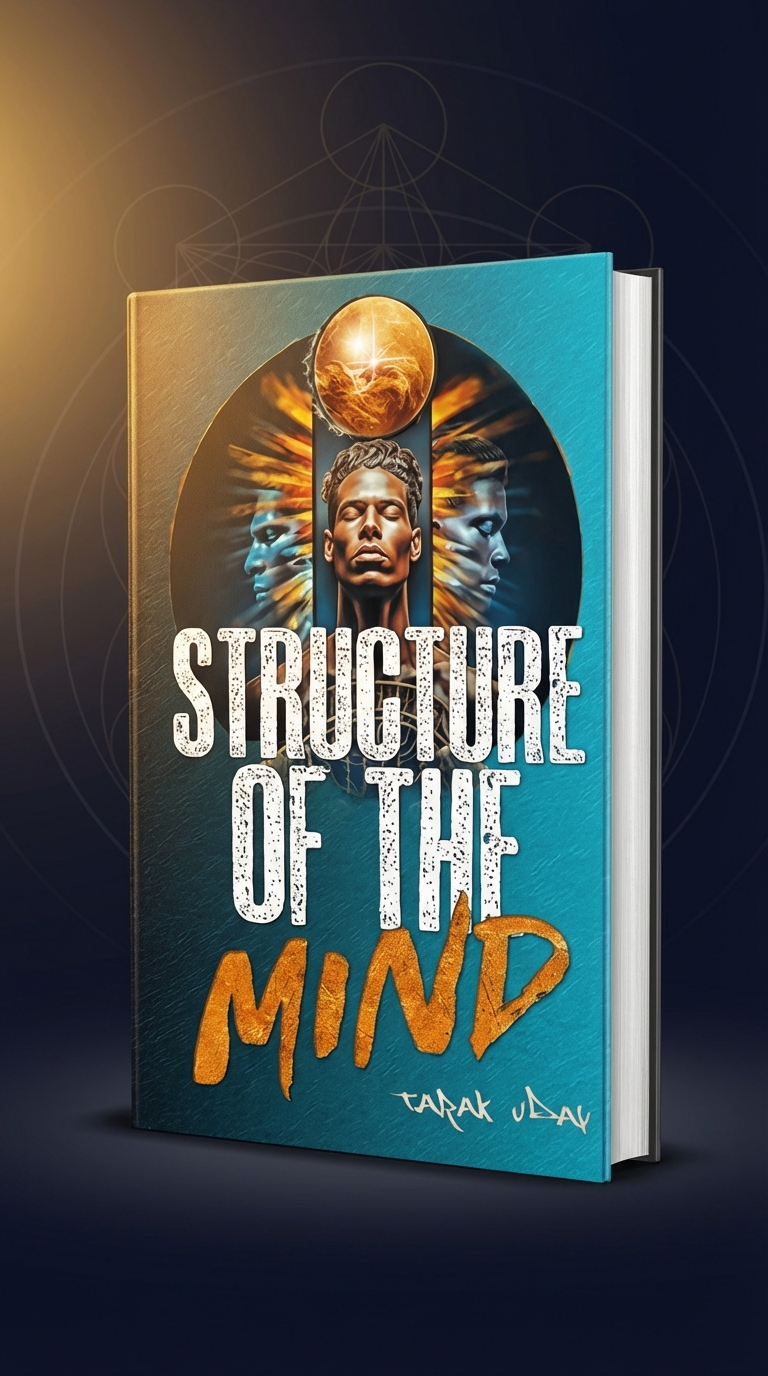
Understand Your Own Mind
"Structure of the Mind" reveals the three divisions of mind, seven levels of consciousness, and powers of mind that most people never learn to develop.

Learn The Language Your Dreams Speak
"Life Is But a Dream" teaches the Universal Language of the Mind — how to read any dream symbol by what it is and what it does, so every dream becomes a message you can act on.

LUCID
You've tried every lucid dreaming technique. Most miss the root cause. LUCID reveals what they all skip.