
Energy Flows Where Attention Goes: What That Actually Means
It isn't a poster on a gym wall. It's the fuel line of every thought you hold, and the worry you rehearse at night has been drinking from it.
Energy flows where attention goes means that attention is the fuel of every thought you hold. Whatever you place your attention on receives creative energy and moves toward becoming real; whatever you withdraw your attention from starves and eventually dissolves. You already know this from the inside. You've lain awake replaying a conversation that hasn't happened yet, rehearsing every line, and woken up tired, as if you'd spent something overnight. You had. And the part of you that was paying attention the whole time left a record of exactly where that energy went: the dream you woke up with this morning.
What Does "Energy Flows Where Attention Goes" Actually Mean?
It isn't a slogan about staying positive. It's metaphysical mechanics. In the Universal Language of Mind, as Tarak Uday teaches it, this truth sits right beside another one: your thoughts create your reality. The two belong together because each is only half the machine. Thoughts are the seeds. Attention decides which seeds get fed and which ones rot in the ground.
Here's the mechanism. Every thought you have is an image. When the conscious mind holds a thought image with enough clarity, it's imprinted into the subconscious mind, and there it begins to grow toward physical form. But growth needs fuel. The fuel is attention. A thought you keep returning to gains energy. A thought you stop feeding loses it.
That makes attention an active creative force, not a passive camera. Every time you place it somewhere, you're investing. What you dwell on, rehearse, worry about or picture on the drive to work is receiving creative energy from you right now, whether you meant to spend it there or not.
Attention is one of the three keys of reasoning, the power of the conscious mind. The other two are memory and imagination. Memory builds images of the past; imagination builds images of the future. Attention is the only one that lives in the present moment, and that's why it decides which of those images gets energy.
Why Does Your Worry Get More Energy Than Your Goal?
Here's where the phrase stops being comfortable. Ask anyone what they want most and they'll tell you. Now ask where their attention actually sat today. Those are rarely the same answer.
You think about the goal on purpose, maybe once in the morning. You think about the fear every idle minute: in the shower, at a red light, at two in the morning in high definition. So which thought is receiving more fuel? The subconscious mind doesn't edit and doesn't judge. It gives energy to the images that are clearest and most often fed. Your worry is vivid and constant. Your goal is vague and occasional. The worry wins, and not because life is against you.
An undisciplined mind scatters attention across hundreds of thoughts at once. Each gets a sliver of energy, and none gathers enough density to move with force. That's why a scattered life feels like nothing quite works out. The arithmetic behind it is laid out in why your manifestation isn't working.
And here's the part no article can settle for you. You can't reliably watch your own attention from the inside, because the faculty you'd use to watch it is the same one that keeps wandering off. Your dreams can. A dream shows you a thought that's already in motion, often one you didn't know you were feeding.
Where Does That Energy Actually Go Once Your Attention Lands?
So attention fuels a thought. Fuels it toward what? Toward form. A thought imprinted into the subconscious mind travels inward through four levels before it emerges as a circumstance in your life, and each level has an elemental quality that describes how the thought behaves there.
It begins at the mental level, where its quality is air: subtle, barely noticed and still easy to alter. It then moves into the upper astral, where its quality is fire. Fire expands, and the thought branches into every possible way it could come true. You feel that as inspired excitement. But fire needs fuel, and this is where attention matters most. Starved of attention, the fire stalls and the thought stays forever an exciting possibility. You know this one. It's every plan that felt electric for a week and then quietly went nowhere.
Fed, the thought moves into the lower astral, where its quality is water. It contracts from endless possibility toward a few probable forms, and this is the last stage where redirecting it is still easy. Finally it reaches the emotional level, where its quality is earth: stable, solid and ready to appear in the physical world. The full sequence is traced in how thoughts create reality, step by step.
That's why emotions are such useful road signs. When a heavy feeling arrives, the practical question isn't "why is this happening to me?" It's "what have I been giving my attention to?" One dream answers that in a single sentence. The same image returning for months is a paragraph, and it's saying something about your attention that no single reading can see.
How Do You Take Back Control of Where Your Attention Goes?
So if attention is the fuel, then the ability to direct it is the ability to decide what you create. That ability is concentration: placing your attention where you choose and holding it there. Of the three keys of reasoning, it's the most vital. You don't train it by thinking about it. You train it with reps, and the most honest rep there is sits on a table in front of you: the candle concentration exercise.
Sit with a candle at eye level, about an arm's length away. Put your phone in airplane mode or use a kitchen timer, set for five minutes if you're starting out and ten once that feels steady. Write the date and time on a sheet of paper. Light the candle, start the timer and place your attention on the flame. That's the whole exercise: you command your attention to go somewhere specific, and you use your willpower to keep it there.
The moment you notice your attention has left the flame, make a tic mark without taking your eyes off it. Breathe. Come back. Hold. A sound counts as a drift. An itch counts. The thought "am I doing this right?" counts. Even repeating "flame, flame, flame" counts, because if your attention is on your thoughts, it isn't on the flame. When the timer ends, tally the marks, circle the number and draw a line to leave room for tomorrow.
The first count is humbling. It's meant to be. For the first time, the paper shows you what your attention does when you aren't steering it. And every tic mark is also a rep, because noticing the drift and returning is exactly the movement you're strengthening. More in the full candle concentration exercise, and on turning the same skill on a racing mind in how to stop overthinking.
One more lever: the state you fall asleep in shapes the state you dream in, and the breath reaches that state directly. A few slow breaths after the candle carry a steadier mind into the night.
How CHITTA Accelerates Your Attention Training?
So now you know what to do, and you can probably see the problem. A sheet of paper tells you today's number. It can't tell you whether the number is falling, and it can't connect your attention to what your subconscious mind is building. Without that, the practice slides back into a feeling: "I think I'm getting better." A feeling isn't a measurement.
CHITTA is the instrument for that gap. The candle exercise lives in CHITTA's daily practices, and it records your tic-mark count against the date of every session. A pile of scribbled pages becomes a dated record, and the record becomes a trend line you can watch fall. You stop guessing whether your attention is under your control and start seeing it.
Tarak Uday takes this further in Structure of the Mind, his map of the three divisions of mind and the powers of attention, memory and imagination.
The dream journal closes the other half. Log the dream you woke up with, and the interpretation engine decodes it symbol by symbol, in sequence, using the symbol dictionary. That's where you find out which thought image has been receiving your energy while you weren't looking. Put the two side by side over a few weeks and you'll see what no single sitting can: as the count comes down, your dreams start to change.
Then there's the Top 10 Most Wanted list. Concentration without a destination is a strong muscle with nowhere to go. Writing down and ranking the ten things you actually want gives trained attention a place to spend its energy on purpose, instead of handing it to the loudest worry. The Structure of the Mind lessons are being turned on shortly, and they're the natural next step once the drill is part of your day.
None of that replaces the practice. It makes the practice visible, and visible is what makes it compound. So here's tonight's act: run five minutes of the candle drill and count every time your attention left the flame. If you'd like your first dream decoded alongside it, start with a free dream decode.
That's what the phrase means. It doesn't tell you where your energy went last night. The number you circle tonight will.
What Else Do People Ask About Energy Flowing Where Attention Goes?
Is "energy flows where attention goes" the same as positive thinking?
No. Positive thinking tries to change the mood of your thoughts. Energy flows where attention goes describes a mechanism: whatever you keep returning to receives creative energy, pleasant or not. A vivid worry you rehearse all day gets more fuel than a goal you think about once. The practice is directing attention, not decorating it.
How long should I practice the candle concentration exercise?
Start with five minutes a day and work up to ten once five feels steady. Do it daily, write the date and time, and circle your tic-mark total each session. Like any muscle, attention grows with reps, and the total comes down over days and weeks. The count, not how the session felt, is your measurement.
What does the Universal Language of Mind say about attention and dreams?
In the Universal Language of Mind, a dream shows a thought already in motion inside the subconscious mind. Because attention is the fuel that moves thoughts toward form, your dreams reveal where your attention has been going, including thoughts you didn't realize you were feeding. Decoding them lets you see the pipeline early enough to redirect it.
Tarak Uday teaches the Universal Language of Mind and the Structure of the Mind, the framework behind CHITTA's practices. His books, including LUCID and Life is But a Dream, are on the CHITTA books page.

Frequently Asked Questions



Books by Tarak Uday
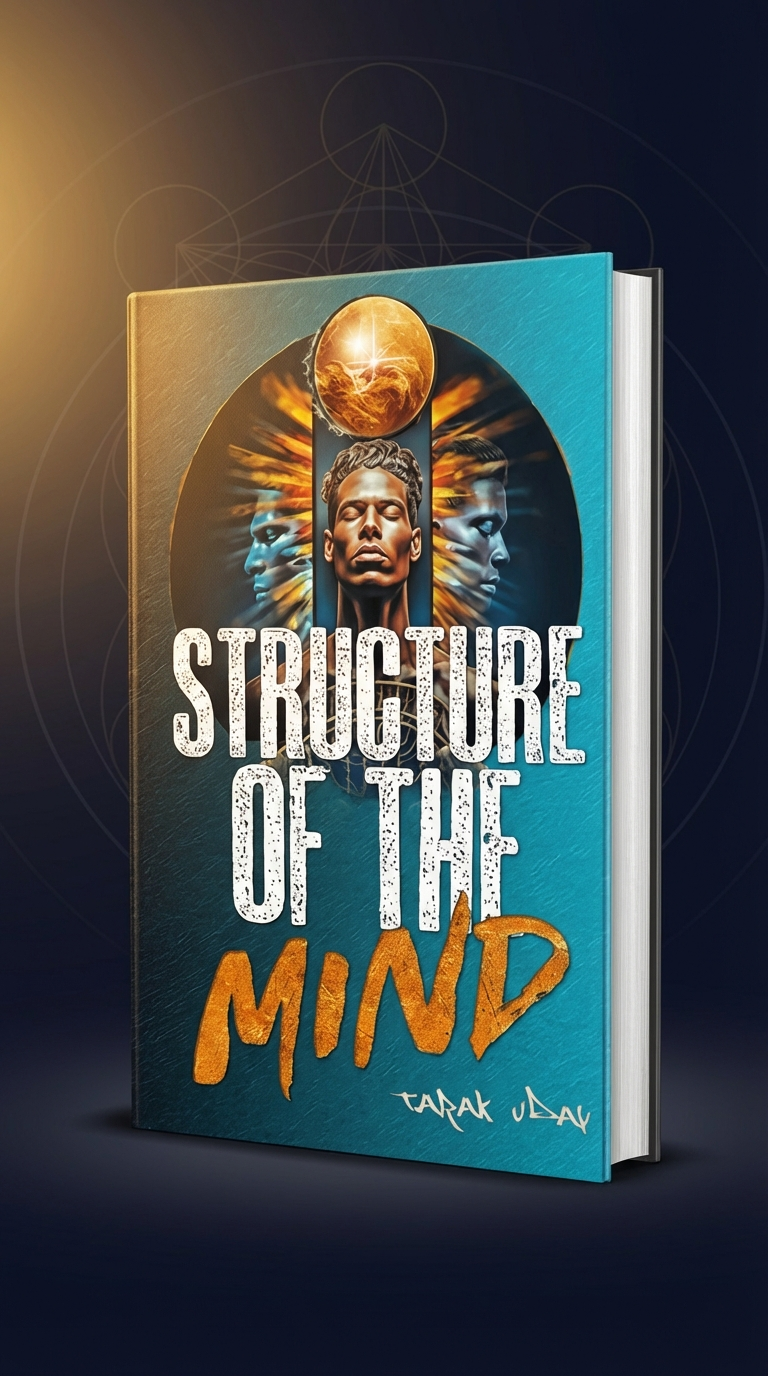
Understand Your Own Mind
"Structure of the Mind" reveals the three divisions of mind, seven levels of consciousness, and powers of mind that most people never learn to develop.

Learn The Language Your Dreams Speak
"Life Is But a Dream" teaches the Universal Language of Mind — how to read any dream symbol by what it is and what it does, so every dream becomes a message you can act on.

LUCID
You've tried every lucid dreaming technique. Most miss the root cause. LUCID reveals what they all skip.