
Mask in Dreams: The Face You Put On Before You Walk In
You know the moment. Your hand is on the door of a meeting, a family dinner, a party where you only know the host, and somewhere between the handle and the first hello your face rearranges itself. The jaw loosens into an easy smile. The eyes brighten a notch. Whatever you were actually feeling in the hallway gets folded away, and the person who walks in is a version of you built for that room.
Nobody sees it happen. You barely see it yourself, because you have done it thousands of times and it takes less than a second. Then one night you dream you are wearing a mask — lacquered, heavy, tied behind your head — and suddenly the thing you do invisibly every day is sitting on your face where you can feel its edges.
Most people wake from that dream and file it under costume parties or a movie they watched. A mask dream is far more personal than that, and far more practical. Your subconscious mind has taken a habit you perform in the dark and made it solid enough to touch, and before this article ends you will know exactly which room you walk into wearing it.
A mask in a dream represents assuming an identity — presenting a self to the world that is not who you truly are — and it carries a clear instruction to become honest with yourself about who that is. The face stands for identity, and a mask is built to cover the face. So the dream points to wherever you are showing people a constructed version of you, whether to feel protected or to be approved of, and it asks what it would take to let the real one be seen.
What does a mask mean in the Universal Language of Mind?
Start with the object itself. A mask is a shaped surface you place over your face. It hides the features underneath and replaces them with different ones, and anyone looking at you responds to the replacement rather than to you. That is its entire job. It has no other use.
Now bring in what the face carries. In the Universal Language of Mind the face represents identity and self-awareness — the part of you others recognise you by and the part you recognise yourself by. So an object whose whole purpose is to cover the face and substitute another one can only describe one thing in the metaphysical mechanics of your mind: an identity you have assumed and are presenting in place of your own.
Tarak Uday's dream dictionary names the symbol in two parts, and both halves matter. The first half is the diagnosis, assuming an identity. The second half is the remedy, a need to be honest with who you truly are. The dream is not accusing you of lying to other people. It is pointing at the more expensive lie, the one where you have worn the face long enough that you have started to confuse it with yourself.
This is why a mask dream can feel oddly calm and still leave you rattled for the rest of the day. Nothing chased you. Nothing broke. You simply caught yourself behind something, and some part of you recognised the fit.
Were you hiding to stay safe, or hiding to be liked?
Every mask gets put on for a reason, and the reason tells you which kind of work the dream is assigning.
The first reason is protection. Somewhere in your history it was not safe to be seen as you were. Maybe your sensitivity got mocked, your ambition got punished, your anger frightened the people you depended on. So you learned to hold something steady in front of it. A protective mask is not a character flaw. It was an intelligent response to a real condition, and it probably did its job. The trouble is that the condition ended years ago and the mask stayed on.
The second reason is management. Here the mask exists to shape how others perceive you — to win approval, to escape judgment, to steer a conversation toward the outcome you want. This one is harder to admit, because it involves a small amount of calculation. You are not only shielding yourself. You are arranging a performance for an audience, and adjusting it as you read their faces.
The face you arrange before you open the door was meant to get you through one room. The dream shows up when you have stopped taking it off in the hallway.
So ask yourself honestly how the mask felt in the dream. If it felt like armour, heavy and reassuring, you are dealing with protection, and the question is whether the danger it guards against still exists. If it felt like a disguise, light and clever, a way to pass among people unnoticed, you are dealing with management, and the question is what you believe would happen if they saw you without it.
Both answers lead to the same place. Neither kind of mask lets anyone meet you. And the one who pays for that most is not the audience. It is you, because approval earned by a mask never quite lands on the person underneath it.
CHITTA interprets your dreams through the Universal Language of Mind, so the mask you woke up remembering gets read alongside every other symbol in the same dream. Decode your dream free.
What kind of mask was it, and whose face was on it?
The design of the mask describes the identity you have been presenting, so give it a second look before the image fades.
A beautiful mask — gilded, jewelled, feathered, flawless — describes an identity that is attractive and admired and not true. This is the polished version of you that wins praise at work or keeps a relationship smooth. It gets rewarded constantly, which is exactly why it is so hard to set down. When the dream makes the mask ornate, it is telling you the facade has become valuable to you, and that you are guarding it the way you would guard something expensive.
A frightening mask — a snarl, horns, a skull, a blank white shell — describes an identity built to create distance. Its purpose is to intimidate, to make people back away before they get close enough to hurt you. If you have been called hard to read, cold, or intimidating, and privately you know that is not what is going on inside, the dream has drawn you a portrait of the gap.
A plain or featureless mask describes an identity so neutral it barely registers. You are not performing a character so much as erasing one, offering people nothing they could possibly object to.
And a mask of your own face is the most pointed version of all. It describes a performance of yourself — the curated, edited self you have presented so consistently that it now looks exactly like you from the outside. Other people cannot tell the difference any more. The dream is making sure you still can.
If someone else in the dream wore the mask, remember that every person in a dream is an aspect of you. A masked friend, partner or stranger describes a part of your own personality that is operating behind a facade, often a part you would not have guessed was hiding anything.
Why won't the mask come off, and what does it mean when it breaks?
What happens to the mask during the dream shows you how far along you are in removing it.
A mask that will not come off is the version people remember with a jolt. You pull at the edges and they do not give. You reach for the ties and there are none. This reports an identity worn so long it has fused with your sense of who you are. You no longer know where the performance stops, and the fear in the dream is the honest fear underneath: that if the mask came away, there might not be a face you recognise under it. There is. It has simply not been looked at in a while.
A mask that cracks, splits or shatters reports a facade that is already failing. Something in your waking life has put more pressure on the performance than it can carry — a loss, a new love, a confrontation, simple exhaustion. Breaking can feel like exposure in the dream, even humiliation, but it is movement in the right direction. The structure was brittle because it was never you.
Taking the mask off yourself, on purpose, reports that you are ready to drop the facade and have begun choosing it. Having someone else pull it off reports an aspect of you that is forcing the issue, a part of your own mind that has grown tired of the pretence and will not wait for permission.
A masquerade, where every figure is masked, describes a whole area of your life run on mutual performance, a family or workplace where everyone has agreed not to show their real faces. So the dream is not asking you to reform the room. It is asking whether you are willing to be the first unmasked face in it.
How is wearing a mask different from playing a part?
This distinction keeps a mask dream from being read as a warning against imagination, so it is worth drawing carefully.
Acting, in dream language, represents putting your imagination to use. An actor represents the ways you imagine yourself being — the confident speaker you rehearse becoming, the patient parent you picture before the difficult bedtime. That is creative work, and it is done in the open. Everyone in a theatre knows the actor is acting. The role is offered as a role, and trying on a future version of yourself is precisely how you grow into it.
A mask works the opposite way. It conceals. It is not presented as imagination; it is presented as fact. The person behind it wants the substitute face to be taken as the real one, and the longer that goes on the less the wearer is using imagination at all. They are defending a fixed image.
So the test is simple. When you picture a better version of yourself and practise stepping into it, you are acting, and you remain honest the whole time about where you are starting from. When you show people a version of yourself so they will never find out where you are starting from, you are masked. The first builds identity. The second hides it.
That is also why the remedy the dream offers is honesty rather than effort. You do not need to become someone better before you are allowed to take the mask off. You need to stop pretending you already are.
How do you take off a mask you have forgotten you are wearing?
You begin by finding the doorway where you put it on. Pick one situation this week that you enter predictably — a standing meeting, a phone call with a parent, the first ten minutes with a particular friend. Before you walk in, pause for a single breath and notice what your face does. Notice the smile you were about to put on, the tone you were about to borrow, the opinion you were about to swallow. Change nothing yet. Just catch it.
Then, once you are alone, write down two sentences. The first describes the self you presented in that room. The second describes what was actually true for you while you presented it. Keep both sentences plain. The distance between them is the precise shape of your mask, and seeing it on paper takes much of its authority away.
Next, practise radical honesty in small doses. Choose one moment a day to let a true reaction show where you would normally cover it — saying you are tired when you are tired, disagreeing gently when you disagree, admitting you do not know. The goal is not to shock anyone. It is to teach your own mind that you can be seen and survive it.
And go under the question the dream is really asking. Every mask is layered over a self you have come to believe is not enough, but the Real Self, the I AM, is not something a mask can improve. It can only be hidden by one. You cannot know who you truly are while you are busy managing how you look, so each small honesty is not self-exposure. It is self-discovery.
Then watch the masks in your dreams over the coming weeks. When they loosen, crack, or come away in your own hands, your subconscious mind is reporting progress. So at the next door you reach, leave your face exactly as it is and walk in. The I AM needs no disguise to enter any room.

Frequently Asked Questions



LUCID
You've tried every lucid dreaming technique. Most miss the root cause. LUCID reveals what they all skip.
Understand Your Own Mind
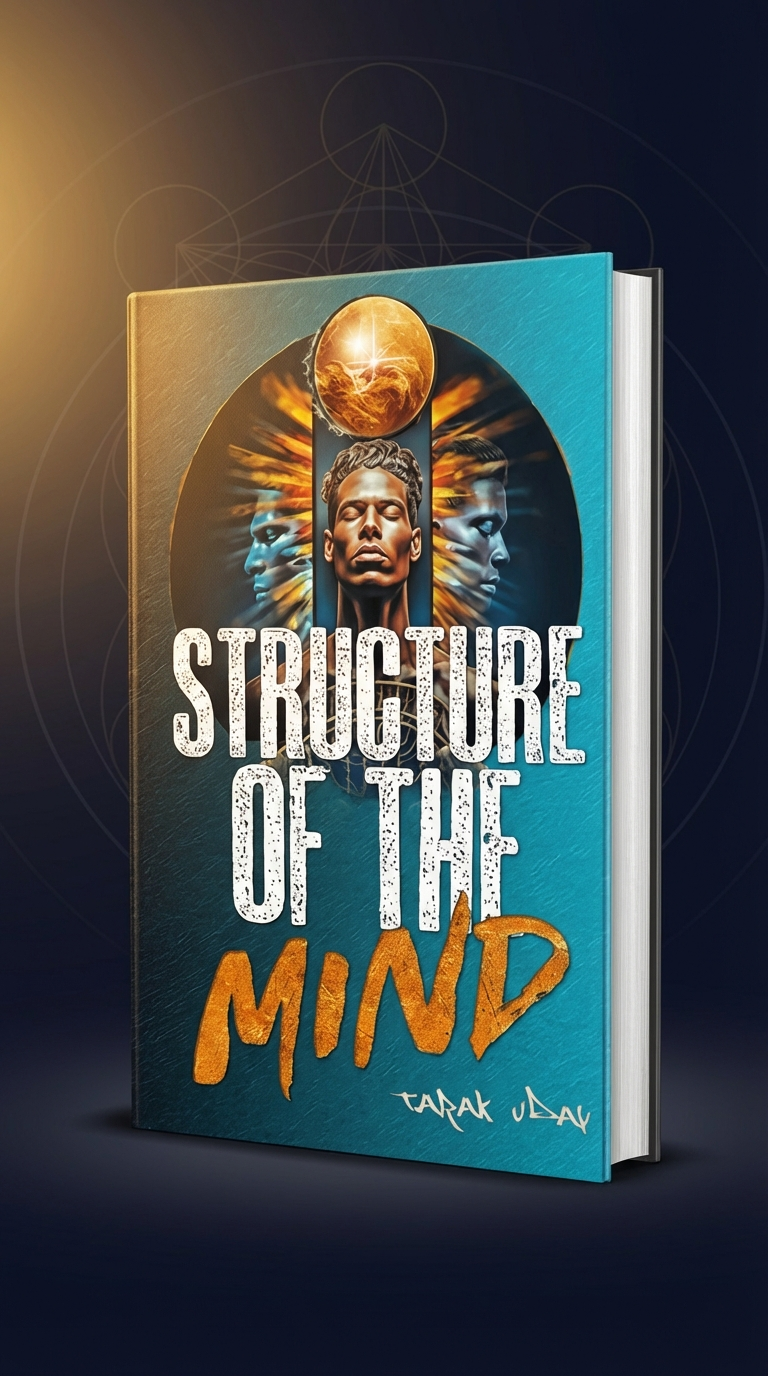
"Structure of the Mind" reveals the three divisions of mind, seven levels of consciousness, and powers of mind that most people never learn to develop.