
Your "Memory Problem" Is Really an Attention Problem
You didn't lose the name three seconds after hearing it. You were somewhere else when it was said. Memory can only return to a moment that attention was present for, and both can be trained together with five moments a day.


You forget things right after you hear them because your attention wasn't on them when they happened. The name, the reason you walked into the room, the paragraph you just read: none of it reached your memory clearly, because for that second you were somewhere else in your mind. You know the moment. Someone tells you their name, you shake their hand, and three seconds later it's gone, and you quietly decide your memory is slipping. Look closer. Memory can only hand back what attention handed in. The same thing happens every morning, when the dream you were just inside dissolves before your feet reach the floor. Think of the last dream you lost that way, the one you can still half feel.
Why Do I Forget Things Right After I Hear Them?
So let's start with the belief, because almost everybody carries it. The belief says the thing went in and then fell out. You heard the name, it was stored, and your memory dropped it. That's why you call it a memory problem.
Now look at what actually happened in those three seconds. While the name was being said, where were you? You were deciding what to say next, or still finishing a thought from the car. Your ears were in the room. You weren't.
In The Structure of the Mind, Tarak Uday describes this exact scene, someone telling you a story while you're lost in thought: "Even though your ears may have physically heard the words of the individual speaking to you, you didn’t actually hear any of it because your attention was on your thoughts." And then the line that explains it:
That's the mechanism. Nothing fell out. The moment was never taken in, because you weren't standing in it. You can't recall a room you never entered.
It's the same reason you read a full page and realize you have no idea what it said. Your eyes moved across every word. Your attention was replaying a conversation from yesterday.
In LUCID, Tarak lists what this looks like across an ordinary day: "They drive to work without remembering the drive. They eat meals without tasting the food. They have conversations while their mind is somewhere else entirely." And he names the condition in one sentence: "They are physically present but mentally absent."
So when you forget something right after it happens, the honest description isn't "I lost it." It's "I wasn't there for it."
Is It a Memory Problem or an Attention Problem?
Here's where the structure helps. The conscious mind has one power, and that power is reasoning. The Structure of the Mind gives its three parts plainly: "The three keys of reasoning are memory, attention, and imagination."
Each key faces a different direction in time. "Our memory allows us to better understand what we experienced in the past. Our attention allows us to better understand what we are experiencing in the present moment." Imagination faces the future, what you have the opportunity to experience next.
Put those two sentences side by side and the order becomes obvious. Everything you'll ever remember was a present moment first. Attention is the key that meets the moment. Memory is the key that returns to it afterward. If attention never met the moment, memory has nowhere to return to.
There's a simple way to tell the two apart in your own life. Think of something you gave your whole attention to: a film that held you, a conversation that mattered, the day something went badly wrong. You can probably still give details years later. Who was there, what was said, where you stood. Your memory did its job, because your attention did its job first.
Now compare that with the name you lost in three seconds. Same memory. Same person. The only thing that changed was where you were when it happened.
One plain line, because it matters: this isn't medical advice, and this article is about everyday absent-mindedness. Memory loss that is persistent or getting worse is a reason to see a doctor.
What the framework can't tell you is which moments of your own day you were absent from. An absent moment leaves no trace, and that is exactly what makes it hard to catch.
How Do You Train Attention and Memory Together?
The good news in The Structure of the Mind is that none of this is fixed. "Each of these mental skills can be strengthened and controlled." They're described as mental muscles, with the same condition that physical muscles carry: "If you are not regularly spending time and energy to build these mental skills, they are growing weaker by the day."
So you train them. And there's one practice that works both keys at once.
The memory exercise in the book is the 5-day 5-step memory exercise: recalling, in reverse order, five moments throughout your day, for five days straight. You start with the moment closest to now and step backward toward the morning. For each moment you pull to mind a clear image, and the book is specific about what the image needs: "the who, what, where of the experience." Not the whole scene. In the book's words, "a quick snapshot is sufficient."
Here's what most people miss about it. The recall happens at night, but the exercise really begins in the morning. Once you know that tonight you'll be asked for five moments, each with a detail you can actually see, you start arriving in your day. You look at the cup. You hear the name. You notice what colour the door was. The evening recall is the test. The daytime attention is the training.
That's why one detail per moment matters so much. A detail is proof of presence. You can't invent the pattern on your coworker's shirt. Either you were there to see it or you weren't.
And the reverse order does its own work. Going backward, you can't coast on the story of your day. Each moment has to be pulled up on its own, like a single file. The book uses that picture: "Like opening a drawer in a file cabinet, you pulled out and glanced at five files within this first drawer."
Attention gets its own direct training too. "Concentration is your ability to control your attention," and the practice the book gives for it is the candle concentration exercise: place your attention on the flame, hold it there, and make a mark on paper every time it wanders. Tarak is clear about the ranking: "Improving your memory is helpful, improving your visualization is powerful, but increasing your power of concentration is vital". If you want the wider picture of how the three fit together, read how to train your attention as three mental muscles.
It'll feel slow at first. The book expects that, and says the first days can take five to ten minutes. "Our memory is a mental muscle. The more we work it out and exercise it, the stronger it will become."
How Does CHITTA Accelerate Training Your Memory and Attention?
Here's the gap the teaching leaves you standing in. You now know the forgetting happens at the moment of the experience, not afterward. But you can't see the moments you missed. By night, the day is a blur with a few bright spots.
You need a record made during the day, not a guess made at the end of it.
Tarak Uday takes this further in Structure of the Mind, his map of the three divisions of mind and the powers of attention, memory and imagination.
That's what Memory Lane is inside CHITTA. Across the day you capture five moments, each with a detail, at the time they happen. At night you recall them in reverse, and the record is there to check yourself against. The entries stay dated, so the five-day version of the exercise has five real days to walk back through.
The acceleration is mechanical. A feeling that "my memory is bad" becomes five dated entries you either captured or didn't. A day where the moments are bunched into one hour shows you exactly when you were on autopilot. The gaps become visible, and a visible gap is one you can do something about.
The candle exercise does the same for attention. CHITTA keeps your tic-mark count session by session, each mark a moment your attention left the flame, so you're no longer guessing whether it is getting stronger.
And then there's the place where all of this shows up first. In LUCID, Tarak puts it in four words: "Dream recall IS memory." In the Universal Language of Mind, as Tarak Uday teaches it, your dreams are a direct reflection of how you use your mind while awake. An absent day produces a dream you can't hold on to. The dream journal in CHITTA dates every dream you do bring back, and decodes it in the Universal Language of Mind, so you can watch recall return as presence returns. If mornings are where you lose the most, start with why you forget your dreams.
What Will You Still Have of Today, Tonight?
Here's the act. No app is required for it, and it starts now, not tonight.
Record five moments today, with one detail each. Spread them out: one from the morning, a few across the middle of the day, one from the evening. A detail is something you had to be present to catch. The song that was playing. The exact words someone used. The colour of the plate.
Tonight, before sleep, recall them in reverse. Start with the last moment and walk back to the first. See each one as a snapshot: who, what, where. If one won't come, don't force it and don't judge it. Notice which one it was, and what you were thinking about when it happened.
That missing moment is the most useful thing you'll find all day. It marks a place where you were somewhere else.
Do this once and you'll already feel the difference between forgetting and never having been there.
What this article can't tell you is where your attention goes when it leaves. That part is yours. It has a pattern, it repeats, and it's very likely the same place your mind takes you tonight after you fall asleep.
Frequently Asked Questions


Books by Tarak Uday
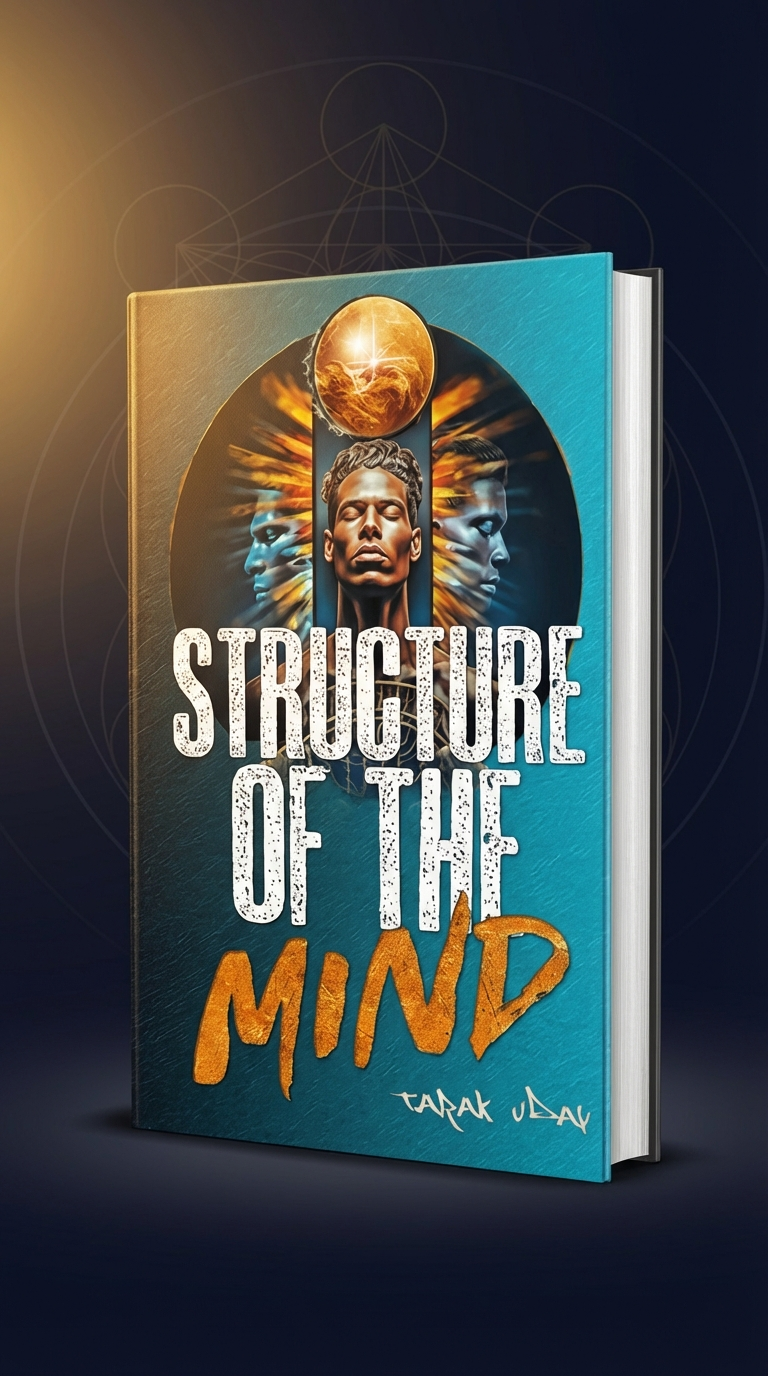
Understand Your Own Mind
"Structure of the Mind" reveals the three divisions of mind, seven levels of consciousness, and powers of mind that most people never learn to develop.

Learn The Language Your Dreams Speak
"Life Is But a Dream" teaches the Universal Language of Mind — how to read any dream symbol by what it is and what it does, so every dream becomes a message you can act on.

LUCID
You've tried every lucid dreaming technique. Most miss the root cause. LUCID reveals what they all skip.