
Numbers in Dreams: How Your Subconscious Tracks a Thought


You woke up with a number stuck to you. A three. A clock reading 4:44. A house number, a jersey, a total on a receipt that made no sense. The dream has already faded and the number hasn't.
So you did what everyone does. You searched it. You got a page telling you what the universe is signalling, and you closed the tab feeling vaguely handled and no clearer than before.
Here's why that didn't land. That search assumed the number came from outside you. It didn't. Your own subconscious mind selected it, deliberately, out of every image available, and it selected it to tell you something specific about a thought you're currently building.
In the Universal Language of the Mind, numbers are the evolution of a thought. A number in a dream is a progress marker. It tells you how far a specific idea has travelled on its way from a flicker in your mind to a fact in your life.
What is a number doing in a dream at all?
What an image does inside a dream is what it means. That's the whole mechanic. A bridge carries you across a gap, so a bridge is your ability to shift from one state of mind to another. A clock measures, so a clock is a mental tool for measuring the evolution of consciousness. Identify the job and the meaning falls out. This is the Universal Language of the Mind, and it's the same for every dreamer who has ever lived, because minds are built the same way even when cultures aren't.
So what does a number do? It marks a position in a sequence. Not a quantity — a stage. Three isn't three things, it's the third step. And what's stepping? A thought is. Every thought you have moves through stages on its way to becoming something real, and your subconscious tracks that movement the way a foreman tracks a build.
That's what Tarak Uday means when he defines numbers as the evolution of a thought. The number isn't decoration on the dream. It's the timestamp. It's your mind saying: this idea you're carrying, here's where it currently sits.
Which means the question to ask is never what does the number mean in general. It's what thought is this number attached to. The number is a reading. You still have to know what it's reading.
What is each number tracking in you?
The sequence is precise, and it's worth knowing cold, because once you have it you can locate almost any idea in your life on a map.
Zero is power. Not nothing — potential before it takes a form, the full charge of something that hasn't chosen a shape yet. One is individuality, the moment a thought separates from everything else and becomes distinctly yours. Two is duality, where the thought meets its opposite and you discover the tension in it. Three is creation, the point where those two forces produce something new, and it's the first stage where the thought exists outside of you at all.
Four is inner stability. The created thing settles and stops needing constant attention. Five is reasoning — you begin working with it consciously, comparing, testing, arguing it out. Six is intuition, where knowing about it stops requiring the argument. Seven is visualization, where you can hold the finished form of it in your mind before it exists. Eight is self-value, the stage where the thought changes what you believe you're worth. And nine is completion.
The number isn't decoration on the dream. It's the timestamp. Your mind is telling you where a specific idea currently sits on its way to becoming real.
Look at that progression honestly and something uncomfortable shows up. Most people's ideas die between three and five. They get created, they achieve a little stability, and then reasoning arrives and takes them apart. That's not a flaw in you. That's the stage where a thought is supposed to be tested, and most of us mistake the testing for a verdict.
Why did your dream pick that specific number?
So your dream handed you a number. Now do the second half of the work, because the number alone is only half a sentence.
Find what the number was attached to. A number on a door is telling you about the state of mind you're accessing. A number on a person is telling you about an aspect of yourself. A number of objects — three birds, two chairs, nine steps — is telling you about the thing those objects represent. The number modifies. It never floats free.
Then bring it to your waking life and be specific. Not what's going on in my life generally. What idea have I been carrying for weeks that I keep almost acting on. That's the one. Your subconscious doesn't file status reports on things you've already finished or haven't started. It reports on what's in motion.
And here's the part that makes this genuinely useful rather than merely interesting. Once you know the stage, you know the next move, because the next move is always the next number. A thought sitting at two — stuck in its own duality, argued from both sides, going nowhere — doesn't need more analysis. It needs three. It needs to be created, made into something outside your head, however small. A thought sitting at seven doesn't need more visualization. You've done that. It needs eight, which means it needs to change what you believe you deserve.
That's why this reading beats the search result you closed. The search told you what a number signifies. The mechanic tells you what to do on Tuesday.
What does it mean when the number is wrong, repeated, or unreadable?
Dreams are rarely tidy, and the distortions carry as much information as the clean images.
A repeated number — 4:44, three threes, the same figure everywhere you look — is emphasis. Your subconscious repeats when the conscious mind has been ignoring something, so a repeated four is telling you the stability is the point, and you've been treating it as background. Repetition is a raised voice, not a different word.
A number you can't read is one of the most common versions of this dream, and it frustrates people badly. You look at a clock, a sign, a page, and the digits blur or rearrange every time you look away. That blurring is the message. It says the thought is genuinely in motion right now and hasn't settled into a stage yet. You're trying to get a fixed reading on something still moving. The dream isn't withholding. It's being accurate.
A number that's wrong — a clock showing an impossible hour, a total that doesn't add up — points to a conflict between what you consciously believe about an idea's progress and where it actually is. You think you're at seven. Your subconscious is showing you two. That gap is the whole reason the dream happened.
And a number counting down, or steps you descend, reverses the direction. Something is moving back toward potential. That's not always loss. Zero is power, and some ideas have to be returned to their unformed state before they can take a shape that actually fits you.
You don't have to hold all ten stages in your head. CHITTA reads your dream in the Universal Language of the Mind, locates the thought the number is tracking, and shows you the mechanics behind the interpretation. Take the 7-day free trial and put a reading on tomorrow morning's dream.
Is the number a date, a sign, or just something you saw yesterday?
Three objections come up every time, and all three deserve a straight answer.
Tarak Uday takes this further in Life Is But a Dream, his guide to reading every dream in the Universal Language of the Mind.
First, the date theory. The number was 11, so something happens on the eleventh. This one is seductive because it's testable and because it puts the outcome outside your hands. But dreams don't schedule. Your subconscious mind has no calendar and no interest in acquiring one — it tracks the condition of your inner life, and conditions don't come with dates attached. An eleven in a dream is telling you about a stage, and stages advance when you move them, not when a Tuesday arrives.
Second, the day-residue theory. You saw the number on a receipt yesterday, so it means nothing. Half right. Your mind does build dreams out of yesterday's raw material, because that's the nearest material to hand. But it selects. You saw a thousand numbers yesterday and your subconscious reached for one. The source is residue. The choice is deliberate, and the choice is the message.
Third, the coincidence objection, which is really a question about whether any of this is worth your time. Here's the test that settles it. Take the number, locate the stage, name the thought you're currently carrying, and check the fit. Not loosely — precisely. If your mind shows you an eight and you find that the idea you're building has genuinely stalled on whether you're worth the outcome, that's not a horoscope landing. That's a mechanism describing itself. Run the test four or five times on your own dreams and you'll stop asking whether it works.
What all three objections share is an assumption that the number arrived from somewhere else. It didn't. Nothing in your dream came from outside you. Every image was manufactured in-house, by a mind that knows more about your situation than your waking mind currently admits, and the number is the most precise thing in the whole production.
How do you use a number dream the next morning?
Write the number down first, before you reconstruct the rest of the dream. Numbers decay from memory faster than images do, and people routinely lose the most precise element in the whole dream while trying to remember the plot.
Then name the idea. Say it in one sentence, out loud. The thought I'm currently carrying is that I should leave, or start, or ask, or stop. If you can't say it in a sentence, you've found the actual problem, and the number is telling you which stage you're stalled in while you fail to name it.
Then take the next number's action. Only one, and make it small and real. If you're at two, create something — a document, a message, a version one. If you're at four, stop maintaining and start reasoning it forward. If you're at eight, the work isn't external at all; it's revaluing yourself, and no amount of additional effort substitutes for that.
Track it. Numbers in dreams tend to return, and when they do they've usually moved. A three that becomes a five over a month is a measurable record of an idea maturing inside you, and almost nobody has that kind of instrumentation on their own inner life. You will.
Your subconscious handed you a digit because a digit was the most efficient thing it could hand you. It didn't need a metaphor. It gave you a reading off a gauge you didn't know you had. So stop asking what the number means and start asking what it's measuring — that question has an answer, and the answer is already in your waking life waiting to be named.
Frequently Asked Questions



Books by Tarak Uday

Learn The Language Your Dreams Speak
"Life Is But a Dream" teaches the Universal Language of the Mind — how to read any dream symbol by what it is and what it does, so every dream becomes a message you can act on.

LUCID
You've tried every lucid dreaming technique. Most miss the root cause. LUCID reveals what they all skip.
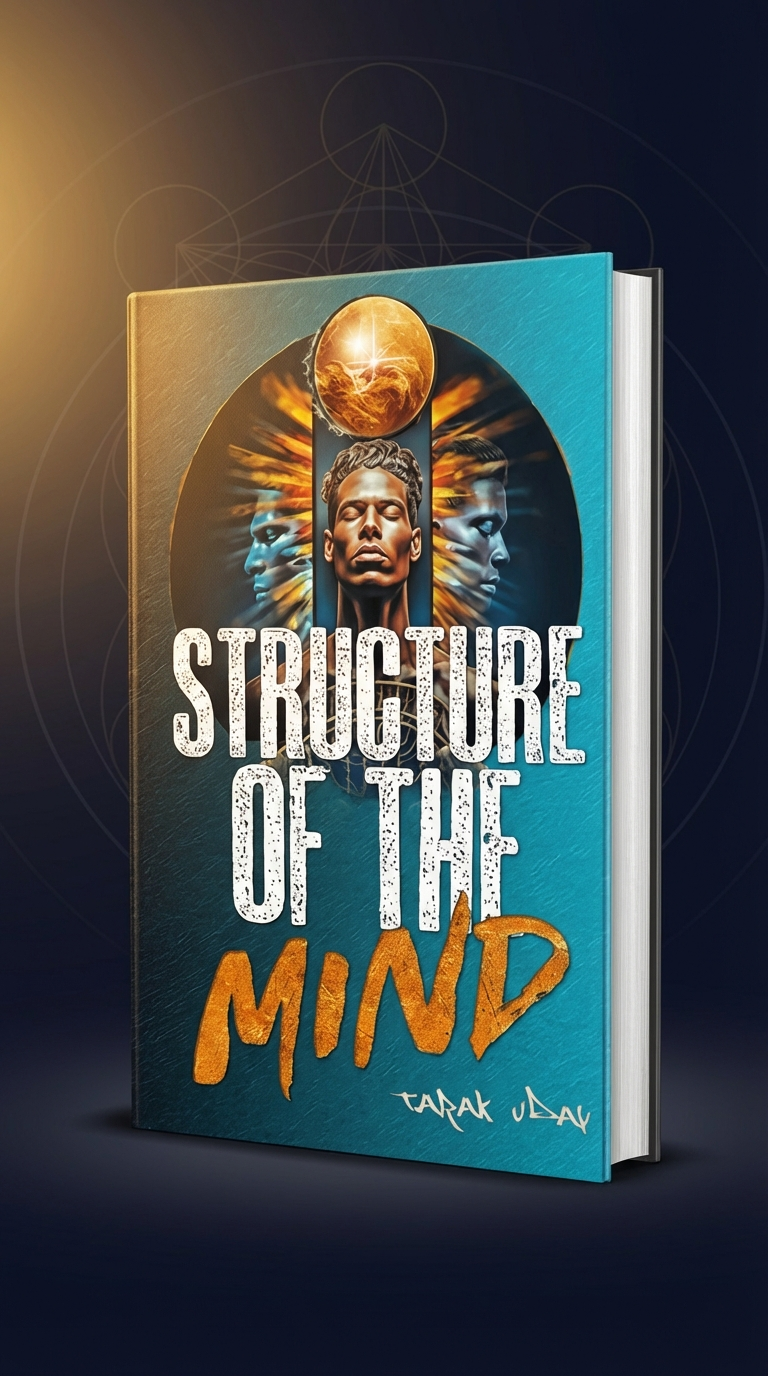
Understand Your Own Mind
"Structure of the Mind" reveals the three divisions of mind, seven levels of consciousness, and powers of mind that most people never learn to develop.