
Old in Dreams: The Age of the Beliefs You Still Carry
Pick a sentence you say about yourself without thinking. Something small that slips out at dinner or in a meeting: "I'm not a creative person." Now do the arithmetic. When did you first say it? Were you nine, watching another kid's drawing get pinned to the classroom wall while yours went home in a backpack? Were you fourteen? Subtract that age from the one you are today. If you're forty-two and you first said it at nine, that sentence is thirty-three years old. It has outlived your first car, your first job and several addresses.
Here's the strange part. Almost nobody asks whether a sentence that old is still accurate. You keep repeating it because it's familiar, and familiar has a way of passing itself off as fact. Then one night a white-haired stranger walks into your dream, or you catch your own reflection aged by decades, or you're wearing a coat you swear you threw out years ago, and you wake up trying to work out what it meant.
It meant a sentence like that one. Your subconscious mind has a precise way of showing you how long something has been living inside you, and it uses age to do it. Keep your number close. We're coming back for it.
Read through the Universal Language of Mind, anything old in a dream — an old person, an old object, your own face grown elderly — represents a longstanding thought, belief, or condition of the mind. The age shows how long it has lived in your consciousness. Its worth is decided by a single test: whether it is still productive for you today.
How long has the thought behind your dream been living in you?
Dreams don't keep calendars. When your subconscious mind shows you something old, it isn't telling you about years on a clock or a birth certificate. It's telling you about duration inside your own awareness. An old thing in a dream is a thought, a belief, or a condition of mind that has been with you so long it feels like part of the furniture: deeply established, well-worn, taken for granted.
In the dream dictionary Tarak Uday built from the Universal Language of Mind, the entry for Old applies to anything carrying that quality. It covers the old man on the bench, the antique clock on the mantel, the faded jacket, and the moment someone in the dream simply tells you, "That's old." In each case the age is the clue. Something in your thinking has been running for a very long time.
That longevity cuts two ways. An old belief that has served you well is a treasured foundation. Think of the conviction, formed early, that you finish what you start. It has carried you through degrees, projects and hard seasons, and it's still paying dividends. An old limiting belief is something else entirely: a prison you've grown so used to that you've stopped noticing the bars. "Money never stays with me." "People always leave." "I'm bad at this kind of thing." Those sentences are old too, and they're working just as hard.
So the first job isn't to feel good or bad about the dream. It's to measure. Ask what in your mind has that kind of age.
Why isn't an old figure in your dream a wise elder arriving with answers?
The popular reading goes like this: an old person appears, so wisdom is arriving. A guide has come. An elder from somewhere beyond is trying to reach you. A darker version says an old figure is a warning about ageing, decline or death. Both readings are appealing because they place the meaning outside you, either as a gift being delivered or a threat approaching.
The metaphysical mechanics work differently. Every person in your dream is an aspect of you, the dreamer. The dream is your subconscious mind reporting on your own state of consciousness, so the old figure isn't a visitor. It's a part of your thinking that has been around for a very long time, shown to you in a form you can recognise instantly: someone who has lived a lot of years.
And here's where the wisdom reading falls apart. Age and wisdom are two separate things. You've met elderly people who are genuinely wise, and you've met elderly people who have repeated the same mistake for fifty years. The same is true of your thoughts. A belief doesn't become wise just because it has survived. It can survive because it's useful, or it can survive simply because nobody ever questioned it.
A thought does not earn its place in your mind by staying there a long time. It earns its place by what it produces.
One note on family. A grandparent figure in a dream carries its own separate meaning in the dictionary, so set grandparents aside for this reading and look them up on their own.
What is an old stranger in your dream showing you about yourself?
When the old person is someone you don't know, pay attention to what they're like and what they do, because their condition is the condition of the belief. An old man hunched on a park bench muttering complaints at passers-by is a longstanding habit of grievance, a way of looking at the world you've rehearsed for decades. An old woman calmly repairing a fence in the rain is a longstanding patience, a steadiness you've relied on for so long you forget it's yours.
Notice how they treat you. An old figure who criticises you, blocks the doorway or tells you to sit down and stop trying is showing you an old thought that restrains you. An old figure who hands you a tool, laughs with you or walks ahead to show you the path is showing you an old thought that still supports your growth. Neither is wise or foolish by default.
Consider an image like this one: an elderly man with a white beard and pale tinted glasses, his face turned down, lit from behind by a blazing golden halo. The glow tempts you to call him sacred and wait for a pronouncement. Look at the posture instead. He isn't looking at you. His gaze is lowered, turned inward, fixed on something below. A dreamer who sees that figure could be looking at a belief so long-held and so revered that it has been placed beyond questioning. The halo shows how much authority you've given it. The lowered face shows it may not be looking where you need to go.
The old figure rarely appears alone: what surrounded it, what it held, where it stood and who else shared the scene all shape the reading, and CHITTA's symbol dictionary translates each one so the whole picture comes into focus. Look up every symbol in your dream
What does it mean when you see yourself old in a dream?
First, the reassurance you deserve. Seeing yourself aged in a dream is not a prediction of illness, and it's not a forecast of death. Your subconscious mind isn't a fortune teller, and it isn't counting down anything. It's using an image you'll understand without explanation.
When you are the old one, the dream is pointing at a condition of mind you've held so long that it now defines how you see yourself. It's no longer a thought you have. It's become who you think you are. Perhaps you catch your reflection in a shop window and a grey, stooped version of you looks back. Ask what you've believed about yourself for so long that it has shaped your posture, your choices, your sense of what's possible.
The details matter. An aged version of you who is vigorous, bright-eyed and busy suggests a longstanding self-image that still has energy and serves you. An aged version who is tired, frail or confused suggests a self-image that has been carried so long it's exhausted, still defining you though it no longer has anything to give.
So treat the dream as an invitation to inspect your self-description. The words "that's just who I am" usually signal a very old thought wearing the costume of a permanent fact.
What are old clothes, an old car and a forgotten box trying to tell you?
Objects follow the same logic, and the quality of the object tells you how that old thought is functioning. Things you use in a dream are mental tools, the means by which you get things done. When the tool is old, you're still getting things done with an old way of thinking.
Old clothes you keep wearing show an old belief shaping how you present yourself to the world. You outgrew it years ago, yet you still put it on because it's comfortable. An old car that still runs well points to a longstanding approach that keeps getting you where you want to go. The same car belching smoke and rattling apart shows an approach that is failing. The car and the clothing have their own entries, so read those too; the age attached to them tells you the pattern is a long-standing one.
Condition is everything here. An old object kept in perfect condition is a belief you've tended and maintained, often a real foundation. An old object falling to pieces is a belief that has outlived its usefulness and is quietly costing you. Finding something old hidden in a drawer, an attic corner or the bottom of a trunk is especially telling. It shows a belief you'd forgotten you held, still operating out of sight. An old house gets a brief word only: the house you grew up in has its own reading about the state of mind you formed early, and it deserves separate attention.
How do you examine an old belief with fresh eyes?
Your oldest beliefs deserve an honest audit, and the audit is simple enough to begin tonight. Take a blank page and write down the sentence your dream pointed to, or the one you picked at the start of this article. Beside it, write the age you were when you first said it. Then write its age today. Seeing that second number on paper changes how the sentence feels. It stops sounding like truth and starts sounding like history.
Now ask three questions and answer each in writing. What did this sentence do for me when it started? Often it protected you; "I'm not creative" can spare a nine-year-old from being compared again. What does it produce in my life now? Be concrete: the projects you didn't start, the classes you didn't take, the ideas you kept to yourself. If I heard this sentence for the first time today, from a stranger, would I choose to believe it?
That third question is the one that matters most. The age of a thought doesn't determine its value; its productivity does. Just because a belief is old doesn't make it wise, and just because it's familiar doesn't make it true. So keep what still serves your growth, and give it the credit it has earned. Release what has outlived its purpose, no matter how many years it has been with you. Loyalty to a sentence is not a virtue when the sentence is holding you back.
Releasing a belief takes more than deciding to. The old sentence has decades of repetition behind it, so it will show up again, usually at the exact moment you're about to act. Write a replacement that is true, specific and forward-moving. Say it each morning. When the old version surfaces, notice it, name its age silently, and say the new one instead. You're not fighting the old thought. You're outvoting it, one repetition at a time.
Here is how that looks on your page.
Before, thirty-three years old: "I'm not a creative person."
After, written today: "I make something new every week, and every one of them teaches me how to make the next."

Frequently Asked Questions




LUCID
You've tried every lucid dreaming technique. Most miss the root cause. LUCID reveals what they all skip.
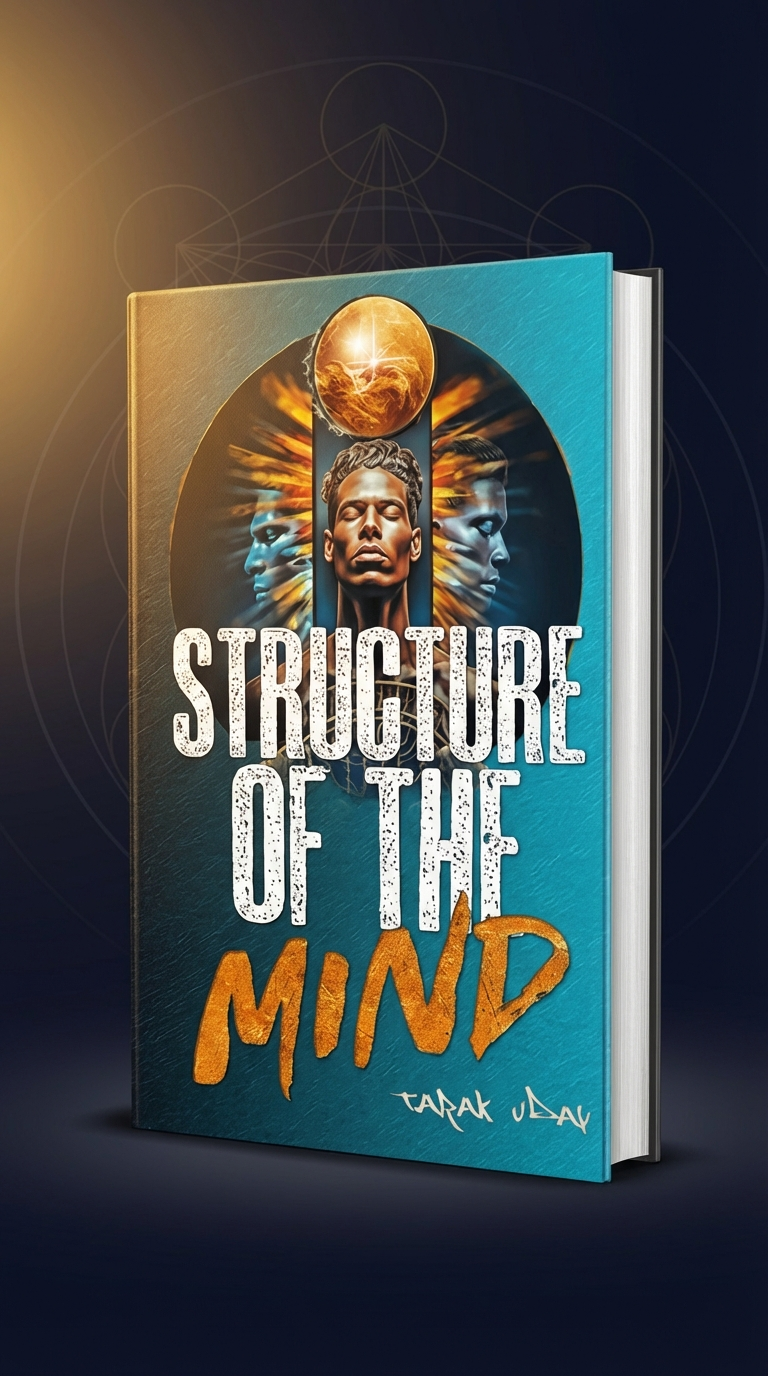
Understand Your Own Mind
"Structure of the Mind" reveals the three divisions of mind, seven levels of consciousness, and powers of mind that most people never learn to develop.