
Parent in Dreams: What Your Subconscious Is Really Telling You
The parent in your dream is not your parent. It is the part of you that decides what you are allowed.
You moved out twenty years ago. You have your own money, your own house, your own opinions about how a life should be run. And last night your subconscious mind put you back in the kitchen, being told what to do by a parent, and some part of you went right along with it.
Nearly everybody reads that dream as unfinished family business. Something you never said. Something they did. A therapist's worth of history rising up in the dark. And there may be real history there — but that isn't what the dream is about, and treating it that way is why the dream keeps coming back.
Your subconscious mind has no access to your mother or your father. It has access to you. When it puts a parent on screen, it is not reporting on a relationship. It is reporting on an authority that lives inside you and is still issuing instructions.
In the Universal Language of Mind, a parent in a dream represents the authority within your own mind — the part of you that produced a belief and still enforces it. Your actual parents are cast because they are the fastest image your mind has for authority. The dream is about who is currently in charge of you, and by what right.
Why does your subconscious mind still cast your parents decades after you left home?
Because casting is about function, not affection.
Every night your subconscious mind renders the state of your inner development as a picture. It doesn't use words. Words belong to the conscious mind and they're local — English, Hindi, Portuguese — and the subconscious mind is older than any of them. It uses images, and it selects each image by what that image does. Tarak Uday calls this the Universal Language of Mind, and the rule underneath the entire system is that form follows function.
So ask what a parent does. A parent produces. A parent sets the standard, defines what is allowed, and hands down the rules by which everything after gets judged. That's the function, and it isn't limited to people who raised you. It describes any authority inside you that originates a belief and then enforces it.
Your mind uses your actual parents for this because they are the strongest, earliest, most fully rendered image of that function you own. The casting is efficient, not sentimental. When your mind needs to show you an internal authority, it reaches for the file that loads fastest.
The parent in your dream is not your parent. It is the part of you that decides what you are allowed.
What does a parent actually mean in the Universal Language of Mind?
It means origin and authority in the same figure — the aspect of you that gave rise to a way of thinking and still holds jurisdiction over it.
Most of the rules you run on were installed before you were old enough to evaluate them. What is safe. What is worth doing. What kind of person you are. How much you're allowed to want. Those weren't decisions, they were inheritances, and your conscious mind rarely goes back to audit them because they don't feel like beliefs. They feel like facts about the world.
A parent dream is your subconscious mind opening that file. It shows you a rule that is still governing you, personified as the authority that issued it. That's why these dreams so often feel oddly ordinary — a conversation, a kitchen, an instruction — while carrying a weight far past the scene. The weight belongs to the rule, not the room.
So the useful question is never what did my parent want from me. It's which rule of mine was on screen, and do I still endorse it as an adult who can now evaluate it.
So what is the difference between dreaming of your mother and your father?
They're different departments of the same authority, and the distinction is precise.
In the Universal Language of Mind the mother figure represents the subconscious aspect of your mind — the receptive, formative part that takes in what you give it and produces from it. The mother in your dream is telling you about your inner life: what you have been feeding yourself, what is being nurtured, what is being starved. A critical mother is your own inner receptivity turned against what you produce. A mother who feeds you is the same faculty being generous with you.
The father figure represents the conscious aspect — the directing, outward-facing part that makes decisions and applies will to the world. A father in your dream reports on your relationship with your own authority to act. A father who withholds approval is your conscious mind refusing to authorise your own choices. A father who is proud is that authorisation being granted.
And when both appear together, the dream is showing you the working relationship between your conscious and subconscious mind. Watch how they treat each other in the scene, because that is exactly how those two parts of you are currently getting along. Parents arguing in a dream is not a memory. It's a report of internal division between what you have decided and what you actually feel.
These rules are still running whether you can name them or not. CHITTA reads your dreams in the Universal Language of Mind and shows you which inherited authority is still issuing instructions, starting with last night's dream. That's where the audit begins.
What does it mean when the parent is angry, absent, or has died?
Each of those is a different reading, and none of them is about your family's future.
An angry or punishing parent shows an internal authority that has become hostile to you. The rule is no longer just governing, it's attacking. This is what an inherited standard looks like when you've outgrown it but haven't retired it — you now routinely violate a rule you still believe in, so the authority that holds the rule turns on you. The dream is showing you the collision, not accusing you of anything.
An absent parent, one you're looking for and can't find, reports a missing authority. Some area of your life has no standard, no one setting direction. People often read this as abandonment when it's really a vacancy. Something in you needs to take the decision and nothing currently has the authority to make it.
A parent who has died in waking life but appears alive in the dream is not a visitation and it is not unresolved grief by default. Death in this language means change, so a living parent in the dream usually means that authority is still very much operating in you. The rule outlived the person. That's worth knowing, because you may have assumed it was buried with them.
And a dream where the parent dies is almost always constructive. It reports the ending of an authority's rule over you — a belief you inherited finally losing jurisdiction. Unsettling to experience, and one of the healthier things this symbol does.
Why do you become the parent in some of these dreams?
Because you've taken authorship, and the dream is confirming the handover.
When you're the parent in the dream — instructing, protecting, deciding for a child — the subconscious mind is showing you that you now hold the authority in the area the dream is describing. Look at the child, because that's the aspect of you being governed. Whatever that child needs, wants, or fears is the part of you currently under your own management.
Notice how you treat them. Most people are startled by their own tone here. If you're harsh with the child, you have inherited the exact authority you spent years resenting and are now running it on yourself. If you're patient, a genuine change has taken hold. The subconscious mind reports this without comment, and it's some of the most direct feedback you will ever get about how you actually treat yourself.
There's a version of this that catches people off guard, which is parenting a child who is clearly you at a specific age. The age is not decorative. Your subconscious mind chose it because that is when the rule under discussion was installed. Six is not the same message as fifteen. Go and find out what was happening then — not to relive it, but because the aspect of you that got frozen at that age is the one currently asking for direction.
And if you're a parent to a child you don't recognise, the aspect is new. Something you've developed recently is now under your authority and hasn't been named yet. That's the healthiest version of this dream. It means you're producing something you weren't producing a year ago, and the only reason it has no face is that you haven't decided what to call it.
How do you read a parent dream tonight?
Write it down before you move, while the specifics are still yours. Who was there, what was said, where it happened, and what you felt about it in the dream rather than what you feel about it now.
Then find the instruction. Almost every parent dream contains one — something you were told, expected to do, judged for, or denied. State it as a plain rule, in the second person, the way it lives in your head. You should always. You are not allowed to. People like us don't.
Now do the audit, because this is the whole point. Ask three things about that rule. Where did it come from? Is it true? And is it mine? Most of what governs you was adopted before you had the capacity to consent to it, and adopting is not the same as choosing. A rule you re-examine and keep becomes genuinely yours for the first time. A rule you re-examine and drop stops spending you.
Then look at your own age in the dream. If you were a child while the parent was adult-sized, you are still operating from a position of no standing in that area — you have the facts of an adult and the authority of a kid. If you were your current age and the parent had shrunk, the transfer has already happened and you're catching up to it. So many people are running a live authority they outgrew years ago simply because nobody sent the notice.
Then check the setting, because it names the department. The childhood home puts the rule in beliefs about who you fundamentally are. A workplace puts it in what you produce and what you're worth. A car puts it in the direction your life is currently travelling and who has the wheel.
Do that honestly and the dream stops repeating, which is how the subconscious mind signals that a message has landed. It has no interest in reminding you about your childhood. It's showing you an authority you're still obeying, so that you can decide, as an adult, whether it still deserves the office.

Frequently Asked Questions




LUCID
You've tried every lucid dreaming technique. Most miss the root cause. LUCID reveals what they all skip.
Understand Your Own Mind
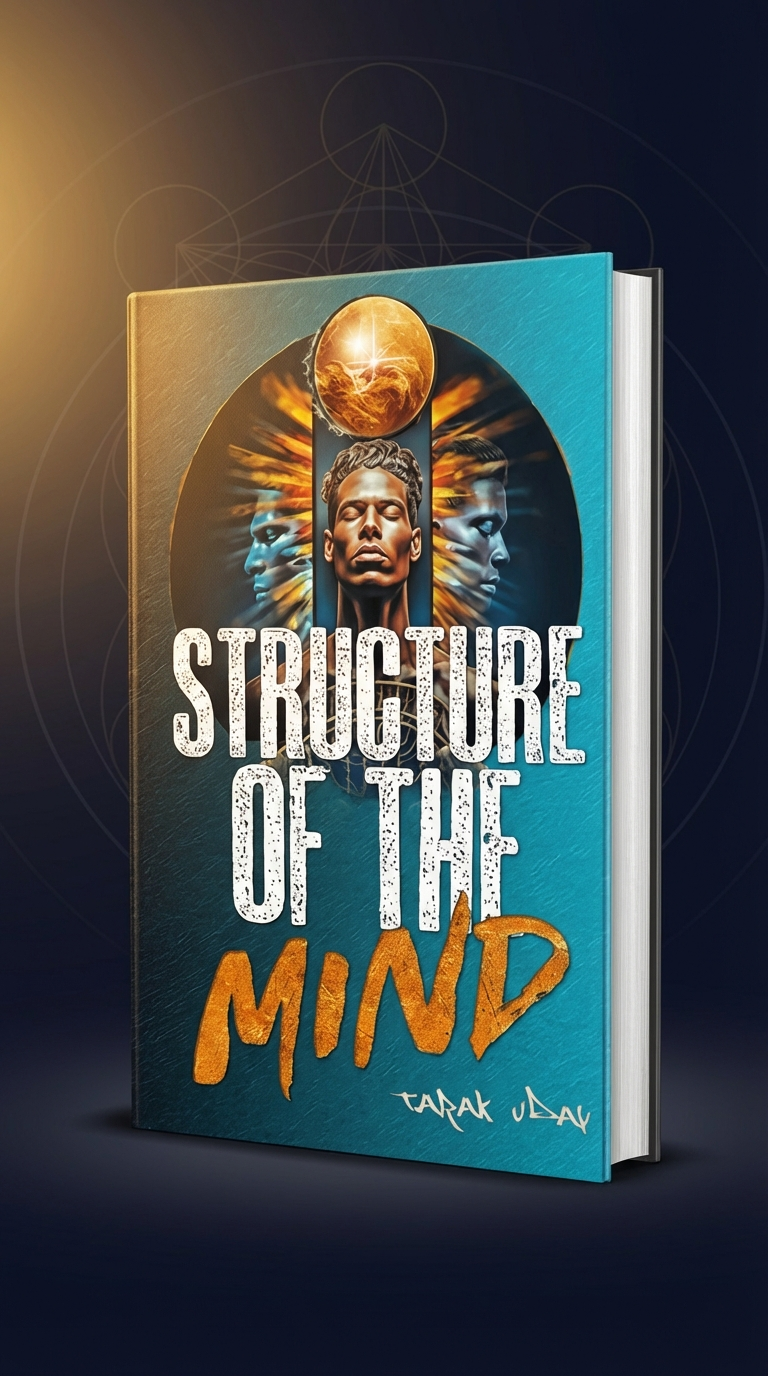
"Structure of the Mind" reveals the three divisions of mind, seven levels of consciousness, and powers of mind that most people never learn to develop.