
Prison in Dreams: The Walls You Built and Still Patrol
It was never your job or your city. A limitation that follows you through every change was never located in any of them.
A prison in a dream represents limitations and personal limiting beliefs. In the Universal Language of Mind, places represent states of mind — and a prison is the state of mind built by beliefs that have been restricting you for a long time. Not a bad week. A structure, with walls and guards and routines, that you built and now live inside.
So the answer you've already been given is that you feel trapped. Trapped in your job. Trapped in your relationship. Trapped in your city. Every dream site says it, most creators repeat it, and it's the single most common thing people are told about this dream.
And it's not wrong so much as it's useless. Let's take it apart.
What Does It Mean to Dream About Being in Prison?
You dreamed you were locked up. Maybe you knew why, maybe you didn't. Maybe you were waiting for release, or trying to escape, or just sitting in a cell with the strange calm those dreams sometimes have.
And you woke up and looked around at your actual life for the cage. That's the reflex the popular reading trains into you: find the external thing that's holding you. Scan the calendar, the lease, the org chart, the relationship. Somewhere out there is the thing with the keys, and once you identify it you can start planning your way out of it.
According to Tarak Uday's Universal Language of Mind, every location in a dream is a state of mind. A house is a state of mind. A school is a state of mind. And a prison is the state of mind of being restricted — which means it travels with you.
That's the part the "you feel trapped" answer misses completely, and the miss is expensive.
Why Is the Popular "You Feel Trapped" Answer Not Enough?
Because it points at the wrong object, and pointing at the wrong object produces the wrong action.
If your prison dream is about your job, the solution is to quit. If it's about your city, the solution is to move. So people quit. People move. People end relationships. And then, somewhere between eight months and two years later, the prison dream comes back — same cell, different address.
I've decoded thousands of these and that returning dream is the tell. Because a limitation that follows you across a career change and a move and a new relationship was never located in any of those places. It was in the belief you carried into all three.
So the popular reading isn't a lie. It's a diagnosis that stops one layer too early — and stopping there costs people years, because they keep rearranging the furniture and never touch the walls.
The dream is more precise than that. It didn't show you a cage, or a trap, or a locked room. It showed you an institution.
And that precision is deliberate. Your subconscious mind had every restricting image available to it — a locked door, a rope, a hole in the ground, a wall. It picked the one image that comes with staff and paperwork and a sentence length. That choice is the message, and the popular reading throws it away.
Here's the test if you want to know which one you're dealing with. Imagine the external thing is gone tomorrow. The job, the city, the relationship — vanished, clean slate, no consequences. Now ask honestly what you'd do on Monday.
If the answer arrives instantly and you can picture it in detail, the restriction really is situational, and you should go handle it. But if the answer is vague, or if you find yourself listing reasons the new thing wouldn't work either — that's the prison. It came with you into the hypothetical, which is a place your circumstances can't reach.
Why Does the Universal Language of Mind Call a Prison a Belief System?
Look at what an actual prison is, structurally, because form and function is where every symbol gets its meaning.
A prison isn't one wall. It's walls plus guards plus fences plus schedules plus rules plus paperwork plus a whole staff whose job is keeping the arrangement running. It's a system, and each part reinforces the others. The wall alone wouldn't hold anybody. The system does.
That's exactly how deeply embedded limiting beliefs work inside a mind. You don't just hold one belief that "people like me don't do that." You hold that, plus a belief about what would happen if you tried, plus a memory you've curated as evidence, plus a story about why the people who did it had advantages you don't. Each belief supports the next. Together they make an infrastructure that feels less like a belief and more like a description of reality.
And here's the detail that makes the symbol land. A prison has a longer sentence than a jail. That's not decoration — it's the specific reason the mind chose that image. These aren't surface doubts you picked up last month. These are entrenched, load-bearing, years-old.
What's the Difference Between a Jail Dream and a Prison Dream?
People use the words interchangeably in waking life. Your subconscious mind doesn't.
A jail is short-term holding. In a dream it points at a temporary restriction — a doubt you're currently sitting in, something recent, something with an obvious end date. Uncomfortable, but shallow.
A prison is the long sentence. It points at something structural that's been running for years and has built its own supporting systems. When your dream specifically gives you a prison — guard towers, fences, a compound rather than a room — it's telling you the restriction is deep and won't yield to a quick mindset shift or a motivational weekend.
That distinction matters because it tells you what kind of effort is actually required. You don't dismantle an institution with enthusiasm. You dismantle it methodically, one supporting belief at a time.
Find out which belief built the walls
CHITTA decodes your dreams through the Universal Language of Mind — the same form-and-function framework behind this article. Symbol by symbol, mechanism by mechanism.
Decode Your Dream Now →What Do the Different Prison Dreams Mean?
The scene tells you where in the system you currently are.
Being imprisoned without knowing the charge
You're operating under a limitation you never consciously agreed to. Most limiting beliefs are inherited rather than chosen — absorbed young, never examined. This dream is asking you to find out what you were actually convicted of.
Trying to escape
You're pushing against the limitation without dismantling it. Escape attempts in dreams often correspond to periods of frantic effort in waking life — working harder inside the same belief rather than questioning it. Effort inside the walls doesn't move the walls.
Visiting someone in prison
Everyone in a dream is an aspect of you. So a part of yourself is imprisoned while another part is free and aware of it. Ask what one word describes the person behind the glass — that's the quality in you currently restricted.
Being released
A belief has genuinely dissolved. These dreams usually arrive after a period of quiet inner work, and they often feel anticlimactic. That's normal. Release doesn't feel dramatic because the walls were never made of anything solid to begin with.
A prison that's comfortable, or one you don't want to leave
This is the most important version in the whole set. The limitation is providing something — safety, an identity, a reason. A belief that protects you from risk is genuinely doing you a service, which is exactly why it's survived this long.
Being a guard, or working in the prison
You're actively maintaining the restriction on yourself. Some aspect of you is invested in keeping the system running, usually because the system is preventing a specific failure you're afraid of.

Bindu says: "You've been looking for the person who locked you in. Check the uniform. You've been walking the perimeter every night for years."
How Do You Actually Dismantle the Prison?
Awareness first, and then structure. Here's the practice.
Write the limitation as one sentence, in the exact wording your mind uses. Not the polished version — the ugly interior one. "I'm not the kind of person who does that." Get it on paper, because a belief you can read is already weaker than one you can only feel.
Now list what holds it up. For each supporting belief, ask two questions: when did I first believe this, and what actually happened that made me believe it? Almost always you'll find a single event, often from childhood, that got generalized into a rule about your entire life. One data point promoted to a law.
Then challenge the anchor belief — the one holding the rest. Not with an affirmation. With a counter-example from your own experience. Find the one time you did the thing you say you can't do. It exists. Everybody has one, and everybody has explained it away as luck.
Then work outward, dismantling each supporting belief one by one. This is slow, and it should be. You built the institution over years and it comes down over months, and anyone who tells you otherwise is selling a weekend.
Watch what your dreams do while you work. The scene will change before your circumstances do — from prison to jail, from jail to a room with an open door. That progression is the most reliable feedback you'll get, because it's coming from the part of you that isn't performing.
And notice how this connects. A prison is built out of self-sabotaging thoughts that have accumulated into structure — poison is the material, prison is the architecture. Dismantling it takes real commitment to yourself, and it goes faster when the parts of you under renovation are met with warmth rather than more criticism.
Freedom is possible. It just isn't sudden, and it was never located in your circumstances. Begin with awareness. The walls come down from the inside because that's the only side you've ever been on.
Your subconscious is writing to you every night
Log tonight's dream in CHITTA and get a full Universal Language of Mind interpretation — no generic dream dictionary, no guesswork.
Decode Your Dream Now →Tarak Uday is the creator of CHITTA and the author of Life is But a Dream and Lucid, where the three divisions of mind and the form-and-function method behind the Universal Language of Mind are laid out in full.

Frequently Asked Questions



LUCID
You've tried every lucid dreaming technique. Most miss the root cause. LUCID reveals what they all skip.
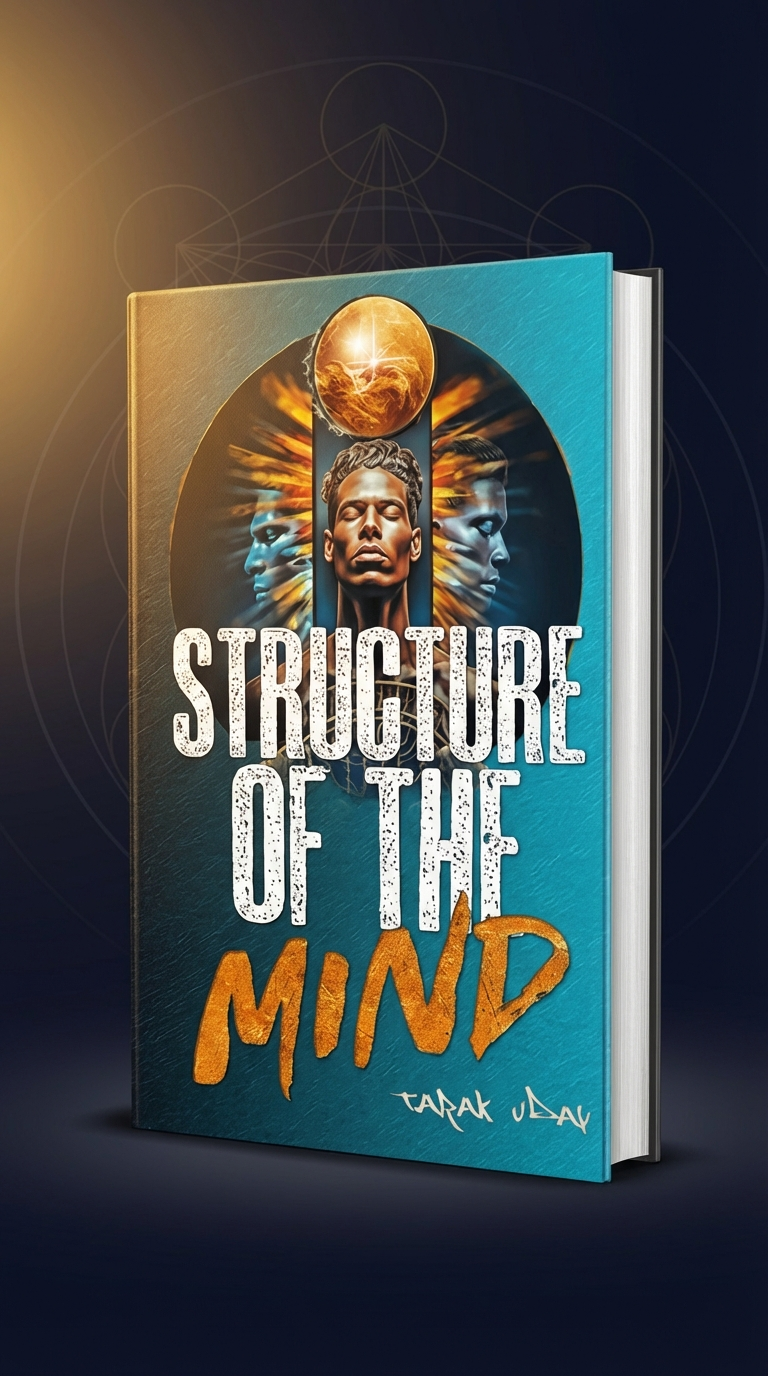
Understand Your Own Mind
"Structure of the Mind" reveals the three divisions of mind, seven levels of consciousness, and powers of mind that most people never learn to develop.