
Trataka (Candle Gazing): What It's Actually Training
You came for a vision and got a headache, so you quit. The flame was never the point. The paper next to it was.
Trataka is candle gazing: you sit with a flame at eye level, put your attention on it, and hold it there. What the practice trains is not your eyesight, and it is not a third eye. It trains concentration — your ability to place attention where you choose and keep it there. That one faculty decides which of your thoughts receive creative energy, which makes the flame a piece of gym equipment rather than an altar.
So most people quit inside a week. They arrived for a vision and got a headache, and nothing in what they read prepared them to be bored by a candle.
Why Does Everyone Get Trataka Backwards?
Because the promise got attached to the wrong end of the practice.
Search the practice and you get third eyes, psychic sight, afterimages read like tea leaves. All of it points your expectation at what you will SEE. And seeing is the one thing in the drill that requires no training at all — your eyes were going to do that anyway. The instruction that actually carries the practice is the dull one nobody quotes: notice when you have left, and come back.
Tarak Uday teaches this through the Universal Language of Mind as a matter of structure rather than mysticism. The power of the conscious mind is reasoning, and reasoning has three keys: memory, attention, and imagination. Memory builds the image of the past. Imagination builds the image of the future. Attention is the only one of the three that operates in the present moment, which is where creating actually happens. Of the three keys it is the most vital, and it is the one you have never deliberately loaded.
So an ancient practice survived for centuries because it works, then got marketed on its least useful feature. The flame is a fixed point. Any fixed point would do. What makes Trataka worth your ten minutes is that a flame is interesting enough to hold you and boring enough to lose you — which is exactly the condition under which drift becomes countable.
What Are You Actually Doing When You Stare at a Flame?
You are running a load test on an instrument you have used every hour of your life without once inspecting.
Set it up honestly. A table, a candle at eye level, a timer for ten minutes, and a sheet of paper with a pen beside it. Light it. Put your attention on the flame. That is the whole instruction. Blink when you need to blink — the version of this that has you holding your eyes open until they stream is confusing strain with progress.
Then the real work starts, and it is not glamorous. Every time you notice your attention has wandered — that you are thinking about a message you did not answer, an itch on your shoulder, a conversation from Tuesday — you make a tic mark on the paper. Acknowledge it. Take a breath. Put the attention back on the flame. Hold. Repeat until the timer ends.
Most people are disturbed by their first sheet of paper. Forty marks. Fifty. Sixty. Ten minutes in front of a single point of light and the attention was dragged off it every ten to fifteen seconds by thoughts nobody chose, sounds nobody was listening for, itches nobody requested. The paper does not flatter you and it does not lie.
That confrontation is the point of the first week. You cannot train a faculty you believe is already fine. Almost everyone believes their attention is basically fine, right up until they count it.
Why Does the Tic Mark Matter More Than the Flame?
Because the mark is the rep, and it is also the measurement. Nothing else in the drill is both.
Read what a mark actually records. It is not a record of failing to concentrate. It is the record of a moment when your awareness caught your attention in the act of leaving and pulled it back to a chosen object. That catch-and-return is the entire mechanism of concentration. So a session with sixty marks contains sixty repetitions, and a session with eight marks contains eight. The beginner does more work, which is exactly what happens in any gym on any first day.
What you are watching for is the slope, not the score. Fifty-two in week one, thirty-eight by week three, nineteen by week six — that curve is the only evidence that means anything, and you cannot see a curve from inside a single session. Which is why the sheet of paper is not optional. Held in memory, a good Thursday and a bad Thursday feel identical by Sunday.
There is a second thing the count tells you, and it is more useful than the first. The gap between drifting and noticing shrinks long before the number of drifts does. Early on you are gone for a full minute before you realise it. Later you are gone for three seconds. Same tic mark on the page — completely different faculty behind it. The wandering is the measurement, not the failure, and reading it any other way makes people quit a practice that was working.
Your attention leaves a record at night too
What your attention fed all day shows up in what your subconscious mind builds while you sleep. Decode last night's dream and you get a second, independent read on where your attention actually went.
Decode Your Dream Now →What Does a Candle Have to Do With Manifestation?
Everything, and this is the part the third-eye framing buries.
Energy flows where attention goes. That is not a slogan — it is the mechanism by which anything gets built. A thought given attention gains energy, and that energy drives it down through the levels of the subconscious mind until it emerges as circumstance. A thought denied attention stalls and dissolves. So attention is not a passive faculty that lets you observe your life. It is an active creative force, and every minute of it is an investment somewhere.
Now look at what an untrained attention does with that force. It scatters across hundreds of thought images a day — the worry, the rehearsed argument, the thing you want, the thing you dread, the notification. Each one receives a sliver of creative energy. None accumulates enough density to move. That is what a life feels like when nothing quite lands: not opposition, just dilution.
A trained attention does the opposite. It holds a chosen image long enough for that image to gain weight. So the person who seems to build their life deliberately and the person who seems tossed around by circumstance are usually not separated by luck or talent. They are separated by how long each of them can hold one thing.
Which reframes your ten minutes entirely. You are not staring at a candle. You are practising, under laboratory conditions, the exact motion required to hold a desire steady enough to arrive.
How Does CHITTA Accelerate This Practice?
By turning the practice into a dated record instead of a feeling, and by reading the other half of the evidence — the half that arrives at night.
The gap the teaching leaves you with is measurement. You now know the tic-mark count is the instrument, and you also know that a count living in your head is worthless by Sunday. The candle exercise is the drill; what it needs is somewhere the numbers sit still. Nineteen marks after six weeks against fifty-two on day one is a result you can act on. A vague sense that focus has been better lately is not.
The second read comes from your sleep, and it is the one you cannot fake. Dreams are real experiences occurring within the subconscious mind, delivered in the Universal Language of Mind, and what they show reports on what your attention has been feeding all day. The CHITTA dream journal is where that record accumulates, the interpretation engine reads it as mechanism rather than omen, and the symbol dictionary is for the image that keeps coming back. As your days consolidate around chosen thoughts, the nights consolidate too — the chase imagery thins, the scenes get less crowded, the recurring intrusion loosens its grip. That shift usually shows up on the page a week or two before you feel it in the morning.
So tonight, do both halves. Ten minutes with the flame and the paper, and the dream logged and decoded when you wake.
What Should the First Three Weeks Look Like?
Unimpressive, and then quietly convincing.
Week one is the confrontation: a high count, some irritation, and the discovery that ten minutes is longer than you thought. Week two the count usually goes UP before it goes down, because you are getting better at catching drift you previously slept through. That is progress wearing a disguise, and it is where most people quit.
By week three the return gets fast. You will not notice a heroic new power of focus. You will notice that you finished a page and can say what was on it, that someone got to the end of a sentence with you still in the room, that you caught yourself mid-rehearsal of an argument that has not happened and put the attention back. None of that is dramatic. All of it compounds, because every catch is creative energy redirected from an image you did not choose to one you did.
Ten minutes on the flame, one dream on the page
Run the drill tonight and log what your mind builds afterward. The count tells you what your attention did; the dream tells you what it fed.
Start Your Dream Journal →
Frequently Asked Questions




LUCID
You've tried every lucid dreaming technique. Most miss the root cause. LUCID reveals what they all skip.
Understand Your Own Mind
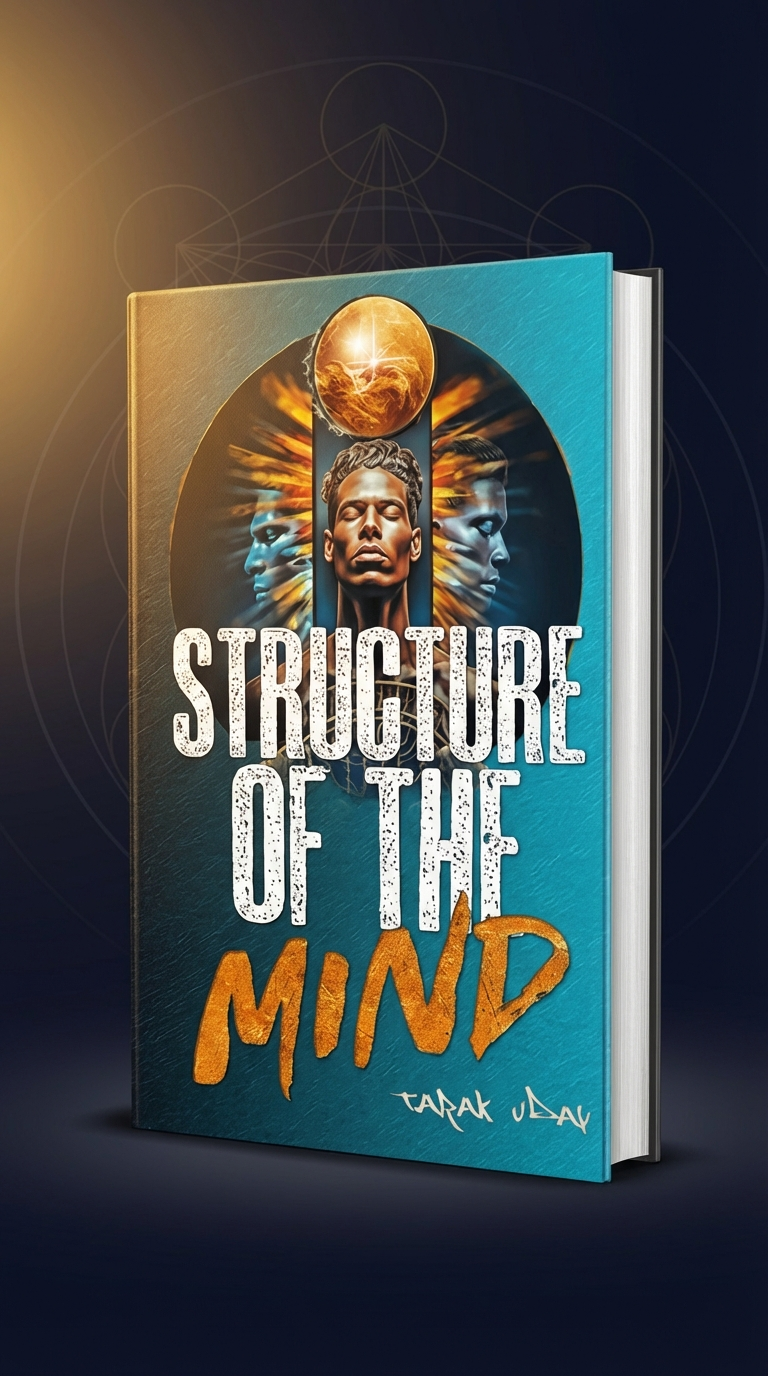
"Structure of the Mind" reveals the three divisions of mind, seven levels of consciousness, and powers of mind that most people never learn to develop.