
What Does It Mean to Dream About a Baby You Don't Recognize


There's a baby in your arms and you have never seen this child before. Not your kid. Not your sister's kid. Not anyone's kid that you could name if someone asked you at the door. And yet in the dream you're holding this baby the way you'd hold something that belongs to you, with that specific, wordless competence, and nobody in the dream thinks this is strange except you.
Then you wake up. And the first thing your waking mind does is run the checklist. Am I pregnant. Is someone I know pregnant. Is this about wanting children, or not wanting them, or being late, or being forty. The checklist is fast and it's confident and it is pointing you in exactly the wrong direction.
Because your subconscious mind was not talking about a baby. In the Universal Language of the Mind, a baby means a new idea — something you have recently created inside yourself that is alive, dependent, and not yet able to stand on its own.
So the dream isn't a fertility report. It's a status update on something new in you. And the fact that you didn't recognize the child is not a detail your mind threw in for atmosphere. It's the loudest part of the message.
A baby in a dream is a new idea, newly born in you. When you don't recognize the baby, your subconscious is reporting that the new development is already alive and already yours — and you haven't claimed it yet.
What does a baby actually mean in the Universal Language of the Mind?
The Universal Language of the Mind runs on form and function. Whatever a thing does in the physical world is what it means in the inner one, for every dreamer, in every culture, in every century. That's what makes the language universal rather than personal.
So look at what a baby actually does. A baby is new. A baby is entirely dependent — it cannot feed itself, move itself, or protect itself. A baby has enormous potential and almost no capacity yet. And a baby was created by you, out of you, whether or not you were paying attention when it happened.
Move all of that inward and you have the exact profile of a new idea. Something you conceived recently. Something that will die of neglect if you don't tend it. Something that carries far more possibility than it currently demonstrates. Tarak Uday teaches this as one of the load-bearing symbols of the entire dream vocabulary, because the subconscious mind produces new ideas constantly and needs a precise image to report on their condition.
This is why the emotion in a baby dream is so disproportionate to the content. You dreamt about an infant for ninety seconds and woke up with your chest tight. That mismatch is the signal. The image was small. What it was describing — something newly alive inside you, and your relationship to it — is not small at all.
Why is the baby in your dream a stranger?
Here is where most people lose the thread. They decide the unfamiliar baby must represent an unfamiliar person, so they start scanning their life for who it could be. Wrong direction. In your dream, every character and every object is a part of you. There is no cast. There's only ever one person on that stage.
So an unrecognized baby is a new idea you have not yet recognized as yours.
That is a real and common condition. You have started thinking differently about your work, or your marriage, or what you're willing to tolerate, and the shift has already happened at the subconscious level — but your conscious mind hasn't caught up and filed it under "me" yet. The idea is born. You just haven't looked at it directly and said, I made this.
You are not dreaming about a stranger's child. You are dreaming about your own new thinking, and you haven't admitted yet that you're the one who conceived it.
Notice how you felt about the baby in the dream, because that's the second half of the report. If you felt calm and protective, your subconscious is telling you the new development is healthy and you're already caring for it well, even unconsciously. If you felt panicked, or resentful, or like you'd been handed something you never asked for, that's the mirror. It's showing you exactly how you're treating your own new idea in waking life — as an imposition rather than a creation.
What does it mean to hold, feed, or lose an unfamiliar baby?
The verb in the dream is where the specific instruction lives. The baby tells you what the subject is. What you do with the baby tells you what your subconscious thinks about how you're handling it.
Holding an unfamiliar baby means you're in contact with the new idea and supporting it, but haven't yet integrated it. You're carrying something you can't name. That's an early, healthy stage — the new thinking has your attention even though you can't articulate it yet.
Feeding the baby means you're actively giving the new development what it needs: time, thought, attention, resources. The subconscious uses feeding to report on nourishment, so if the feeding goes well, you're doing right by whatever is new in you. If the baby refuses the food, examine whether you're giving the new idea the wrong kind of attention — worry instead of work is the most common substitution.
Losing the baby, or setting it down and forgetting it, or realizing halfway through the dream that you left it somewhere, is the sharpest version of this dream and the one worth acting on fastest. It reports neglect. Something new started in you and you stopped tending it. The dream is not a punishment and it's not a prediction of loss. It's your own inner reporting system flagging an abandoned creation while it's still recoverable.
CHITTA reads your dreams in the Universal Language of the Mind — the same symbol system used here — so you can see what your subconscious is reporting instead of guessing at it. Decode your dream free.
How do you find the new idea this baby is reporting?
Work backwards from timing, because the subconscious mind is precise about age. A newborn means something conceived within roughly the last few weeks. An infant that can sit up or babble means a development that's been alive for months and has started showing itself.
Tarak Uday takes this further in Life Is But a Dream, his guide to reading every dream in the Universal Language of the Mind.
So date the dream, then look at that same stretch of your waking life. Not for events — for changes in what you think. What did you start believing recently that you didn't believe before? What did you catch yourself saying out loud that surprised you? What are you doing differently that nobody has commented on, including you?
The answer is almost never dramatic. It's usually something like: you stopped defending a person you always used to defend. You started resenting a routine you used to be fine with. You had one clear thought about leaving, or starting, or asking, and then you put it down and went back to work. That thought is the baby. It's alive, it's yours, and it has been waiting in a room you don't visit.
And check the setting, because your subconscious rarely wastes a background. A baby handed to you in your own home means the new idea belongs to your established life and your existing identity. A baby found in an unfamiliar building means the new thinking belongs to a part of you that you don't spend much conscious time in, which is usually why it took a dream to get your attention in the first place.
If nothing surfaces, don't force a symbol onto your life. Write the dream down exactly as it happened and watch for the baby to come back. Recurrence is how the subconscious raises its voice, and an idea that matters will be reported again, usually older and more mobile each time.
What should you do the morning after this dream?
Claim it. That's the whole action, and it's smaller than it sounds. The dream said you have something new and haven't acknowledged it as your own, so the correction is acknowledgment — the deliberate act of naming the new thinking and admitting you're its author.
So write one sentence in your journal that begins with "I have started to think that." Finish it honestly, even if the ending is uncomfortable. Then write the second sentence: what this new idea needs from you this week to stay alive. One concrete thing. A conversation, an hour, a search, a question you've been avoiding asking.
That's how you feed it in waking life. The subconscious mind responds to action, not to insight, so understanding the dream changes nothing on its own. Doing one thing for the idea it flagged changes everything, and you'll usually see the confirmation in the dreams that follow — the baby recognized, the baby growing, the baby walking on its own.
Your mind built an entire scene to hand you something you already made. That's not mysticism. That's the metaphysical mechanics of a subconscious mind doing its job, reporting on your inner condition in the only language it has. The child was never a stranger. You just hadn't looked at it long enough to see the resemblance.
Frequently Asked Questions



Books by Tarak Uday

Learn The Language Your Dreams Speak
"Life Is But a Dream" teaches the Universal Language of the Mind — how to read any dream symbol by what it is and what it does, so every dream becomes a message you can act on.

LUCID
You've tried every lucid dreaming technique. Most miss the root cause. LUCID reveals what they all skip.
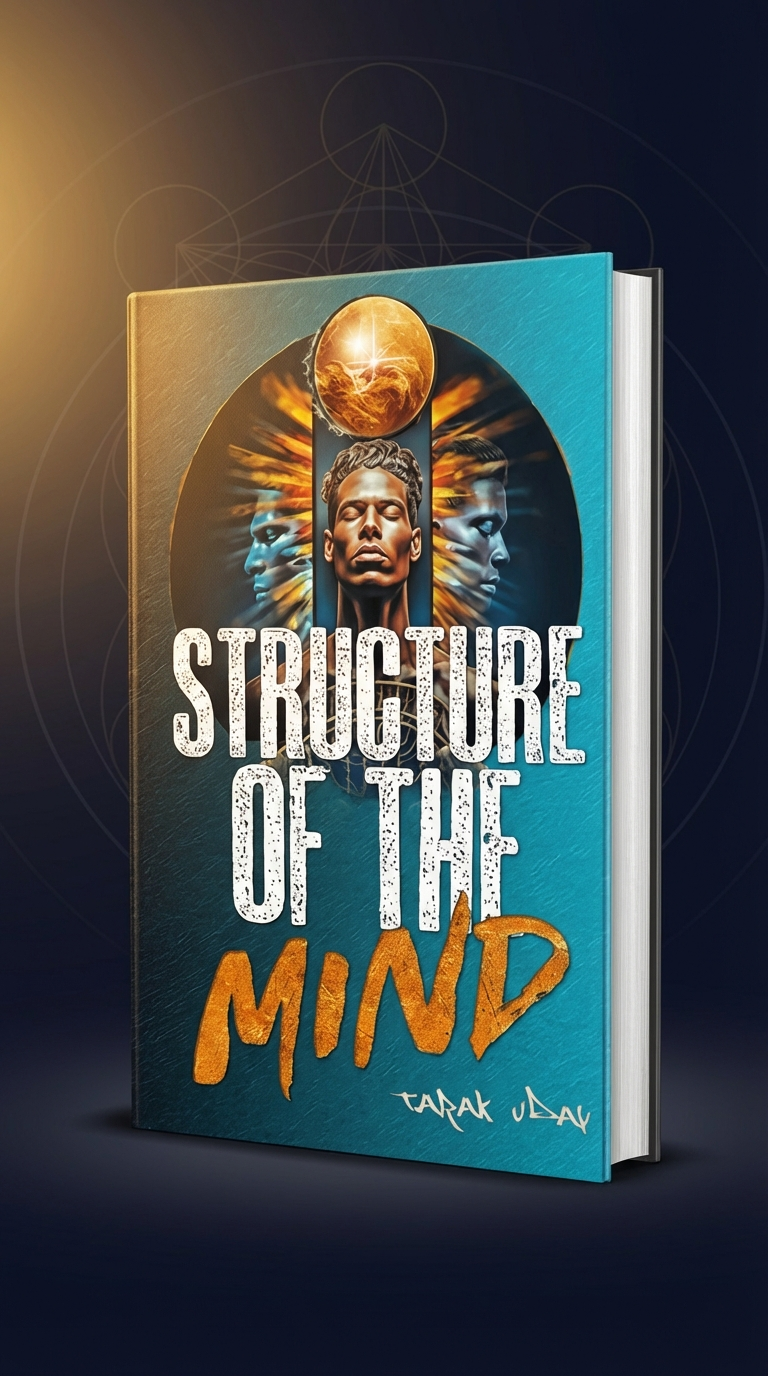
Understand Your Own Mind
"Structure of the Mind" reveals the three divisions of mind, seven levels of consciousness, and powers of mind that most people never learn to develop.