
Eye Dream Meaning: It's About Perception, Not Surveillance
So you keep seeing eyes in your dreams — sometimes one, sometimes many, sometimes glowing or watching from the dark. Here's what your subconscious is actually pointing at.
So you've been seeing eyes in your dreams. One eye, two eyes, eyes peering from the dark, glowing eyes, eyes that don't blink, eyes that follow you across the scene. You woke up unsettled. You searched it. Every dream site told you the same thing — someone is watching you, you feel exposed, you're being judged, your privacy feels invaded. Maybe something more occult and ominous. Here's the problem with all of that. None of it actually answers what you saw.
In the Universal Language of Mind, an eye in a dream represents your perception and awareness — your ability to see your life clearly, both the world around you and the inner state running underneath it. Eyes are not about surveillance. They are not about being watched by something external. They are about how your own consciousness is currently looking at itself. Once you understand the form-and-function reasoning, every eye dream you've ever had starts decoding itself.
Eyes Don't Mean What You Think They Mean
So here's the dream-site answer everybody gets handed. Eyes mean someone is watching you. Eyes mean paranoia. Eyes mean you feel judged. Eyes mean a spiritual presence is observing. Some sites get even more dramatic and tell you it's a warning about a hidden enemy or a forecast of conflict ahead.
Stop for a second and think about what you actually experienced. You were inside your own subconscious mind. You saw an image so specific, so detailed, so emotionally charged that you woke up still thinking about it. And the explanation you were given was — "someone is watching you"? That doesn't account for any of the form. It doesn't explain why eyes and not ears. It doesn't explain why clear eyes feel different from clouded eyes. It doesn't explain why a single eye carries a different charge than two. It's a vague projection of waking-life anxiety onto a precise inner image.
look, the subconscious doesn't communicate in vague threats. It communicates in form and function. Every image it shows you is engineered to match the function it represents. To decode the eye, you have to ask what an eye actually does.
What Eyes Actually Are in the Universal Language of Mind
So here's the form and function. An eye is the organ through which you perceive the world. It takes in light, processes it, and gives you the experience of seeing. In the Universal Language of Mind — the framework Tarak Uday developed and writes about in Life is But a Dream — every dream symbol matches the function of the thing it pictures. The eye does perception. So in your dream, the eye represents perception.
Not surveillance. Not judgement. Not the metaphysical Other. Your perception. Your awareness. How you are currently seeing your own life, your relationships, your inner state, your beliefs about yourself. The eye in the dream is a snapshot of how clearly — or how distortedly — your mind is currently operating.
This is why the eye is such a frequent symbol when consciousness is shifting. When your awareness expands, eyes show up. When your perception is being clouded by fear or assumption, eyes show up. When the third-eye center — the brow chakra — is activating during a phase of inner work, eyes show up. The image arrives the moment perception itself becomes the question.
Reading the Condition of the Eye
So this is where the diagnostic gets specific. The eye isn't one thing. Every detail layers meaning onto the base symbol. The condition of the eye in your dream is the literal status report on how your perception is currently functioning.
A clear, open, bright eye reflects strong perception. You are seeing your life with clarity. You're tracking what's happening, you're aware of your own patterns, you're catching the signals before they have to escalate. This is the eye of a consciousness that's awake.
A clouded, blurry, or damaged eye reflects impaired perception. There's something in your life right now you're not seeing clearly. It might be a relationship dynamic you've been minimizing, a pattern you keep repeating without registering it, a belief you've been carrying that's distorting what you take in. The dream is pointing directly at the blind spot.
An eye that's swollen, infected, or watering signals that perception is being affected by emotional pressure. Something feels too charged to look at directly. The conscious mind is flinching away from what the subconscious is asking it to see. Notice this — the eye showing up wounded usually means the wound is in how you're currently looking, not in what you're looking at.
A closed eye or an eye that won't open reflects active unawareness. You are choosing — usually below the level of conscious recognition — not to see something. The dream isn't accusing you. It's surfacing the choice so you can make it consciously next time. Per the Universal Language of Mind, eyes-closed is the canonical symbol for chosen unawareness.
Decode Your Eye Dream the Right Way
CHITTA reads your specific dream through the Universal Language of Mind and tells you exactly which aspect of your perception the eye was reporting on. No vague horoscope answers.
Decode Your Dream Now →The Single Eye and the Third Eye
So a lot of people specifically dream of one eye. A single floating eye. An eye in the middle of the forehead. An eye where nothing else is there. This one is rich. The single eye in a dream very often points at the third eye — the brow center traditionally associated with intuition, inner sight, and direct perception of the inner mind.
When the third-eye center is activating — through meditation, sustained dream work, concentration practice, or any sincere inner inquiry — it can show up in dreams as a single eye. Your subconscious is flagging the development. It's saying: this center is coming online. Pay attention to it.
The position and behavior of that single eye is the next layer of detail. Is it looking at you or looking outward? Is it open and steady, or is it darting? Is it glowing, or dark? Each of those details is reporting on the current state of your inner sight — the subtle perceptive faculty that operates below the level of physical seeing. Strengthen it through concentration and consistent dream recall, and you'll find the single eye keeps reappearing, each time clearer.
Eyes Watching You — and Why It's Not What You Think
So this is the most common eye-dream scenario, and it's the one most consistently misread. You're in a scene and you become aware that eyes are watching you. Sometimes from the dark. Sometimes from a crowd. Sometimes from a wall or a portrait or an animal. The waking interpretation is automatic: I feel watched, therefore something is watching me.
Here's the actual mechanic. The dreamer and everything in the dream are the same person — you. Every face, every figure, every set of eyes in the dream is an aspect of your own consciousness. So when eyes watch you in a dream, your subconscious is not reporting that you're under surveillance. It's mirroring an internal event: one aspect of you is observing another aspect of you.
That's actually a major signal of self-awareness developing. Most of the time we operate without watching ourselves. The eye-watching dream is the moment the inner observer becomes visible to you. The aspect of you that perceives is becoming a perceivable thing. That's the doorway into self-mastery, not a threat. The same mechanic shows up in mirror dreams, where you're suddenly looking at yourself looking at yourself.

Bindu says: "The eye in the dark isn't watching you. It's you, finally noticing yourself."
How to Strengthen the Inner Eye
So once you understand the eye as perception, the next move is obvious. You can sharpen it. Inner perception isn't a fixed trait. It's a faculty — and like any faculty, it gets stronger with the right practice.
Concentration is the base. The ability to hold attention on one thing without drifting is what creates clean perception. A scattered mind sees everything filtered through a hundred competing thoughts. A concentrated mind sees what's actually there. Five focused minutes a day, done with intention, starts shifting the quality of perception within weeks.
Dream recall is the multiplier. Writing your dreams down the moment you wake — before you reach for your phone, before the inner image dissolves into the day — trains your awareness to register subtler levels of mind. The more reliably you can recall a dream, the more your perception is operating across multiple levels of consciousness, not just the surface one. Tarak's book Lucid walks through the full progression.
Honest self-reflection is the directional rudder. Concentration sharpens the lens; self-honesty points it at the right thing. Ask yourself, on the days you remember an eye dream — what specifically have I been refusing to look at? Not as accusation. As inquiry. The dream is offering you the answer; your job is to stop flinching from it.
So Where Does This Leave You?
So the next time an eye shows up in your dream — single, plural, watching, clouded, glowing, blackened, looking at you or past you — you'll know what to actually look at. Not who is watching you. How you are seeing yourself.
Tarak Uday takes this further in Life Is But a Dream, his guide to reading every dream in the Universal Language of Mind.
Track them. Note the condition. Note the position. Note what you were doing in the scene when the eye appeared. Patterns will start showing up within a week. You'll see — clearly, because the eye is being clear with you — exactly where your perception is sharp and exactly where it's getting filtered through old assumptions.
The reader who treats eye dreams as paranoia stays stuck. The reader who treats them as a perception report starts seeing themselves with the precision the dream is offering.
GO WITHIN - OR GO WITHOUT.
Get the Exact ULM Reading on Your Eye Dream
CHITTA's engine reads your specific dream in the Universal Language of Mind and reports back on which aspect of your perception is being flagged. Stop guessing.
Decode Your Dream Now →Frequently Asked Questions
What does it mean to dream about eyes?
In the Universal Language of Mind, eyes in a dream represent your perception and awareness — how clearly you are seeing your own life, choices, and inner state. The condition of the eye is the diagnostic: clear eyes signal strong perception, clouded or damaged eyes signal something you are not seeing clearly.
What does it mean to dream of a single eye?
A single eye in a dream often points to the third eye — the brow center traditionally associated with intuition and inner sight. It is the subconscious flagging that your inner perception is opening or asking for attention. Notice its condition, position, and whether it is steady or shifting.
Why do I keep dreaming of eyes watching me?
When eyes watch you in a dream, your subconscious is not reporting surveillance — it is mirroring self-observation. Some aspect of you is paying attention to another aspect of you. The dream is showing that you are becoming aware of how you operate. That awareness is the doorway, not a threat.
What does it mean when eyes change color in dreams?
Color changes in dream eyes reflect shifts in the quality of perception. Bright or glowing eyes suggest expanding awareness. Dark or blackened eyes point to a perception that has been closed off or distorted. The color is not decorative — it is a precise reading of how your inner sight is currently functioning.
About the author: Tarak Uday is the founder of CHITTA and the author of Life is But a Dream and Lucid. He teaches the Universal Language of Mind — the form-and-function methodology behind every dream decoded on this site. More about Tarak.

Frequently Asked Questions


Books by Tarak Uday

Learn The Language Your Dreams Speak
"Life Is But a Dream" teaches the Universal Language of Mind — how to read any dream symbol by what it is and what it does, so every dream becomes a message you can act on.

LUCID
You've tried every lucid dreaming technique. Most miss the root cause. LUCID reveals what they all skip.
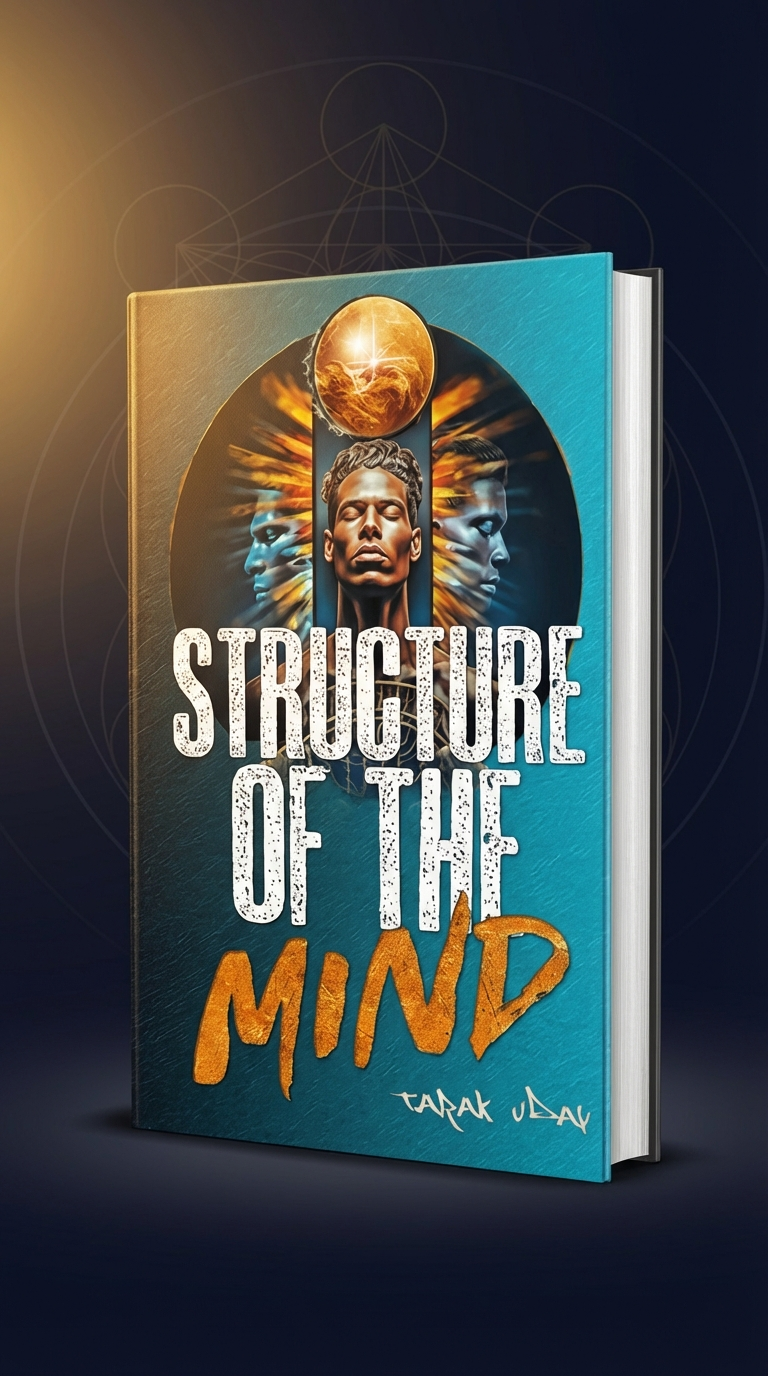
Understand Your Own Mind
"Structure of the Mind" reveals the three divisions of mind, seven levels of consciousness, and powers of mind that most people never learn to develop.