
Dad in Dreams: What the Superconscious Is Handing You


Your father was in the dream. Maybe he's been gone for years. Maybe you spoke to him yesterday. Maybe you've never met him and your mind produced one anyway, fully formed, and you knew exactly who he was.
You woke up and went straight to the family question. What does this say about him and me. What am I still carrying. And that question is so obviously the right one that almost nobody checks whether it is.
It isn't. Your dad in a dream is almost never your dad.
In the Universal Language of the Mind, Dad is the aggressive quality of the superconscious mind — the part of you that projects, supplies and delivers to the rest of the mind. It's a structural role, not a family member. Your subconscious borrowed a familiar face to show you an inner function.
Who is your father standing in for?
Images in dreams are defined by what they accomplish. That's the mechanic underneath all of this. A boat carries you across water, so a boat is your physical body and your life. Fire consumes and transforms whatever it touches, so fire is expansion of consciousness and inner purification. You read the function, and the meaning is already there — no interpretation, no cultural lookup, no guessing. That's the Universal Language of the Mind, and it's the same for every dreamer alive.
So what does a father do, structurally? He supplies. He provides, projects outward, and delivers something from a source the household doesn't produce itself. That's the function your mind is reaching for, and Tarak Uday maps it precisely: Dad is the aggressive quality of the superconscious mind, the part that supplies the rest of the mind.
Now hold on that word, because it will mislead you if you let it. Aggressive here does not mean angry, hostile, or forceful. It's a technical term for a polarity. Aggressive is the outward-moving, projecting, giving direction of energy. Its pair is receptive — the inward-moving, holding, receiving direction. Both are neutral. Both are necessary. A river is aggressive in this sense and a reservoir is receptive, and neither one is in a bad mood.
So when your dream casts a father, it's showing you the delivery mechanism of your own deepest mind — the channel through which the superconscious sends what you need into the levels of you that can actually use it.
Why does the superconscious show up wearing your father's face?
Because your subconscious is efficient, and it uses the material you already have.
It needs to communicate a specific idea: something is being supplied to you from above your ordinary awareness. It could build an abstract image for that. Instead it reaches into your own memory, finds the single most established example of a figure who supplies and projects into your life, and puts that face on the function. You recognise the face instantly, which means the message loads instantly.
Aggressive doesn't mean angry. It's a direction of energy — outward, projecting, supplying. A river is aggressive in this sense and it isn't in a bad mood.
So the face is packaging. The content is the function. And this is why so many father dreams feel emotionally loaded but produce nothing when you interrogate the relationship — you've been analysing the wrapper.
There's a version of this that catches people who had difficult fathers, and it deserves saying directly. If your relationship with your father was painful, your mind will still use his face for this role, because it uses the strongest available association and not the happiest one. That doesn't mean the dream is about the pain. It means the pain built the clearest template. The message underneath can be entirely benign, and frequently is.
What does it mean when your dad is angry, absent, or silent in the dream?
The condition of the figure describes the condition of the supply. Read it that way and these dreams stop being ambiguous.
A father who is present and giving you something — advice, an object, a direction, a hand — is the cleanest possible version. The superconscious is delivering, and delivery is being received. Whatever he handed you is worth reconstructing in detail the moment you wake, because the object carries the specifics.
A father who is angry is showing you supply arriving with force behind it. Not punishment — urgency. Your mind has been holding something you've declined to accept through gentler channels, so it turns the volume up. So the question to ask isn't what did I do wrong. It's what have I been refusing to take delivery of.
A father who is silent, turned away, or won't engage points to a channel that's currently closed. Something is available to you and isn't arriving. That usually correlates with a waking period where you've been running entirely on your own reasoning — deciding everything consciously, consulting nothing deeper. The dream isn't punishing you for that. It's showing you what it costs.
A father who is young — younger than you, or the age he was when you were small — points to a supply channel that formed early and hasn't been updated since. That's common in people who built their working relationship with their own inner guidance during childhood and never renegotiated it as adults. You're still receiving on terms set by a nine-year-old, and the dream is showing you the date on the contract.
A father who is sick or weakened is the image people find hardest, and it's rarely about his health or yours. A weakened supply channel means less is coming through than the system was built to carry. That shows up in waking life as a strange thinness — you're doing the same work, the same hours, and less of it is landing. The dream names the cause: the delivery is depleted, not the effort.
And a father who is absent, searched for and never found, is one of the most common versions of this entire category. You spend the dream looking. That's an accurate portrait of a mind that knows something should be supplying it and can't locate the channel. It's a very specific kind of tiredness, and people who have this dream usually recognise the waking version immediately.
What if your father has died, or you never knew him?
These two cases feel like they should complicate the reading. They don't, and understanding why is the fastest route into the whole framework.
If your father has died and appears in a dream, the temptation is to treat it as contact, or as grief processing, and to stop there. But the function hasn't changed. Your subconscious is still using that face to depict the aggressive quality of the superconscious, and the fact that the person is gone doesn't remove the template from your mind. So read the dream structurally first. What was he doing, what was he supplying, what condition was he in. The grief is real and it's a separate matter from what the dream is reporting.
If you never knew your father and your mind produces one anyway, that's the framework proving itself. You had no personal template, so your subconscious constructed the role from scratch, which it can only do because the role exists independently of your biography. The function is native to how a mind is built. The face is optional.
Family faces in dreams are the easiest images to misread and the most costly to get wrong. CHITTA reads your dream in the Universal Language of the Mind, separates the packaging from the function, and shows you the mechanics behind the interpretation. Try it free for 7 days and read the next family dream structurally instead of emotionally.
How is Dad different from Mom in a dream?
They're the same source and opposite polarities, and the distinction is where most of the precision lives.
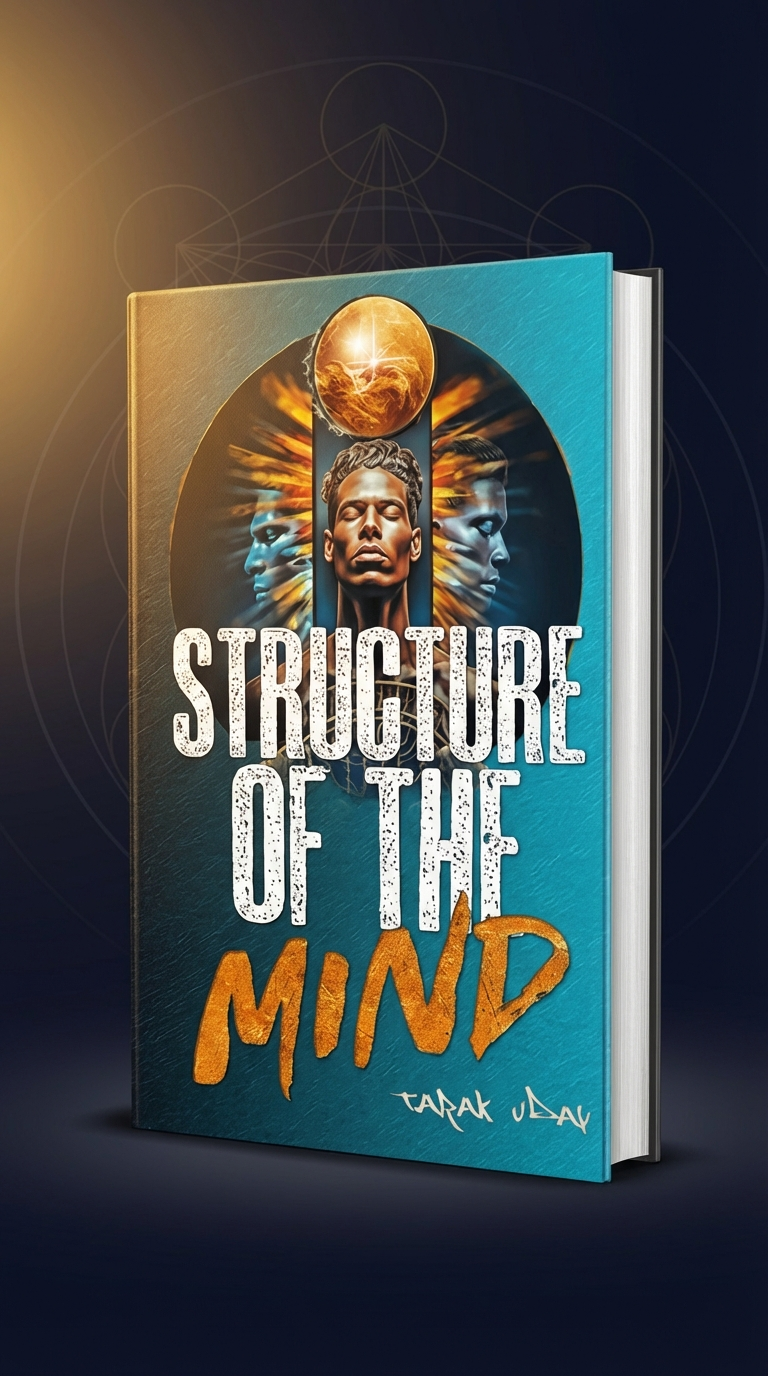
Tarak Uday takes this further in Structure of the Mind, his map of the three divisions of mind and the powers of attention, memory and imagination.
Both parents represent the superconscious mind. Dad is its aggressive quality — projecting, supplying, sending outward. Mom is its receptive quality, and she holds the blueprint of your existence, the original design of who you are meant to become. So a dream featuring your mother is about the design. A dream featuring your father is about the delivery.
That means a dream with both of them present is reporting on the whole system at once, and the relationship between the two figures in the dream is telling you how well the design and the delivery are currently cooperating. Parents arguing is a genuinely useful image — it says what's being supplied and what you were built for are out of step. Parents united is the opposite, and it tends to show up in periods where things move with unusual ease.
Other family members follow the same logic. Family in this language means aspects of self the dreamer is familiar with, so a dream full of relatives is a dream full of you. A brother, a sister, a cousin — each one is a known part of your own mind, cast for a scene. Once you stop reading these dreams as social reports about your relatives, they get dramatically more useful.
A teacher carries the same weight as a parent here, which surprises people. A teacher in this language is the superconscious mind directly, without the family packaging. So if your dream swapped your father for a teacher, a coach, an old mentor, or an authority figure you can't place, you're looking at the same source arriving through a different door. The swap itself is informative — it usually means the family template stopped being the most efficient way to deliver the message, and your mind found a cleaner one.
What do you do with a father dream?
Write down what he did, not how you felt about him. The action is the message and the feeling is the wrapper, and if you only record the feeling you'll have preserved nothing you can work with.
Then ask the supply question directly. What has been arriving in my life that I didn't generate. An opportunity, an insight, a piece of timing that was too clean to be yours. Name it. That's what the dream is pointing at, and naming it consciously is how you keep the channel open, because attention is what your mind allocates resources toward.
Then look for what you've been refusing. Most closed-channel father dreams trace back to a single thing you've decided you'd rather do alone. Not a character flaw — usually a reasonable decision made in a hard season and never revisited. So revisit it. The dream is telling you the supply exists and you've stopped standing where it lands.
Your mind reached for the most familiar supplying figure it had and put it in front of you. That wasn't a memory surfacing. That was a status report on the deepest working part of you, delivered in the only language your subconscious speaks, and you can read it now.
Frequently Asked Questions



Books by Tarak Uday
Understand Your Own Mind
"Structure of the Mind" reveals the three divisions of mind, seven levels of consciousness, and powers of mind that most people never learn to develop.

Learn The Language Your Dreams Speak
"Life Is But a Dream" teaches the Universal Language of the Mind — how to read any dream symbol by what it is and what it does, so every dream becomes a message you can act on.

LUCID
You've tried every lucid dreaming technique. Most miss the root cause. LUCID reveals what they all skip.