
Dreaming About Your Childhood Home: What It Actually Means


You haven't lived there in twenty years. You might not have thought about the place in months. And last night you were standing in the hallway of your childhood home, and the light through the front window was exactly right, and the whole thing was so ordinary that waking up felt like being removed from it.
Then comes the strange part. It keeps happening. Not every night, but at particular times — and if you've never worked out what those times have in common, you're missing a signal your subconscious mind has been sending you with real consistency.
It isn't nostalgia. Your mind doesn't spend a night's work on sentiment. It went to that specific address because something in your present life required it.
A home is your regular, everyday consciousness — the ordinary mental setting you run on by default. A childhood home is the version of that default you formed before you were finished forming, and your subconscious returns you there when your current life has put pressure on something you decided back then.
Why Does Your Subconscious Mind Send You Back to Your Childhood Home?
Every image in a dream is chosen for what it performs, not for what it resembles — that's the working rule of the Universal Language of Mind, and it's what makes this dream readable instead of merely touching.
So consider what a home performs. It's the place you don't have to think about. It's where your movements are automatic, where you know which stair creaks, where you can navigate in the dark. A home is the setting your ordinary awareness runs in without effort.
Now add the qualifier. A child, in this language, is an undeveloped aspect of yourself — not a person, not your younger self as a character, but a part of you that hasn't matured. Put those together and a childhood home becomes precise: it's the default way of thinking you assembled while you were still undeveloped, and which is still running underneath your adult conduct.
So the dream arrives when something current has leaned on that old default. A new job with an authority figure who reminds your nervous system of something. A relationship at the stage where you decide how much of yourself to give away. A responsibility that requires you to be more grown than the setting you're operating from allows. Your subconscious mind doesn't send you home to comfort you. It sends you home to show you where you're currently thinking from.
What Does the Condition of the House Tell You?
The state of the building is the state of that default, and dreamers usually remember it vividly even when they forget everything else.
A house exactly as it was — right furniture, right smell, nothing altered — means the old pattern is intact and fully operational. Nothing has been revised. You're running the original.
A house in disrepair, damp, collapsing or partly demolished says the opposite, and it's more encouraging than it feels. The default is breaking down because you've outgrown it. That process is uncomfortable and looks like loss, but a structure only fails when the load has changed.
An empty house — same rooms, no furniture, no people — is the pattern stripped to its frame. You can see the shape of how you were built without the content that used to fill it. Those dreams tend to come during genuine transitions, when someone is between the person they were and the one they're becoming.
And a house being renovated, with work underway, is active revision. Something in you is deliberately rebuilding the baseline. Notice which room the work is happening in, because that's where the change is actually taking place.
You stopped living there decades ago. The way of thinking you built there never moved out.
What Does It Mean If the House Is Changed, Wrong, or Not Quite Your House?
This detail confuses people enough that they discard the dream, and it's one of the most informative things in it.
Very often the house is your childhood home and simultaneously isn't — the layout is wrong, there's an extra floor, the back door opens onto somewhere that never existed. That distortion isn't a memory error. Your subconscious mind is showing you the old default with something added or removed, and the alteration is the message.
Extra rooms mean capacity you now have that you didn't have then. The old baseline has been extended by your adult life, and the dream is showing you the extension. Missing rooms mean the opposite — parts of that original way of thinking are no longer accessible, and whether that's a loss or a graduation depends on what the room was for.
A house that's the right building but the wrong scale — everything enormous, doorknobs at eye level — is your mind reporting the perspective you're viewing the situation from. You're seeing your current circumstances through the proportions you had as a child, which is exactly the distortion that makes an adult problem feel unmanageable.
Who Else Is in the House, and Why Does It Matter?
People in a dream are aspects of yourself, and family members carry the aspects you formed alongside. So the figures in the house aren't your relatives — they're the parts of you that got built in relation to them.
Tarak Uday takes this further in Structure of the Mind, his map of the three divisions of mind and the powers of attention, memory and imagination.
A parent in the childhood home is the authority principle you internalized there: the standard you still measure yourself against when nobody's watching. If they're welcoming, that internal standard is currently at peace with you. If they're disappointed, absent, or won't look at you, the dream is naming a self-judgement you've been carrying without examining.
Siblings are the aspects of yourself you developed competitively or comparatively. Being back in the house with them frequently coincides with a waking situation where you're measuring your progress against someone else's.
And an empty house with nobody in it is worth reading carefully. That's the old pattern operating without any of the relationships that originally justified it — a way of thinking that's outlived its reason. Those are the ones most worth revising, because the rule is still running and the situation that installed it is long over.
These dreams come in seasons, and the season is the message. CHITTA keeps the record and interprets each one in the Universal Language of Mind, so you can see which weeks of your waking life keep sending you back to that house — the pattern no single morning can show you.
What Should You Do the Morning After This Dream?
Write down the condition of the house and which room you were in first. Those two details decay within minutes and they carry most of the diagnosis.
Then find the pressure. Somewhere in the past two weeks, an adult situation required something from you and you responded from an older setting — deferring when you meant to disagree, shrinking to keep a room comfortable, working to earn something that was already yours. Tarak Uday's work on the Universal Language of Mind is built on that bridge between the picture and the day: the dream is never about the past, it's about the past still operating in the present.
Then name the decision you made back then and check whether it's still true. Most of these were reasonable at the time. A child in a particular household decides that being useful is the safest way to be loved, and they're often right, and then they're forty and still paying that price in a situation that never asked for it.
So the correction isn't to reject where you came from. It's to notice you've been thinking from a house you don't live in — and to answer the current situation from the address you actually occupy now.
Frequently Asked Questions



Books by Tarak Uday
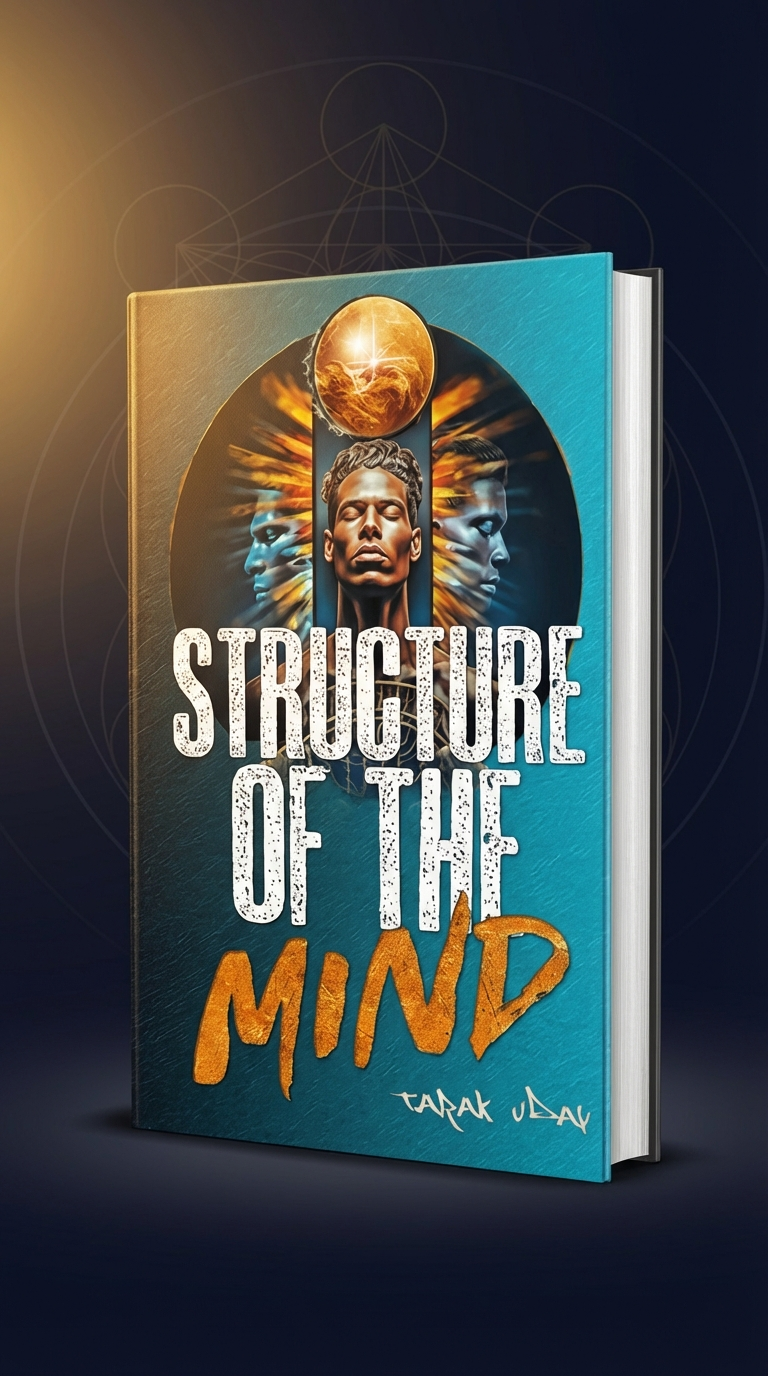
Understand Your Own Mind
"Structure of the Mind" reveals the three divisions of mind, seven levels of consciousness, and powers of mind that most people never learn to develop.

Learn The Language Your Dreams Speak
"Life Is But a Dream" teaches the Universal Language of Mind — how to read any dream symbol by what it is and what it does, so every dream becomes a message you can act on.

LUCID
You've tried every lucid dreaming technique. Most miss the root cause. LUCID reveals what they all skip.