
Emotions Are Road Signs, Not Reactions
The feeling that hijacked your afternoon was not the event. It was a sign on the side of the road, reporting a thought you planted long before you noticed it.
Your emotions are road signs: each one reports what is manifesting, or has just manifested, in your life. A good feeling means something you want is arriving. A bad feeling means something you do not want is arriving. You know the moment I mean. A message left on read, a plan that falls through, and before you have decided anything you are furious, or flattened, and the whole day bends around it. The feeling seems like the whole story. It is not. It is a sign on the side of the road, and you have been arguing with the sign instead of reading it. The clearest place to start reading is not your waking day at all. It is the feeling you woke up with this morning, the one that stayed after the dream itself had gone.
What Are Your Emotions Actually Telling You?
So most of us were taught that feelings are either the truth, to be obeyed, or a nuisance, to be managed. Both treat the emotion as the main event. In the Universal Language of Mind, as Tarak Uday teaches it, the emotion is not the main event. It is the report on one.
In The Structure of the Mind, Tarak puts it in a single image:
Read that slowly. A road sign does not build the road or decide where you are going. It tells you what is already there: a curve ahead, a lane ending, an exit coming up. Your emotions work the same way. Something you desire taking shape arrives as joy or relief. Something you did not want taking shape arrives as frustration, dread or sadness. The feeling is accurate. It is just not the cause.
A feeling is information about creation already in motion. It is not an instruction, and it is not a verdict on who you are.
Why Does a Feeling Show Up After the Thought That Caused It?
In the Structure of the Mind framework, the subconscious mind has four levels: the mental level, the upper astral, the lower astral, and the emotional level. A thought that becomes strong enough in your conscious mind is imprinted into the mental level, and from there it gains density as it moves down through the astral levels until, in Tarak's words, it is “pushed out into the physical reality from the emotional level and made manifest.”
So the emotional level is the last stop before the physical. Its elemental quality is earth. Tarak's explanation of the word itself is plain: “This is why we call our emotions feelings, because we can feel our emotions.” A thought is like air, hard to notice. An emotion is like the ground under your feet.
The energy of this level is stability. A thought form that reaches it is fully developed and ready to step into your life. That is why a feeling can seem to come out of nowhere. It did not. The thought behind it was planted earlier, quietly, while your attention was elsewhere. The feeling is the first moment it became dense enough to notice.
Here is the uncomfortable part. If the feeling is the late arrival, then fighting the feeling is fighting the wrong thing. You can suppress the anger or talk yourself out of the sadness, and the thought that produced them is still moving toward manifestation. Most people spend their emotional energy at the exit ramp when the turn was taken miles back.
How Do You Read a Road Sign Instead of Reacting to It?
On a long drive you do not argue with a speed limit sign. You read it and adjust: slow down, change lanes, take the next exit, head in a new direction. Tarak describes emotions in exactly those terms. In LUCID he writes, “When we elevate our perspective on our emotions and see them in this new way, it becomes easier to not remain attached to them.”
Not attached does not mean not feeling. It means the feeling stops driving the car. Tarak's word for this is responsibility, and he takes the word apart: “This is the true essence of the word responsibility: your ABILITY to RESPOND.” Reacting is the sign steering you. Responding is you reading the sign and choosing the turn.
He is candid that he learned this the hard way. In LUCID he describes how angry he used to be, and how the change began when he started moving through each day observing his emotions and mental state, catching the shift into anger as it happened. That awareness gave him a choice he had not had before: let the anger grow, or transform that emotional energy into something else. Today, when things do not go his way, he writes, “I instead use it as an indicator of my inability to properly manifest my desires.”
That is the road-sign reading in practice. Frustration is not proof that the world is against you. It is a sign that something you did not want has arrived, which means some thought upstream is producing it. The useful question is never how to make the feeling stop. It is what has just manifested, and what you were thinking that built it.
A plain note before going further: this is inner, spiritual practice, not medical advice and not therapy. If you are carrying strong or persistent distress, please see a qualified professional, and if you have physical symptoms, see a doctor.
What Are the Feelings in Your Dreams Pointing To?
Your dreams hand you the same signs with the noise turned down. When you sleep, your awareness moves into the levels of the subconscious mind and perceives the thoughts that live there, at whatever stage of creation they have reached.
Here is the belief to flip first. Popular dream dictionaries will tell you that water in a dream symbolizes your emotions. In the Universal Language of Mind it does not. Water is your conscious experience of life. The emotion in a dream is not hidden inside a symbol; it is the feeling you have while you are in it. The fear in the chase, the relief when the door opened. Those feelings are road signs too, often more honest than the waking ones.
The dream also tells you how far down the road the thought has traveled. Tarak teaches that dreams in the upper astral level come in vibrant, striking colors, while dreams in the emotional level come in black and white. In LUCID he spells out what that means: a message about growing anger seen in vivid color is still early, with plenty of time to change it; the same message in black and white tells you the thought form has gained stability and is ready to manifest, and it will take far greater effort to transform.
So the strongest feeling in a dream is worth more than a passing note. Write down what you felt, where the feeling peaked, and what was in front of you when it did. Then ask the road-sign question: what is this pointing to that is already taking shape in my life? A symbol's general meaning is public. Why that feeling attached itself to that symbol in your dream last night is not, and only the dream read in sequence can answer it.
How Does CHITTA Accelerate Reading Your Emotional Road Signs?
All of this leaves a gap. Road signs only help if you notice them in time and remember them afterward. A dream feeling fades within minutes of waking. And the pattern that matters most, the same sign showing up week after week, is invisible when every sign is read once and forgotten.
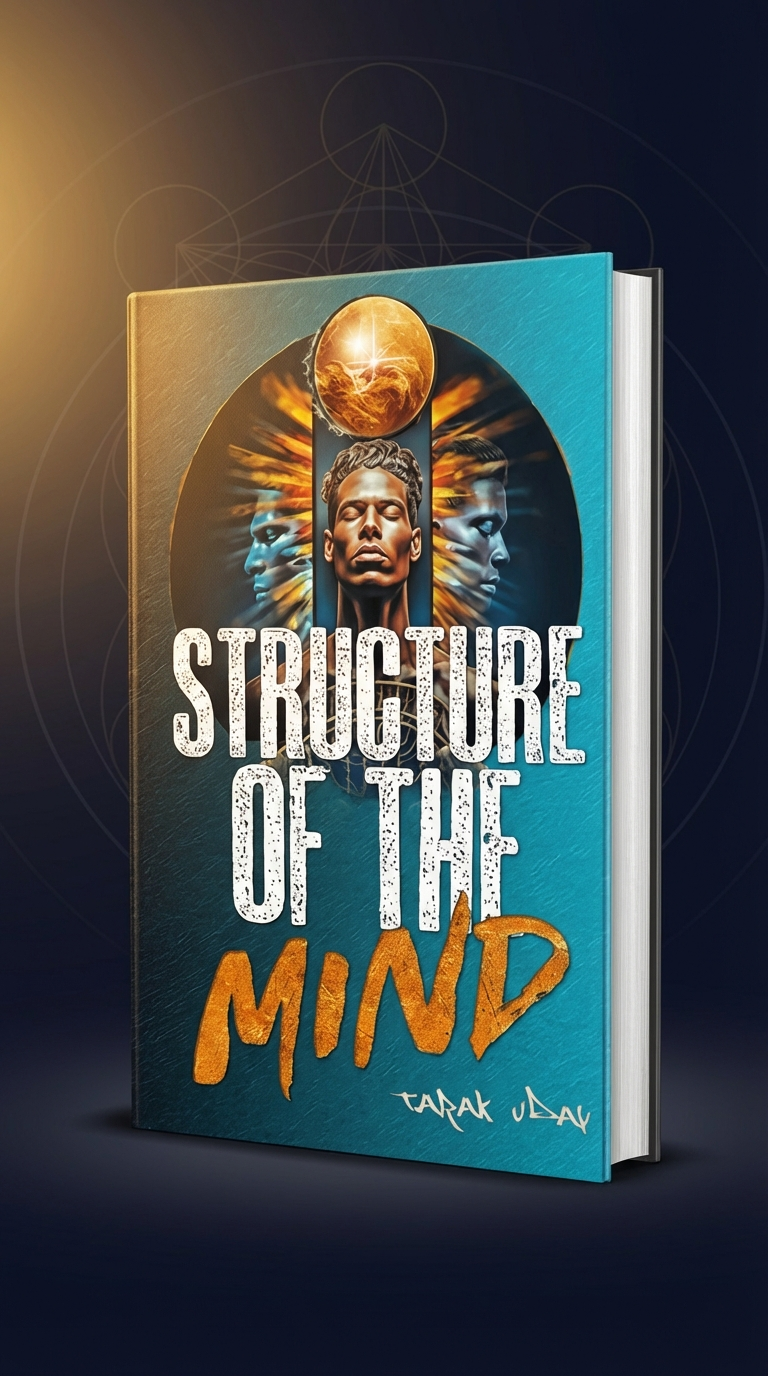
Tarak Uday takes this further in Structure of the Mind, his map of the three divisions of mind and the powers of attention, memory and imagination.
CHITTA is built to be the instrument for that. The dream journal captures the dream and the feeling the moment you log it, dated, before the day overwrites it. The interpretation engine decodes the dream in the Universal Language of Mind, reading each symbol beside the others it appeared with, so the feeling has a context instead of floating free. Over weeks, Memory Lane lets you look back and see which feelings keep returning and which symbols travel with them. Anger that showed up in four dreams this month is not a mood. It is a sign repeating itself until you take the exit.
The practices write to the same record. The Long Breath log tracks the sessions you use to settle yourself before sleep, since the state you carry into sleep colors the dreams you meet there. The candle exercise and its tic-mark count measure the attention you need to catch a feeling as it rises, rather than an hour after it has already steered you.
The acceleration is mechanical. A sign you notice late costs you the exit. A sign kept on a dated record shows you the thought upstream while it is still in color, early enough to change. What was a reaction becomes a decision.
What Will You Write Down Tonight?
One feeling. That is the whole practice.
When you wake from tonight's dream, before you reach for your phone, write down the strongest feeling the dream left you with. Not the plot first. The feeling, whichever was loudest. Then, underneath it, write one line about what that feeling was pointing to: what in your waking life is arriving that matches it. Put the date beside both.
If you cannot remember the dream, write down the feeling you woke up with anyway. That feeling came from somewhere, and it is still a sign.
Do this for a week and you will see something no single morning can show you: whether the same sign keeps appearing, and whether it is drifting from color toward black and white. What one night's feeling cannot tell you is which thought, planted long before you noticed it, put that sign on your road. A week of honest entries usually starts to.

Frequently Asked Questions



Books by Tarak Uday
Understand Your Own Mind
"Structure of the Mind" reveals the three divisions of mind, seven levels of consciousness, and powers of mind that most people never learn to develop.

Learn The Language Your Dreams Speak
"Life Is But a Dream" teaches the Universal Language of Mind — how to read any dream symbol by what it is and what it does, so every dream becomes a message you can act on.

LUCID
You've tried every lucid dreaming technique. Most miss the root cause. LUCID reveals what they all skip.