
What Is the Real Self? You Are Not Your Body, Soul, Spirit or Mind
You have caught yourself in the middle of a worry and noticed it. Something in you was not worried at all. It was only watching. That watcher is the subject of this article.
The Real Self is your consciousness: the intelligent awareness that uses your body, your soul, your spirit and your mind, but is none of them. That is the answer the Universal Language of Mind gives to the question "who am I, spiritually?", and it is more exact than the one you have probably been handed. Think about the last time you caught yourself in the middle of a worry. One moment you were inside the thought, rehearsing the conversation, tightening your jaw. The next moment you noticed it. You saw the worry. Something in you was not worried at all; it was simply watching. This article stays with it, because that watcher is the whole subject. And you met it again last night, in whatever dream you still half remember: someone was there seeing every scene, even while the scenes kept changing around them.
What Is the Real Self in the Universal Language of Mind?
Most answers to "who am I spiritually" stop one layer too early. Some people identify with the body because it is the only thing they have ever had a reason to notice. Others go a step further and say "I am a soul" or "I am a spirit," because they have felt something beyond the physical. Many repeat the popular line that you are a spiritual being having a physical experience.
Tarak Uday teaches the structure of mind that the Universal Language of Mind has always pointed to, and he corrects all three answers at once. In LUCID he puts it as plainly as it can be put: "you are not your body, you are not your soul, you are not your spirit, and you are not your mind." Even the spiritual-being line, he says, is "still inaccurate." You are not a physical being, and you are not a spiritual being either. You are the one having both experiences.
Read the last phrase twice. With varying levels of awareness of each. You are having all three experiences right now. You are simply aware of one of them, mostly, and the other two run on without your noticing.
So the Real Self is not something you have to acquire. It is what is already reading this sentence. The work is to stop mistaking yourself for the vehicles it uses.
If You Are Not Your Body, Soul, Spirit or Mind, What Are They?
They are vehicles, and the word matters. In The Structure of the Mind, the physical body is the vehicle your consciousness uses in this three-dimensional reality, and it uses the conscious mind. The soul is the vehicle your consciousness uses in the fourth dimension, and it uses the subconscious mind. The spirit is the vehicle it uses to traverse the fifth dimension, and it uses the superconscious mind. If the line between those three still blurs for you, the difference between body, soul, spirit and mind sets them side by side, piece by piece.
Think about the way you talk about a car. You say "I'm parked around the corner," but nobody believes they are made of steel. The car is how you get somewhere. The body is that kind of thing, built for this physical world. So are the soul and the spirit, built for realities tuned to a much higher vibration.
The mind gets the same treatment, and this is where most people push back. Surely I am my thoughts? So watch what actually happens when a thought passes. It arrives. It stays a while. It leaves. You were there before it came, and you are still there after it has gone. Something that comes and goes cannot be the one who watches it come and go.
That is why the Real Self is never found by thinking harder about it. Thinking is one more movement inside a vehicle. The Real Self is the one noticing the movement.
Why Do the Scriptures Keep Saying "I AM"?
None of this is new, and nobody owns it. In The Structure of the Mind, Tarak writes, "This knowledge has been preserved within many holy scriptures." He reads them as writings by minds, about mind, in the picture language the mind uses.
In the King James Bible, Exodus 3:14, the answer given to Moses is "I AM THAT I AM." Not a name. Being, with nothing added. Psalm 82:6, in the same translation, says, "Ye are gods; and all of you are children of the most High." Read through the Universal Language of Mind, neither verse is about a figure somewhere far away. Both are describing the consciousness at the center of the person reading them. In the Bhagavad Gita, chapter 10, verse 20, Krishna names himself as the Self seated within every being: the same pointing finger from a different tradition.
The word yoga means union, and the union every serious practice aims for is union with the Real Self. The Structure of the Mind describes four roads to it. Raja Yoga, which includes meditation and breathwork. Karma Yoga, the alignment of your actions and intentions. Bhakti Yoga, devotion to the ideals of the Real Self. And Jnana Yoga, the yoga of knowledge, which is practiced in part by increasing self-awareness "through dream interpretation." All four are ways of quieting the vehicles long enough to notice who has been driving.
The book is just as precise about what the Real Self is not. It is not large and it is not small, because size is a measurement of form. "It is outside of time and space. It has no form." That is why you cannot picture it: every picture is one more thing being looked at, and the Real Self is always the one looking.
How Do Your Dreams Show You the One Who Is Watching?
Here is where the idea stops being philosophy. Every night your body stays in bed, your waking mind goes quiet, and your awareness moves into the inner levels of the subconscious mind. And yet you are still there, living through an entire world.
In the Universal Language of Mind, every person in a dream is an aspect of you, every building is a state of your mind, and every road is a direction you are taking in life. The dream is the subconscious mind showing you its contents. But notice that someone is perceiving all of it. The house turns into a school halfway through; the one seeing both never changes.
A lucid dream makes this impossible to miss. The moment you realize "I am dreaming," nothing in the dream has to change. What changes is who is present. You wake up inside the dream the same way you woke up inside that worry at the start of this article. Tarak describes deepening the awareness of your dreams, and becoming lucid within them, as a way to increase "our awareness in astounding ways of our existence beyond this current life within this physical body."
So a dream is not only a message. It is evidence. Most people believe they barely dream, but they dream every night and lose it in the first minute or two after waking. Recall is a trainable skill, and every dream you catch is one more night of proof that you exist apart from the body in the bed. What no article can tell you is what your own dreams have been showing that watcher, night after night, for months. That only appears when your dreams sit side by side.
How Does CHITTA Accelerate Knowing the Real Self?
Everything above leaves you with a problem. Tarak is insistent that you should not take his word for any of it: "This is why I always encourage you to never believe anything that I say, but instead to find ways to implement it into your life." Belief only turns into knowledge through experience. But the experience of the watcher is quiet and brief. You notice it for a second, the next thought arrives, and by evening it is gone.
CHITTA is built to be the instrument for exactly that. The Long Breath is the practice, and its session log keeps a dated record of every sit. Breathing longer, slower and deeper is also concentration training, because your attention rides the breath and keeps returning to it. Every return is a small act of the Real Self taking its attention back from a passing thought. The log turns those sits into a record you can read, instead of a mood you half remember.
Tarak Uday takes this further in Structure of the Mind, his map of the three divisions of mind and the powers of attention, memory and imagination.
The dream journal dates each dream as you log it, and the interpretation engine decodes it in the Universal Language of Mind, reading every symbol beside the others it appeared with rather than one dictionary entry at a time. Memory Lane lets you look back across months. The candle exercise and its tic-mark count measure the same faculty from another angle: how often your attention wanders before the watcher notices it wandering. Put side by side, the breath log, the counts and the dreams begin to show one thing from three directions.
The acceleration is plain mechanics. A glimpse of the Real Self that is never recorded fades into a story about one good morning. A dated record of sits, counts and dreams becomes evidence that your awareness is steadying. The Structure of the Mind lessons and masterclasses, being turned on shortly, are where that practice becomes a sequenced curriculum.
Who Is Doing the Watching Tonight?
Not a belief to adopt. An experiment to run.
Tonight, sit for five minutes of the Long Breath. Sit comfortably, close your eyes, breathe in through your nose and out through your mouth, and let each breath be a little longer, a little slower and a little deeper than the one before it. Don't force it. Follow the air in, and follow it back out.
Then, somewhere in the second or third minute, do one more thing. Simply watch. A thought will come. Watch it arrive. A sensation in the body, an itch, a sound in the next room. Watch those too. And then ask, gently, without trying to answer in words: who is doing the watching?
You will not find an object. That is the point. Every answer you reach for is one more thing being watched. What remains when you stop reaching is closer to the Real Self than any description, including this one.
Afterward, write down the date and one line about what you noticed. Then, before you sleep, set the intention to notice the same watcher inside tonight's dream. That is the part this article cannot close for you. You now know what the Real Self is. Whether you will recognise it from inside a dream is something only tomorrow morning's record can tell you.

Frequently Asked Questions



Books by Tarak Uday
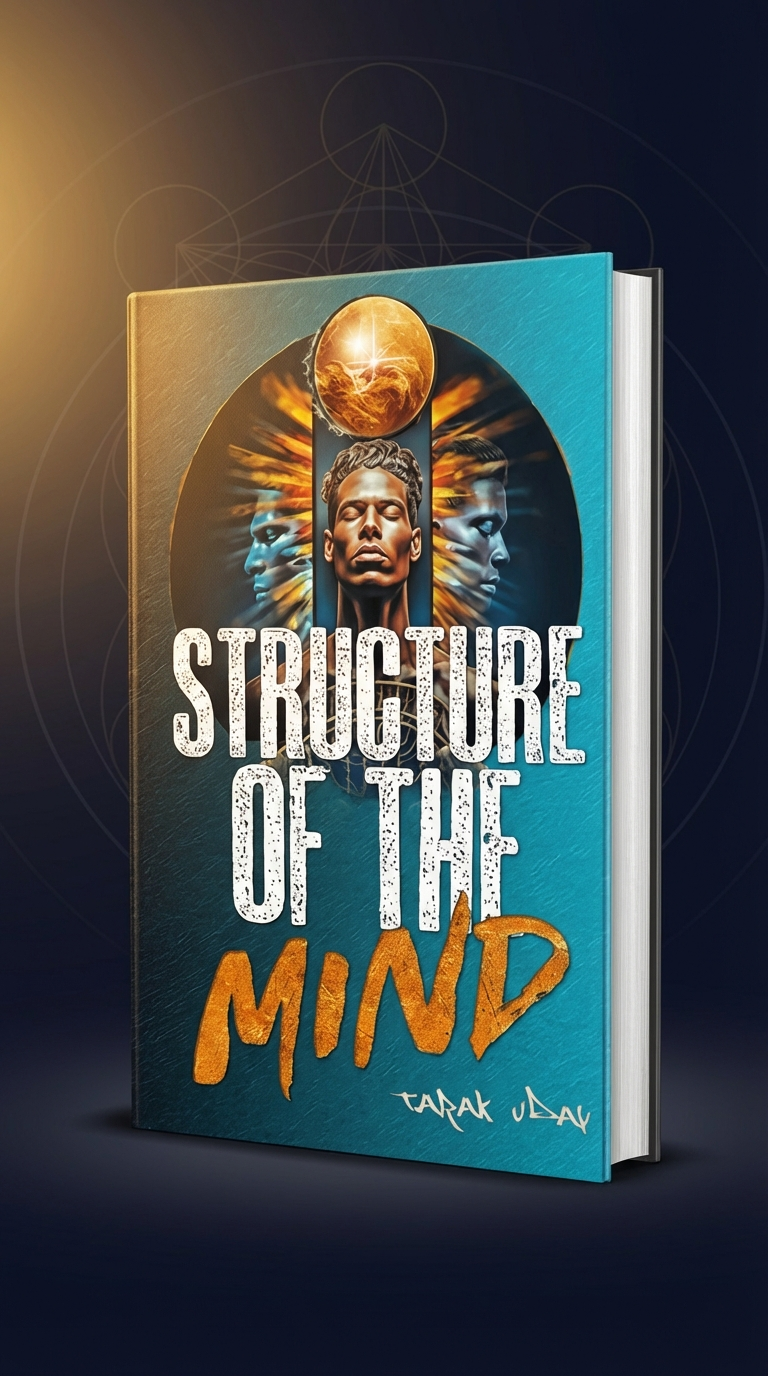
Understand Your Own Mind
"Structure of the Mind" reveals the three divisions of mind, seven levels of consciousness, and powers of mind that most people never learn to develop.
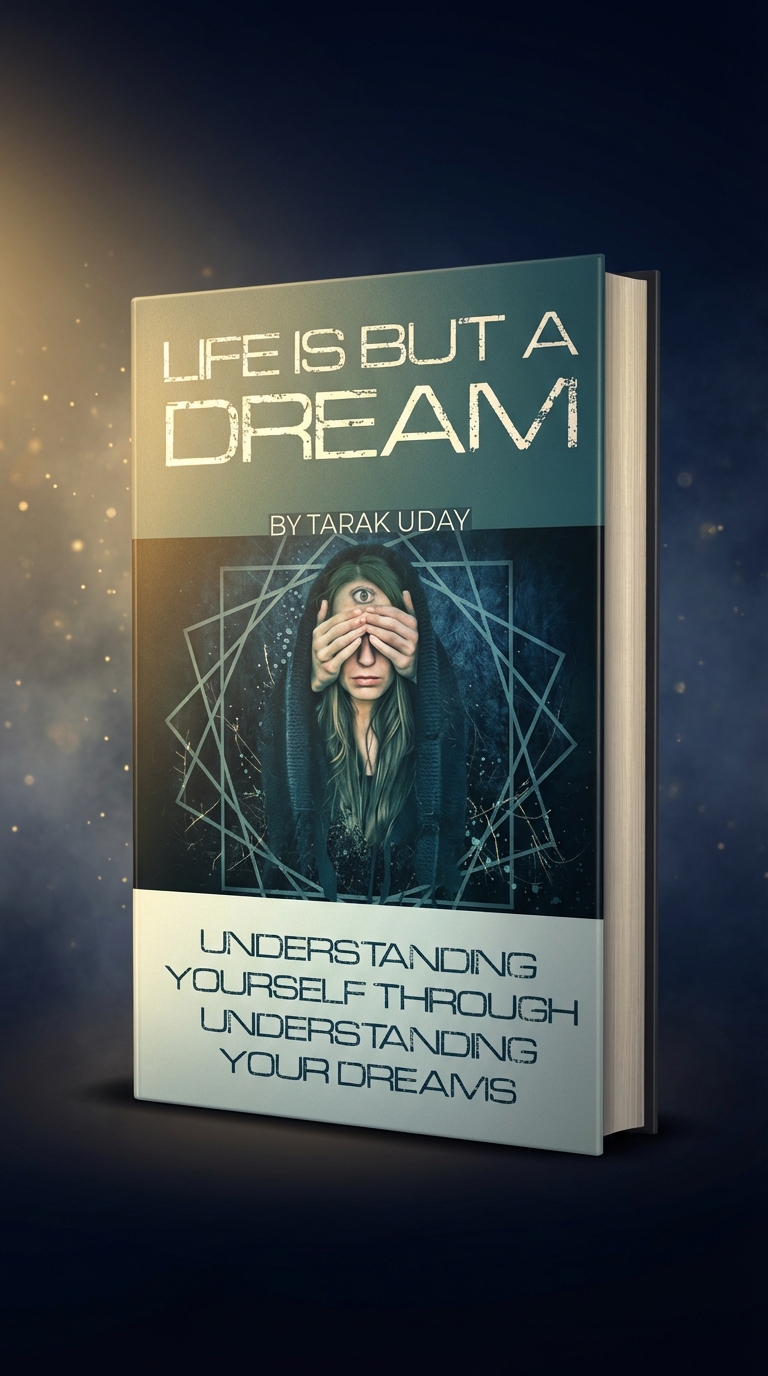
Learn The Language Your Dreams Speak
"Life Is But a Dream" teaches the Universal Language of Mind — how to read any dream symbol by what it is and what it does, so every dream becomes a message you can act on.
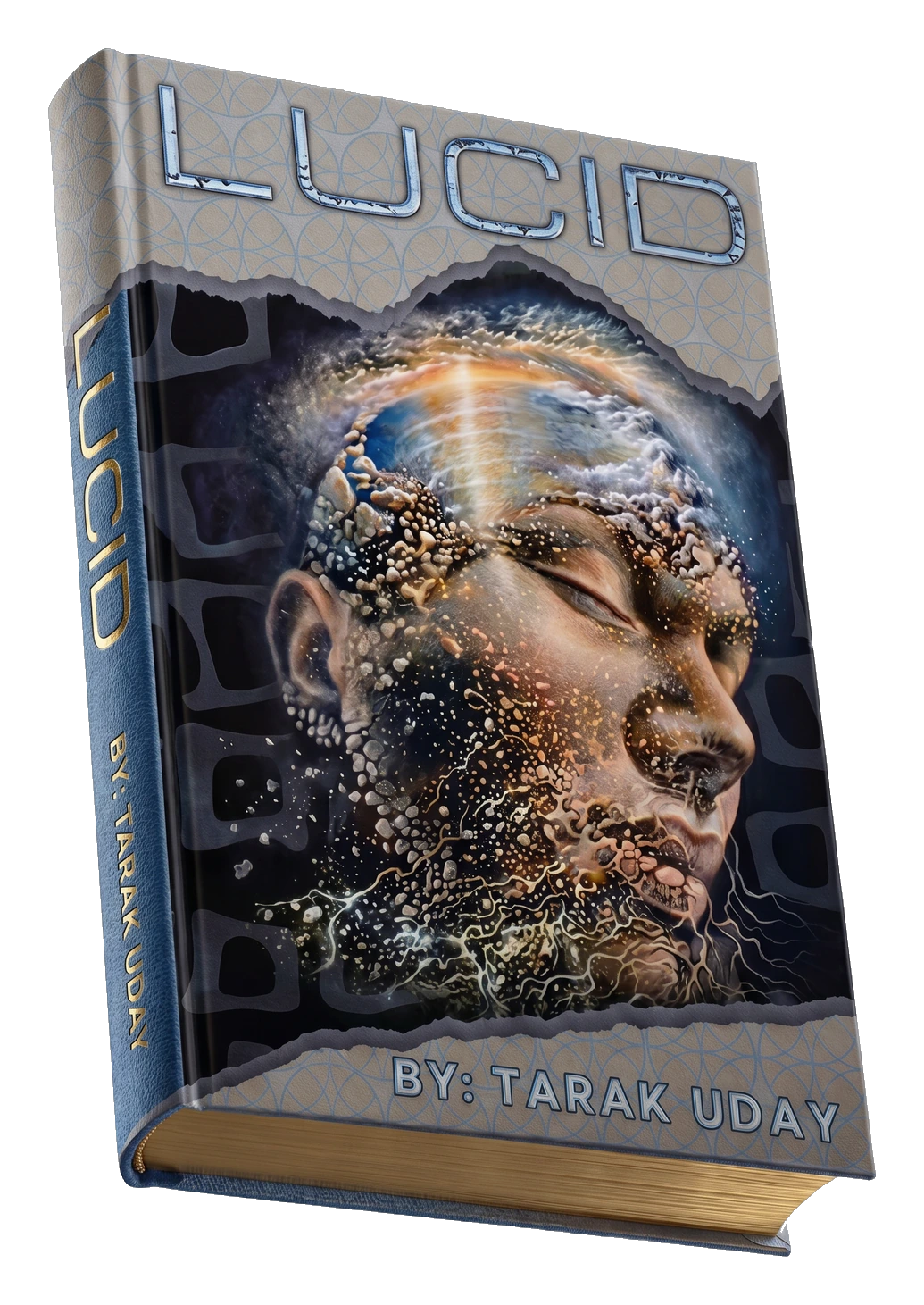
LUCID
You've tried every lucid dreaming technique. Most miss the root cause. LUCID reveals what they all skip.