
What Is the Purpose of Reincarnation? The Soul Carries Understanding, Not Memory
There is something you have always known how to do, and you can't remember learning it. That is what the soul carries. This article is about how it got there, and what you are adding to it now.


The purpose of reincarnation is understanding. In the Universal Language of Mind, the soul returns to physical life, lifetime after lifetime, to turn experience into permanent understanding, and that understanding, not the story of who you were, is what it brings forward. You already hold the evidence. There is something you have always simply known how to do: stay calm when everyone else panics, tell when someone is lying, take responsibility before anyone asks. Nobody taught it to you, and you can't remember learning it. That is what a carried understanding feels like from the inside. And there is the other side of it: the same lesson that keeps arriving in a new costume, in your relationships, in your work, and in the dream you had last night, the one that still hasn't quite let go of you.
What Is the Purpose of Reincarnation in the Universal Language of Mind?
Most explanations of reincarnation hand you a wheel. You go around, you are rewarded or punished for the last trip, and with enough good behavior you eventually get off. It's a tidy picture, and it leaves out the mechanism.
Tarak Uday teaches the structure of the mind that the Universal Language of Mind has always described, and in that structure every division of mind has a duty and a purpose. The duty of the conscious mind is to create life experiences for you to learn from. Its purpose is to feed the understandings you build from those experiences into the soul, where they are stored and become permanent. The purpose of the subconscious mind, the mind your soul uses, is to hold them. The power of the subconscious mind begins right there: before it manifests anything, it stores.
One half of you goes out and lives. The other half keeps what the living was worth. In The Structure of the Mind, Tarak calls this storehouse of wisdom "the end game to even existing within these physical bodies, lifetime after lifetime."
That one sentence is the whole purpose of reincarnation. Not escape. Not reward. Addition. Each lifetime is a chance to add to something that doesn't die when the body does, and that slow addition is what people mean when they talk about soul growth.
Why Don't You Remember Your Past Lives?
Start with what you're remembering with. The conscious mind is the mind your physical body uses, and this body began with this lifetime. The body, the soul and the spirit are separate vehicles, each using its own division of mind (the difference between body, soul, spirit and mind sets them side by side). The vehicle built for this lifetime has only this lifetime's roads in it.
The record itself isn't destroyed. The Structure of the Mind is plain about that: when we leave the body, we take nothing with us "outside of the memory of the experiences we had and the understandings that we have built through the experiences that we chose to learn from." The memory exists. It is kept with the soul, at the inner levels of the subconscious mind, where the book places the akashic records, the library of every vibration that has ever sounded. In Life Is But a Dream, Tarak writes that the information of our past lives is stored there, and that when people re-experience past-life moments within a dream, that is where it comes from.
So you haven't lost your past. It's filed at a level your waking attention doesn't normally reach. What reaches the surface of a new life is not the file. It's the result. You already live this way inside one lifetime: you don't remember the afternoon you learned to read, and yet you read. The event went into storage and the ability stayed in your hands.
That's why this article won't tell you who you were. Nobody can responsibly say that about you from the outside, and a name and a century wouldn't change how you treat people tomorrow morning. An understanding does.
What Does the Soul Actually Carry From One Lifetime to the Next?
Understanding. And the word is more exact than it sounds. Tarak explains that it is called an understanding "because it provides the foundation that your knowledge and intelligence then stands upon." It stands under you. It is the floor, not the furniture.
Take forgiveness. You can read about forgiveness for years and still hold the grudge. Then life hands you an experience where you actually have to forgive someone, or yourself, and you do it. In the book's words, that new knowledge "becomes a part of the foundation of our wisdom that we stand upon as we move through life." You don't have to remember to be forgiving after that. You simply are, the way you are simply able to read.
That is the thing the soul keeps. It is also the honest explanation for gifts. Some people arrive lucid dreaming as children, or naturally intuitive, or steady in ways nobody trained into them. The Structure of the Mind refuses the idea that they were specially selected: "It is that they put in the work in prior lifetimes to build up those strengths." The same goes for quieter things: being considerate without thinking about it, or responsible long before anyone asked. Those are what you walked in with.
Notice the condition buried in that earlier line, though: the experiences we chose to learn from. An experience by itself adds nothing. Only the experience you turned toward, looked at, and learned from becomes permanent.
Is Reincarnation a Punishment, or a Lesson Coming Back Around?
Nobody is being sentenced. There is a blueprint. The purpose of the superconscious mind is to hold the blueprint for your existence, and the book adds a line that changes how you read your own difficulties: "We have each created this blueprint for ourselves." It holds your soul's purpose and your purpose within this lifetime. You have free will about when you fulfill each part of it. But "one way or another, one lifetime or another," it continues to be fulfilled.
So when you dodge a lesson, life doesn't punish you. It presents the lesson again. Tarak writes that if we choose to run from it, "life will recreate new experiences and new opportunities to learn the same lesson that we are destined to learn. This could come back around this lifetime, or it could emerge again within a future lifetime."
Read that as mechanics, not morality. The third partner who leaves the same way the first two did. The new job that turns into the last job. You're being offered the same page again because you haven't turned it yet.
Which means the practical question was never "who was I?" It's "what is in front of me right now that I keep walking around?" Your waking mind is usually the last to know the answer, because it is the one doing the walking around. A dream comes from the subconscious mind, the same mind that stores your understandings, and it shows you where you stand in pictures. One dream is a sentence. The same picture returning for months is a paragraph, and it is saying something no single night can.
How Does CHITTA Accelerate What Your Soul Keeps?
Here's the gap the teaching leaves you standing in. Understanding is only built from experiences you choose to learn from, and you can't choose to learn from a lesson you can't see. The clearest picture of your current lesson arrives every night, and most of it is gone within a minute or two of waking.
CHITTA is the instrument for that gap. The dream journal dates every dream as you log it, so last night stops being a mood and becomes an entry. The interpretation engine decodes it in the Universal Language of Mind, reading each symbol beside the others it appeared with, in sequence, instead of one dictionary line at a time. The symbol dictionary lets you check any image yourself. If your mornings are blank, that isn't proof you don't dream; recall is a trainable skill, and why you forget your dreams covers how it comes back.
Tarak Uday takes this further in Structure of the Mind, his map of the three divisions of mind and the powers of attention, memory and imagination.
The acceleration is plain mechanics. A lesson you can't name keeps coming around. A lesson you can see on the page, the same symbol on a Tuesday in March and again in June, beside the same kind of day, is a lesson you can turn toward on purpose. What was a vague feeling of "this again" becomes a dated record. And a record you can read shortens the distance between having an experience and learning from it, which is the only step that makes anything permanent.
In LUCID, Tarak calls dreams and dream interpretation "two of your greatest tools for self-awareness you will ever have available to you," and he ties them to exactly this: "the understanding you can build from the experience and make a permanent part of yourself." Reading your own dream alone gives you one perspective; in the Sanctum, CHITTA's free community, you practice beside people doing the same work.
What Would You Want to Keep From This Lifetime?
This part isn't for agreeing with. It's for doing, tonight, on one page.
First, write down one understanding you would want to keep. Not a fact you know. Something you learned by living it, the hard way, that you would not want to learn twice. "I can be alone without being abandoned." "Telling the truth early costs less than telling it late." Put it in your own words, in one sentence.
Then write down one dream that taught it. It might be from the season when you were learning it, or from this week. Write it the way it happened: the place, the people, what you did, how it ended. Don't interpret yet. Just get it on the page with the date.
Look at the two side by side. One is a line of understanding your soul gets to keep. The other is the picture your subconscious mind drew while you were earning it.
Then leave a line blank underneath. That is for the understanding you haven't finished building, the one this lifetime is still working on. You now know the purpose of reincarnation. What this article can't tell you is which lesson is on your page right now. Tonight's dream already knows, and it will say so in the morning if you're there to write it down.
Frequently Asked Questions



Books by Tarak Uday
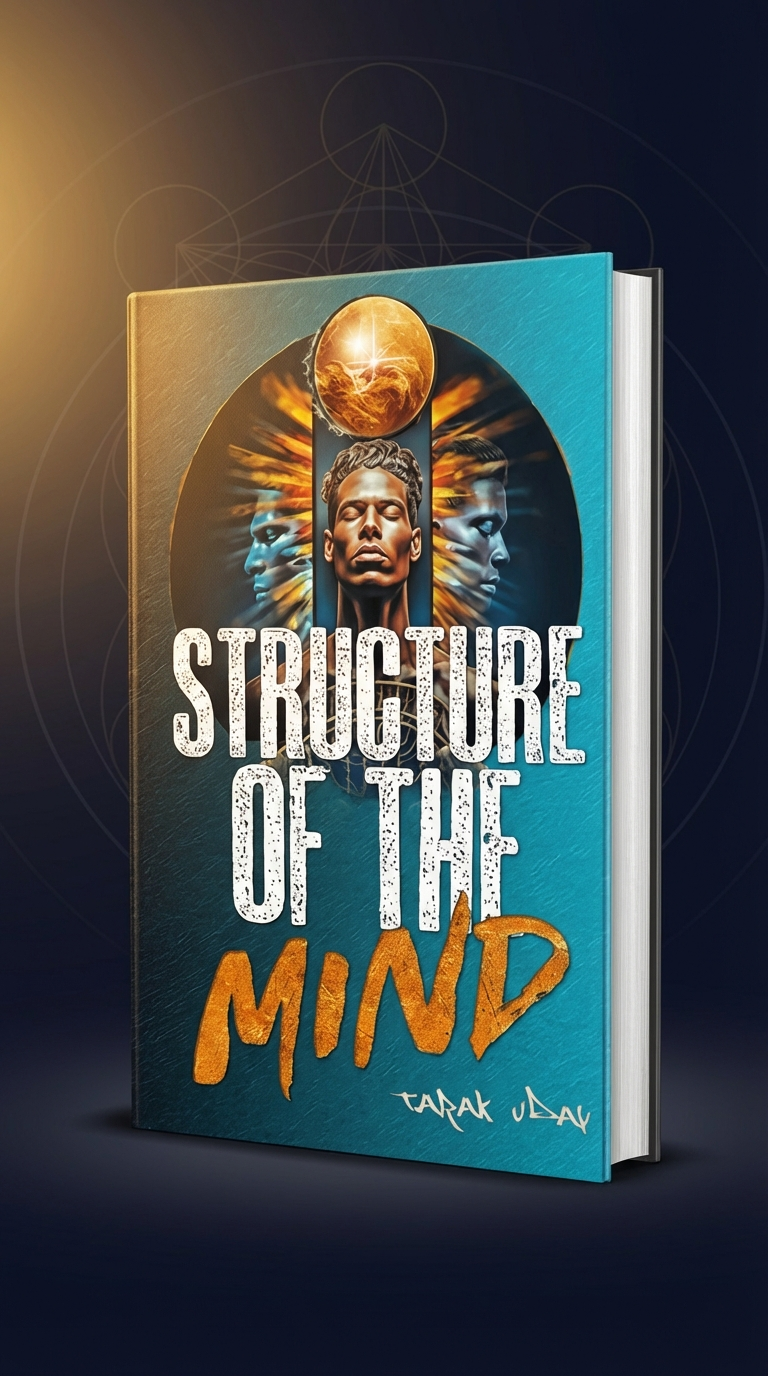
Understand Your Own Mind
"Structure of the Mind" reveals the three divisions of mind, seven levels of consciousness, and powers of mind that most people never learn to develop.

Learn The Language Your Dreams Speak
"Life Is But a Dream" teaches the Universal Language of Mind — how to read any dream symbol by what it is and what it does, so every dream becomes a message you can act on.
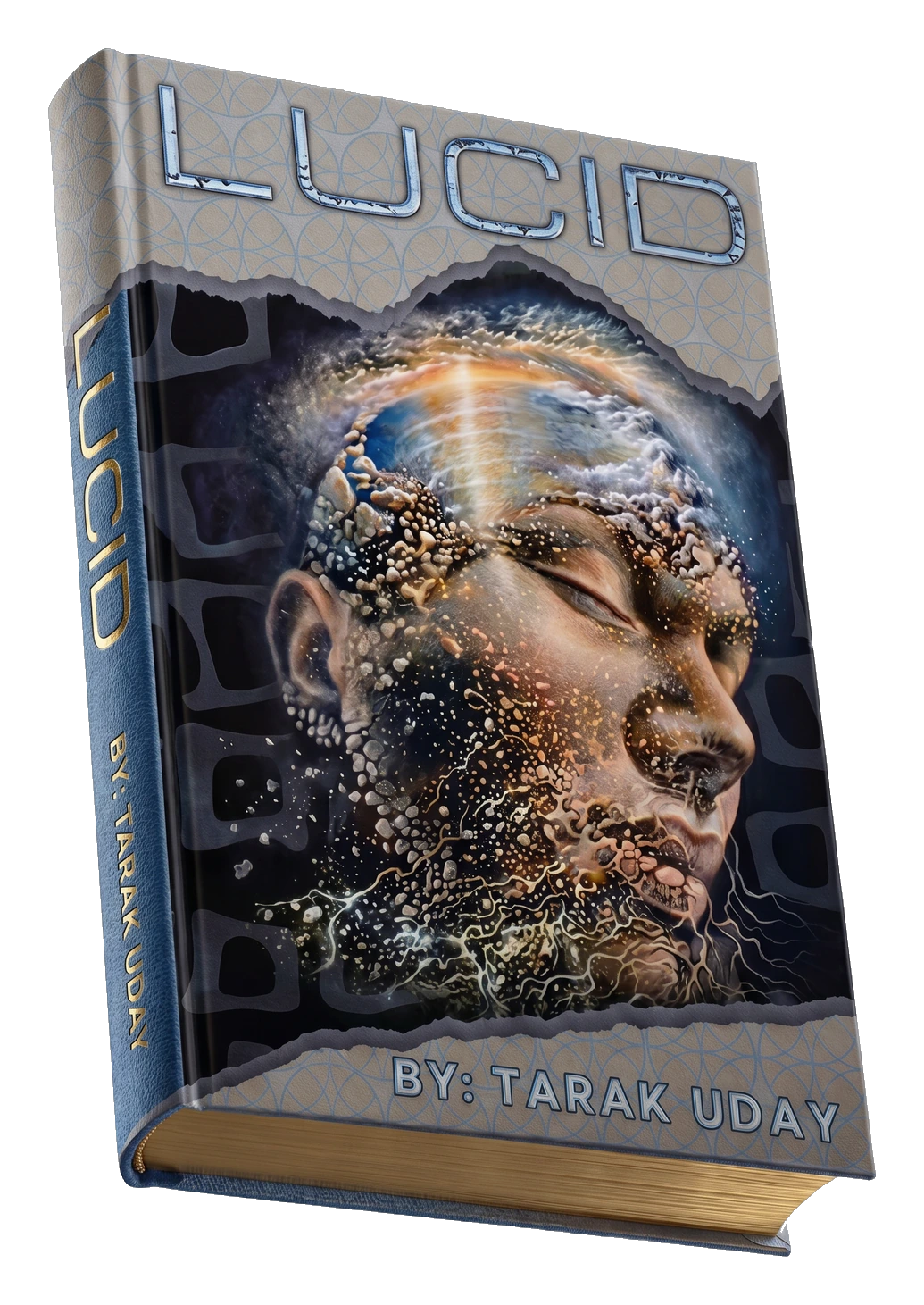
LUCID
You've tried every lucid dreaming technique. Most miss the root cause. LUCID reveals what they all skip.