
Waking Up at 3 AM: Spiritual Awakening or Something Else?
Your eyes open in the dark and the phone says 3:07 again. The clock has nothing to tell you. The dream you were just pulled out of does.


Waking up at 3 AM is not, by itself, a spiritual awakening, and the hour on the clock carries no message. The message is the dream you were pulled out of a moment earlier. You know the scene. Your eyes open in the dark, the house is silent, and the phone says 3:07. It happened last night too, and the night before, and by now you have started to wonder whether something is trying to reach you. Something is. It just isn't the clock. In the Universal Language of Mind, your subconscious mind speaks to you every night in pictures, and waking in the middle of the night drops you at the edge of one of those pictures while it is still warm. So before you reach for the time, reach for that instead: the last image you were inside before your eyes opened, the dream you just left.
Is Waking Up at 3 AM a Spiritual Awakening?
So let's take the popular answers first, because you have already read them. One popular belief says 3 AM is the hour when the veil between worlds is thinnest. Another calls it the witching hour. Another pins each hour of the night to an organ of the body and reads your waking as a report on that organ. These are popular beliefs, and they deserve to be labeled as exactly that. I am not going to hand you any of them as truth.
Notice what all three have in common. They put the meaning in the clock. And the clock is the one thing in the room that knows nothing about you. It reads 3:07 for every person in your time zone.
Here is the mechanical answer. In the Universal Language of Mind, as Tarak Uday teaches it, growth is measured in awareness: how much of your own mind you can see and use. Being awake at an unusual hour adds nothing to that by itself. What you do with the first minute after your eyes open can add a great deal.
So is it a spiritual awakening or something else? It is an opening. Whether anything comes through it depends on whether you read what was handed to you. And most people, night after night, hand it straight back.
One plain line before going further. This isn't medical advice; if the waking is persistent, or comes with other physical symptoms, see a doctor. Nothing below replaces that.
What Is Actually Happening in Your Mind at 3 AM?
Start with what sleep is. In LUCID, Tarak describes it step by step. When you fall asleep, the conscious mind goes dormant and the physical body rests. Your attention closes off from the physical senses and moves inward. The subconscious mind takes over the experience, creating images that communicate the state of your consciousness: what you have been creating, what you need to pay attention to, what is manifesting. You experience those images as dreams.
Then comes the line that explains your 3 AM. "Upon waking, if the memories of these experiences are still reverberating within your consciousness, you remember the dream."
Still reverberating. When the alarm drags you out at seven, the day arrives with it. The meeting, the messages, the list. The reverberation is drowned in seconds. In the middle of the night nothing is waiting for you. There is only the dark, and the echo of where you just were.
LUCID has a name for that window. The reverie state is the drowsy, half-awake state you pass through immediately upon waking, before full waking consciousness takes hold, and the book calls it the ideal state for dream recall. At 3 AM you are standing in it with no competition for your attention.
And here is the part that flips the whole question. The same book teaches that the back end of the night holds the longest, most vivid dream periods, and its Wake Back to Bed method has students set an alarm for three hours before their normal wake time, on purpose, to catch a dream while it is fresh. For many people that alarm lands right around the hour you keep seeing on your phone.
What If You Wake Up Wide Awake With No Dream at All?
There is a second kind of night waking, and it feels different. No fog, no fading picture. You are simply awake, clear, and there is an idea in your mind that was not there when you lay down.
The Structure of the Mind describes this one too. The superconscious mind holds the blueprint for your existence, and its duty is to supply the lifeforce energy you need to fulfill it. It is the mind your spirit uses. The book puts it in five words: "The word spirit means breath." The Latin spirare, to breathe, sits at the root of the word inspiration.
Then Tarak asks the question you may already have an answer to. "Have you ever had an idea pop into your mind late at night and you are suddenly no longer tired, but inspired to take action upon that idea, even though it may be one or two in the morning?" His reading of it is direct: "This is the lifeforce energy being fed into your being from the superconscious mind."
Read that carefully, because it is easy to twist. The book is not naming a sacred hour. One or two in the morning is simply an example of late. What it describes is a mechanism: inspiration arrives with energy attached, and it does not check your schedule. If you want the fuller picture of that division of mind, the superconscious mind and how to consult it lays it out.
So you have two possibilities when your eyes open, and you can tell them apart. Foggy, with a picture slipping away: you were handed a dream. Clear, with an idea and the energy to act on it: you were handed inspiration. In both cases the delivery is the content. Write the idea down exactly as you would write the dream.
The same book also tells you how to settle afterward. Nearly all meditation practices begin with the breath, because connecting with your breath connects you with your spirit. A few rounds of the Long Breath, each one a little longer and slower than the last, is a far better companion in the dark than a glowing screen.
Why Does the Dream Vanish the Moment You Check the Clock?
Because your attention can only be in one place, and you just moved it.
The dream lives in the inner levels of your mind. The phone lives in the physical world. The instant you roll over, squint at the screen and start calculating how many hours are left until the alarm, your attention has gone fully outward. LUCID describes the result without softening it: "Without a trained memory, the dream dissolves the moment consciousness returns to the physical."
You may think you hardly dream. You dream every night; it slips away in the first moments after waking, and recall can be trained like any other skill. If the page keeps coming up blank, why you forget your dreams covers what is actually going on and how to reverse it.
There is one more layer, and no article can reach it. One dream caught at 3 AM is a sentence. If you have been waking at the same hour for weeks, your subconscious mind has been writing you a paragraph, and you have not kept a single line of it. Was the same house in every one? The same person? The same road? You don't know yet. Nobody does.
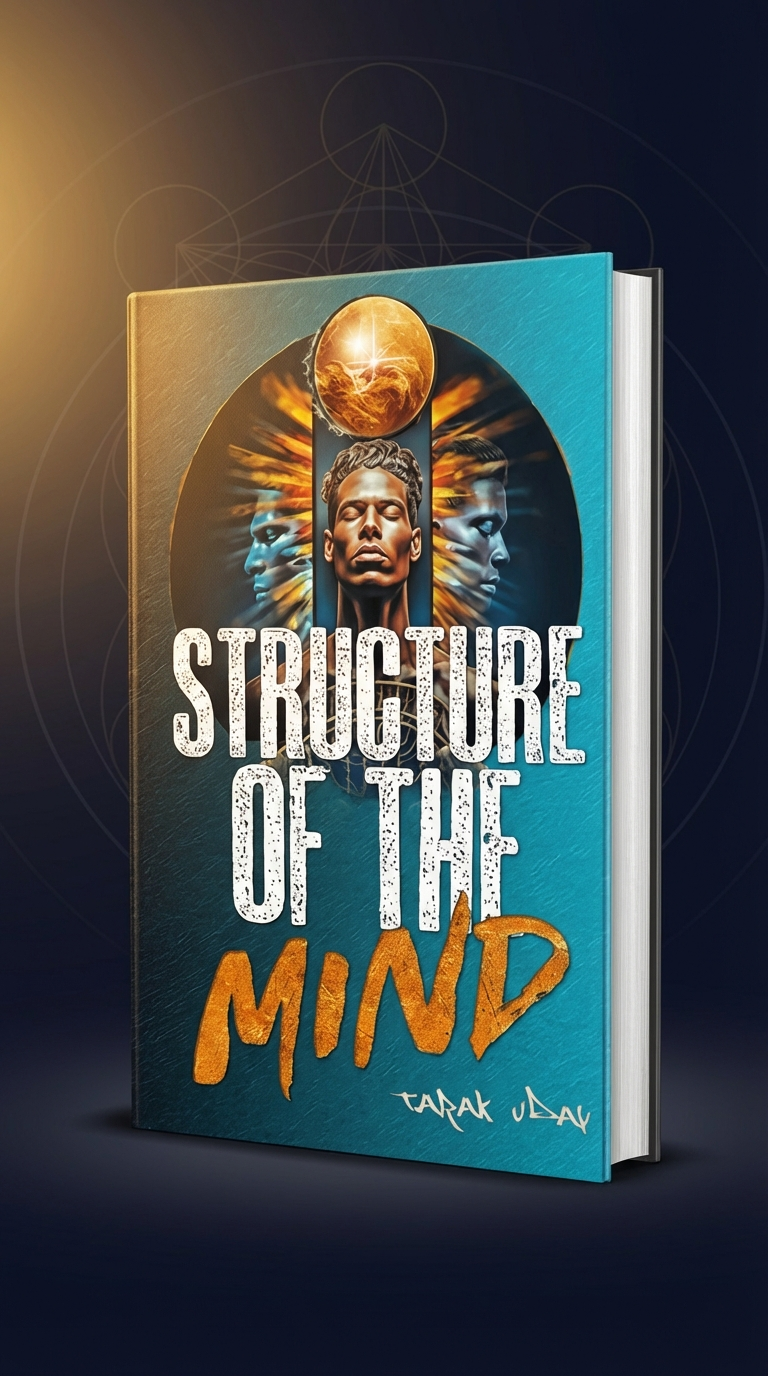
Tarak Uday takes this further in Structure of the Mind, his map of the three divisions of mind and the powers of attention, memory and imagination.
How Does CHITTA Accelerate Reading What Woke You?
All of this opens a gap. You now know that the dream is the message. But what you will actually have tomorrow morning is three half-legible lines scribbled in the dark, in a picture language nobody taught you to read, with nothing to compare them to.
CHITTA is the instrument for that gap. LUCID gives the order of operations itself: pencil and paper first, then transfer the dream to CHITTA. The dream journal dates each dream as you log it, so the scribble becomes an entry with a place in a sequence. The interpretation engine decodes it in the Universal Language of Mind, taking the symbols together, in the order they came, the way a sentence is read. And the symbol dictionary is there when you want to look up a single picture on your own, the house or the car or the stranger at the door.
Here is why that speeds things up. "I keep waking up at 3 AM" is a story, and a story can be repeated for years without teaching you anything. A dated record of what you were dreaming each time you woke is evidence. What was invisible becomes visible: which symbols return, what changed in your waking life the week they showed up, and whether the dreams shift once you act on what they say.
What Will You Do at 3 AM Tonight?
Before you sleep tonight, put a notebook and a pencil within reach of the bed. Write tomorrow's date at the top of a clean page. You are telling your subconscious mind that you expect to have something to write, and that this time you are listening.
Then, if your eyes open in the dark, do nothing at first. Don't roll over. Don't reach for the phone. Keep your eyes closed or barely open and ask one question: where was I just now? Let the last picture come back. A room. A face. A feeling of moving. Then write it, in the dark, as badly as you need to. LUCID is clear that a fragment counts: "Even if you only remember one thing, write it down."
If what you woke with was an idea instead of a picture, write the idea. Then put the pencil down, take a few long, slow breaths, and let yourself go back under. The time can wait until morning. It will not have changed anything.
Here is what this article has to leave open. You now know what waking at 3 AM is. What you were shown at 3:06, one minute before you looked at the clock, is something only you were there for. So if you wake at 3 AM tonight, write down the dream you just left before anything else.
Frequently Asked Questions



Books by Tarak Uday
Understand Your Own Mind
"Structure of the Mind" reveals the three divisions of mind, seven levels of consciousness, and powers of mind that most people never learn to develop.

Learn The Language Your Dreams Speak
"Life Is But a Dream" teaches the Universal Language of Mind — how to read any dream symbol by what it is and what it does, so every dream becomes a message you can act on.

LUCID
You've tried every lucid dreaming technique. Most miss the root cause. LUCID reveals what they all skip.