
Higher Self vs Superconscious Mind: How to Actually Connect
Your higher self isn't a wiser being living a floor above you. The superconscious mind is a tool, and the one you're trying to reach is the one holding it.
To connect with your higher self, you don't reach upward for a wiser being living above you. You still the movements of the mind until you notice who has been using it all along. The superconscious mind is a tool with a job; your Real Self is the consciousness using all three minds. You've probably sat with your eyes closed, asked for guidance, heard something quiet answer, and then wondered all evening whether that was your higher self or just you talking to yourself. The most honest evidence isn't anything you heard in the chair. It's the dream you woke up with this morning.
Is Your Higher Self the Same Thing as Your Superconscious Mind?
No, and the whole problem starts here. "Higher self" gets used for two completely different things, and most people never notice they're switching between them.
Sometimes it means the part of you that holds your purpose and sends the one-in-the-morning surge of inspiration. That's the superconscious mind. In the Universal Language of Mind, as Tarak Uday teaches it, the mind has three divisions, conscious, subconscious and superconscious, and each has a duty. The superconscious mind's duty is to supply lifeforce energy toward your blueprint. The map is in the three divisions of mind explained, and the blueprint in what you're actually consulting when you meditate on your purpose.
Other times "higher self" means the real you, the one who's still there when every thought stops. That isn't a mind at all. That's the Real Self.
So here's the belief worth confronting. You've pictured your higher self as a wiser version of you, standing a floor above, waiting to hand down instructions. That picture makes you the small one asking and something else the big one answering. In the Structure of the Mind it's the other way round. The minds are the tools. You're the one holding them.
So Who Is the Real Self, If It Isn't Your Mind?
You aren't your body. You aren't your soul, your spirit or your mind. Tarak Uday goes one step past the popular line about being a spiritual being having a physical experience; even that's inaccurate. Body, soul and spirit are vehicles, each calibrated to a different vibration, that your consciousness uses to experience life. Your Real Self is that consciousness: your own individual ray of the Creator's light, your I AM.
Notice where people stop short. Most identify with the body. Some sense something beyond the physical and identify with the soul or the spirit. But that's still a vehicle. It's like realising you aren't the car and deciding you must be the trailer.
None of this is new. It's ancient, and scripture preserved it. When Moses asks for a name, the answer in Exodus 3:14 (King James Version) is "I AM THAT I AM." Psalm 82:6 (King James Version) reads, "I have said, Ye are gods; and all of you are children of the most High." In the Bhagavad Gita, chapter 10 verse 20, Krishna speaks as the Self seated in the heart of every being. The Yoga Sutras of Patanjali, 1:2 and 1:3, describe yoga as stilling the movements of the mind, after which the seer rests in its own true nature. Read through the Universal Language of Mind, they all point at one thing. The I AM isn't a mind. It's the one the minds belong to.
And the Real Self is outside of time and space. It has no form and no beginning. So it can't be contacted like a person on the other end of a phone. It can only be uncovered, by quieting what's covering it.
Why Does Every Attempt to Connect Feel Like Talking to Yourself?
Because most of the time it is. You sit down, close your eyes and ask. The asking is the conscious mind doing its job, reasoning with memory, attention and imagination. Then you wait, and while you wait it keeps working. It drafts an answer. It imagines what a wise reply would sound like. Every one of those is a movement of the mind, and every movement is a layer between you and the seer underneath.
So the question isn't "how do I get my higher self to speak?" It's "how do I get the minds quiet enough that I stop hearing only them?"
The ancient answer comes in four parts, and Tarak Uday maps them as the four yogas. Yoga means union, and the union is with the Real Self. Raja Yoga is meditation and breathwork, the direct stilling of the mind. Karma Yoga aligns your intentions and actions with the True Self. Bhakti Yoga is devotion; understood metaphysically, prayer and chanting program the mind to stay devoted to the ideals of the True Self. Jnana Yoga is knowledge, practised through contemplation and through self awareness gained from dream interpretation.
That last one is the piece almost everyone skips. Your dreams are the subconscious mind reporting, accurately and nightly, what's actually occurring in your mind, including the noise you've been mistaking for guidance. One dream is a sentence. The same image returning for months is a paragraph.
There's a second reason it feels like talking to yourself: you were told what the higher self is, and you believed it. Tarak Uday's instruction runs the opposite way. Don't believe him; implement it and create your own experiences, because experience is what turns belief into knowledge.
What Does Connecting With Your Real Self Actually Look Like?
Ten minutes. Five speaking, five listening, then you write what came. Each part has a mechanism.
So start with the breath, because the breath ties the soul to the body and lets the conscious mind unite with the superconscious mind. Take a few slow rounds of the Long Breath: inhale through the nose without strain, exhale through the mouth for longer. You're just turning the volume down. Why every tradition opens here is in why every meditation tradition starts with the breath.
Then speak for five minutes, quietly or aloud, directly to your Real Self. Not to the sky, not to a guide. Speak to the I AM as the one you are. Say what you're carrying, what you intend and what you're willing to change. That's Karma Yoga and Bhakti Yoga in miniature: intention and devotion in your own words. It also empties the conscious mind, so it has less to interrupt with.
Then listen for five minutes. Don't ask anything new. Don't build an answer. When a thought arrives, notice it as a movement of the mind and let it pass, the way you'd return your attention to a candle flame. What comes is rarely a sentence. It's more often a settledness, a sudden simplicity about what you spoke of, an image that arrives without being constructed.
Then write what came, before reasoning edits it. Date it. "Nothing came" counts too, because a blank session recorded honestly is data.
Some nights you'll swear nothing happened. Then you'll dream. Most people believe they don't dream on those nights. They dream every night and lose it within ninety seconds of waking. Recall is a trainable skill, not a gift.
Tarak Uday takes this further in Structure of the Mind, his map of the three divisions of mind and the powers of attention, memory and imagination.
How Does CHITTA Accelerate Your Connection With the Real Self?
Here's the gap the practice leaves. On your own you've no way to tell whether anything is changing. Ten minutes on a Tuesday feels like ten minutes on a Friday. And the evidence that matters most arrives at night, while you're asleep.
CHITTA closes that gap with instruments. The Long Breath practice and its session log record your longest inhale and exhale every time you sit, so the state you speak from stops being a mood and becomes a dated number. The dream journal holds what you wrote after listening next to what you dreamed that night, and the interpretation engine decodes those dreams through the Universal Language of Mind, symbol by symbol, against the symbol dictionary. When a parent, the sky or a third floor shows up after a session, you can see the superconscious mind being represented, and what the dream says about how you're receiving it.
That's the acceleration. A feeling in the chair fades by lunch. A dated line, a breath count and a decoded dream side by side don't. Over weeks they become a trend line: which sessions were noise, which were stillness, and what the subconscious mind reported afterwards. You stop asking whether it was real, because you can read the record.
And a consultation that has already read every dream you've logged asks questions you wouldn't think to ask yourself. That's ASK BINDU, once the record exists.
What Should You Do Tonight to Connect With Your Higher Self?
So here it is. Sit for ten minutes: five speaking to your Real Self, five listening, then write what came. Open with the Long Breath and log the numbers. Speak to the I AM as the one you are. Listen without building. Write before you reason. Then sleep, and write down whatever you wake up with, even a fragment.
Your Real Self was never upstairs waiting for a call. It's been the one listening the whole time. What you heard tonight is yours to write down. What the subconscious mind says about it, in the dream you'll wake up with tomorrow, is the part no article can tell you.

Frequently Asked Questions


Books by Tarak Uday
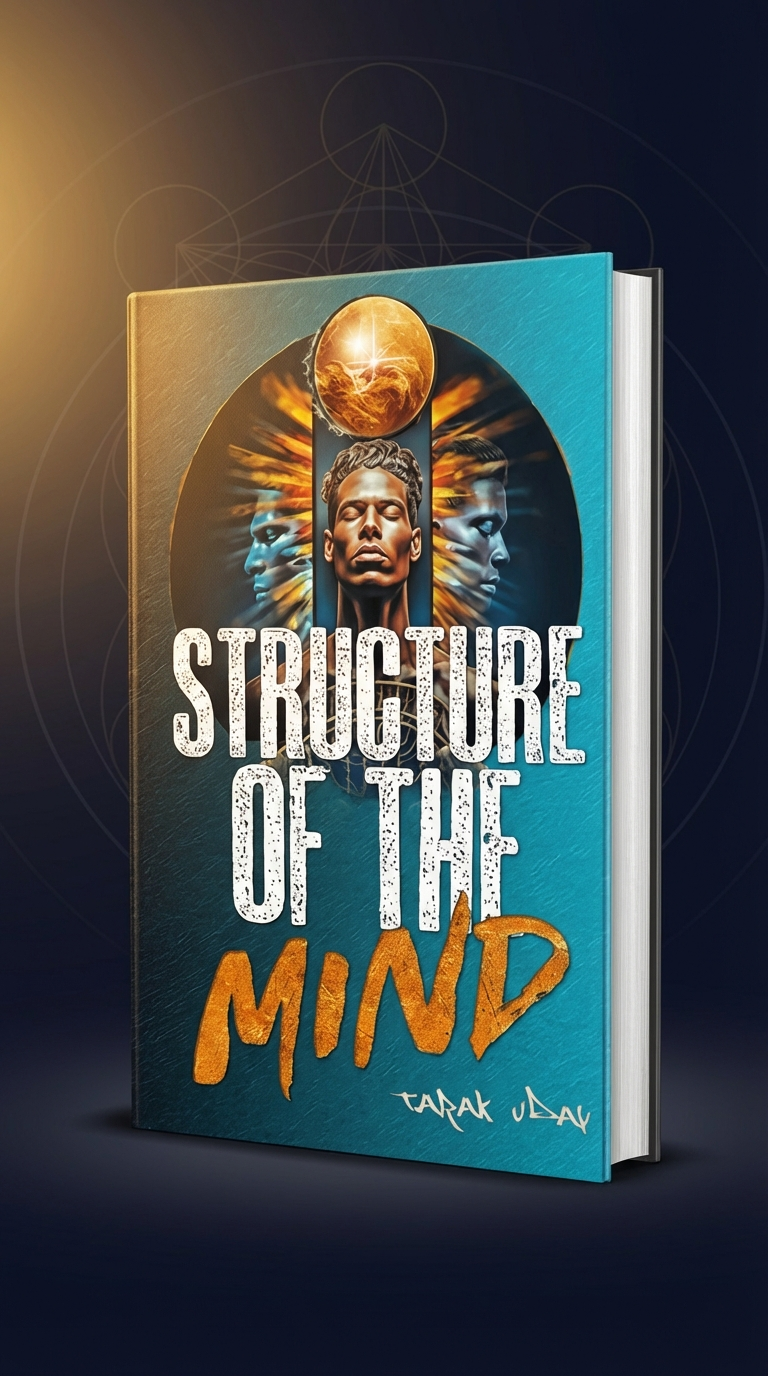
Understand Your Own Mind
"Structure of the Mind" reveals the three divisions of mind, seven levels of consciousness, and powers of mind that most people never learn to develop.

Learn The Language Your Dreams Speak
"Life Is But a Dream" teaches the Universal Language of Mind — how to read any dream symbol by what it is and what it does, so every dream becomes a message you can act on.
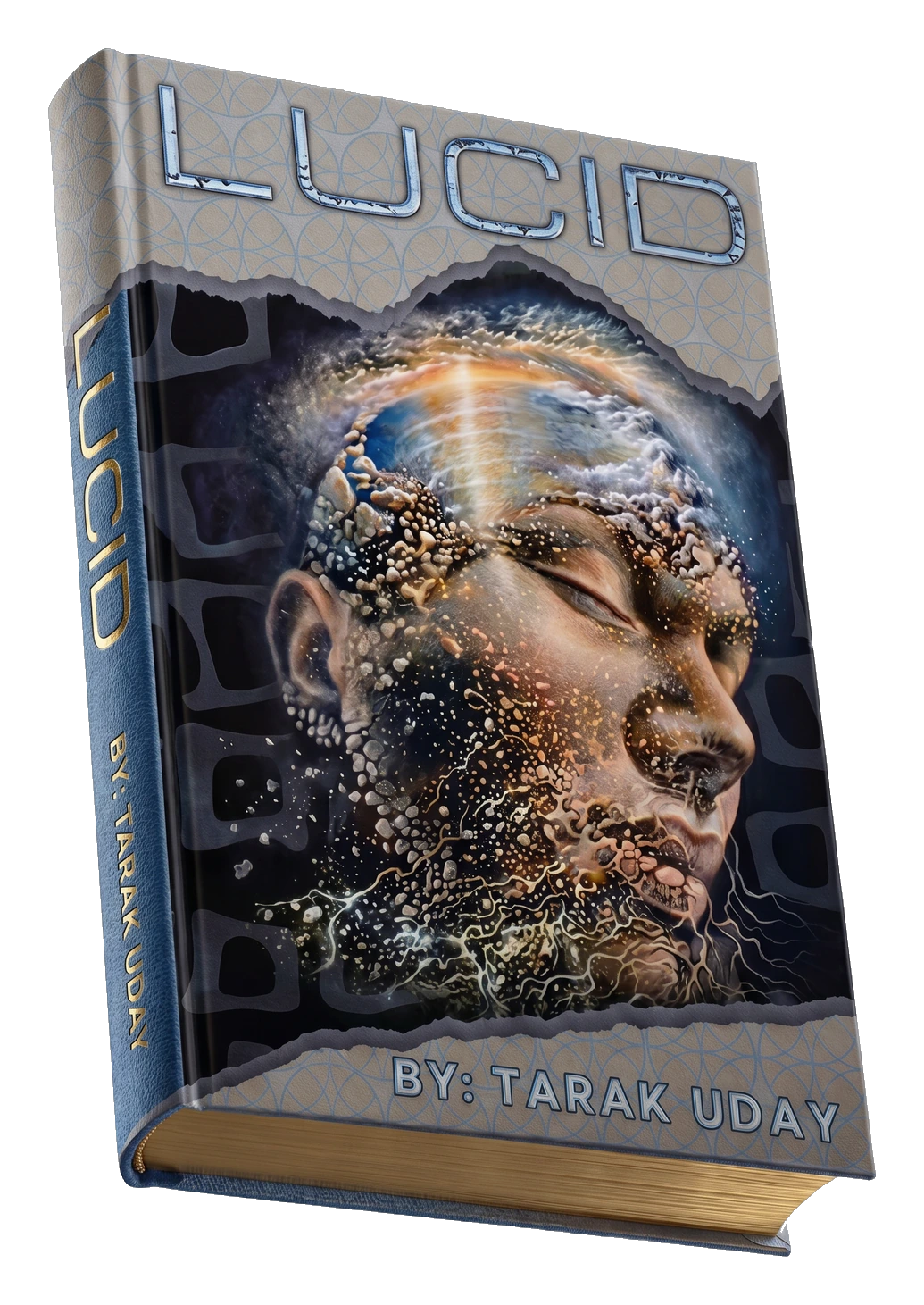
LUCID
You've tried every lucid dreaming technique. Most miss the root cause. LUCID reveals what they all skip.