
Meditation in Dreams: Why Your Mind Rehearses Stillness


You dreamt you were sitting still. No chase, no falling, no stranger at the door. Just you, seated, breathing, going nowhere. And when you woke up you almost didn't write it down, because nothing happened.
That nothing is the most eventful thing your subconscious has shown you in months.
Most people read a meditation dream as a nudge. The mind is telling me to start a practice. Add it to the list, somewhere under drink more water. That reading is comfortable and it is wrong, and it's wrong in a specific way that costs you the message entirely. Your subconscious doesn't assign homework. It reports. It shows you what is already happening inside you, in pictures, in a language that predates every spoken tongue on this planet.
In the Universal Language of the Mind, meditation is not an instruction to meditate. It's the image of unification and alignment with the Real Self. When it shows up in a dream, some part of you has already stopped fighting itself.
What does meditation actually mean in the Universal Language of the Mind?
Start with the mechanic, because the mechanic is what makes this usable. Every dream image means what it does, not what it looks like. Function, not decoration. A car carries you, so a car is your physical body and your life in physical reality. A ladder gets you to a level you could not otherwise reach, so a ladder is a mental tool for accessing higher levels of mind. This is the whole engine of the Universal Language of the Mind, and once you have it you stop guessing at dreams forever.
So what does meditation do? It gathers. It takes a mind that was scattered across a dozen demands and pulls it into one place, pointed at one thing. That's the function. That's the meaning. Meditation in a dream is unification and alignment with the Real Self — the part of you that was never anxious, never performing, never negotiating for approval.
Notice what that is not. It's not peace as a mood. It's not calm as a personality trait. Alignment is structural. It describes an arrangement of your inner parts, the way a spine is aligned or a wheel is aligned. Your conscious mind, your subconscious mind, and the superconscious blueprint underneath both of them stop pulling in three directions and point the same way. The dream shows you a person sitting still because stillness is what that arrangement looks like from the outside.
Tarak Uday teaches that the images your mind selects are never arbitrary and never poetic. They are precise. Your subconscious had every symbol available to it and it chose a figure in stillness. It chose that because something in you has genuinely quieted, and the mind is showing you the receipt.
Why does your subconscious show you stillness instead of action?
Here's the part that trips people up. Dreams are usually busy. You're running, driving, arriving late, losing your teeth, standing in a house you've never seen. Motion is the default because most inner life is motion — thoughts arriving, being chased, being avoided. A dream that goes still is a dream where the motion stopped mattering.
Your subconscious speaks in contrast. It shows you stillness precisely when stillness is the new information. If your waking days have been loud, contested, spread across too many obligations, then a seated figure is a report on a change of state, not a wish. Something has resolved. A decision you thought you were still agonizing over has quietly been made underneath you, and the dream is the notification.
Your subconscious doesn't assign homework. It reports. Stillness in a dream means something inside you already stopped fighting.
This is where the mirror turns on you. Ask yourself what you stopped arguing with in the last two weeks. Not what you solved — what you stopped defending. Alignment rarely arrives as a breakthrough. It arrives as a subject you used to have a lot to say about and now don't. The dream catches that shift before your waking mind gets around to noticing it, because your subconscious is not distracted by your calendar.
And there's a second reason for the stillness. Sleep itself carries a meaning in this language — assimilation, the mind digesting experience into usable understanding. So a dream about deliberate inner quiet, occurring inside sleep, is the mind doubling down. It's telling you the assimilation is going well. You're not just resting. You're integrating.
What is your dream telling you when the meditation goes wrong?
Now the useful cases, because a clean meditation dream is rarer than a disrupted one.
You sit down to meditate in the dream and you can't. Your legs won't fold, the floor tilts, someone keeps talking. That's not failure and it isn't a warning. It's a description of an attempt in progress. Some part of you is genuinely reaching for alignment and meeting resistance from another part that benefits from the noise. The interruption is the message. Whatever interrupts you in the dream is the inner quality currently outvoting your intention.
So look at what interrupted. A person talking is an aspect of yourself — a man is an aspect of the conscious mind, a woman an aspect of the subconscious mind, a child an undeveloped aspect of self. If a child kept pulling at you while you tried to sit, the thing breaking your alignment is immature, not malicious. It needs raising, not defeating. That single distinction changes how you handle it in waking life, and it's the kind of precision you only get when you read the images by function instead of by feeling.
You meditate and feel nothing. Blank, flat, no light, no warmth. This one worries people and it shouldn't. Light in this language is awareness — what becomes known. An absence of light isn't an absence of progress. It's alignment happening below the threshold where your conscious mind can observe it yet. The work is real and you haven't been given visibility into it. That's normal, and honestly it's a mercy, because premature visibility is how people start managing their own growth instead of allowing it.
You meditate somewhere strange. A temple, a hallway, a field, your childhood kitchen. The location is a state of mind, and it tells you where in yourself this unification is taking place. A temple or church is a spiritual state of mind, so alignment is happening at the level of your relationship with your own source. A childhood room means it's happening in territory formed early, in the old material. Same event, very different address.
How does the setting around the meditation change the message?
Read the whole frame, not just the figure. Your subconscious builds a complete sentence and most people only read the noun.
If someone teaches you to meditate in the dream, pay close attention. A teacher in this language is the superconscious mind — the part of you holding the blueprint of who you actually are. Being taught is not a small image. It means guidance is arriving from the deepest available level, and that level does not waste transmissions. Whatever that figure demonstrated is worth reconstructing in detail the moment you wake.
If you're meditating with a group, you're seeing multiple aspects of yourself doing the same thing at once. That's what unification looks like when it becomes plural — not one part getting quiet, but several parts agreeing. It's a stronger signal than the solitary version, and it usually arrives after a period where those same parts were in open conflict.
Breath is worth naming too. If the dream emphasized breathing, you've been shown an external source of lifeforce energy entering the system. The alignment isn't just internal rearrangement. Something is being supplied. That pairs with a very specific waking experience — the week where you didn't do anything differently but had noticeably more to give.
Stop guessing at your own dreams. CHITTA reads them in the Universal Language of the Mind — the same functional method used here — and hands you the interpretation with the mechanics shown. Start your free 7-day trial and decode tonight's dream by morning.
Does dreaming about meditation mean you should start meditating?
Let's kill this one properly, because it's the most common misread and it quietly wastes the dream.
Tarak Uday takes this further in Structure of the Mind, his map of the three divisions of mind and the powers of attention, memory and imagination.
A dream is a message from your subconscious mind to your conscious mind about the state of your inner life. It is not a coach. It doesn't hand out assignments and it has no interest in your habit tracker. When your mind shows you a symbol, it's describing a condition that already exists, the way a thermometer describes a fever it did not cause.
So no — a meditation dream isn't an order to buy a cushion. It's a status report saying unification is underway. If you go straight from the dream to a new morning routine, you've taken a description and turned it into a chore, and you've skipped the part where you find out what actually aligned.
That said, here's the honest nuance. If you do have a meditation practice, this dream is telling you it's landing. The practice is producing the structural change it's supposed to produce, and you now have independent confirmation from a part of your mind that has no reason to flatter you. Keep going. And if you don't have a practice, the dream is telling you that alignment reached you through some other door — a decision, a loss, a relationship that resolved, a belief you finally put down. Find that door. That's where your leverage is.
Either way, the instruction the dream is genuinely giving you is the same one it always gives. Look at what changed. Not what you should add.
What do you do with this the morning after?
Interpretation without application is entertainment. So here's the bridge.
First, write the dream down before you decide it was boring. Meditation dreams are the ones people skip, and they're the ones carrying the clearest structural news. You are logging an alignment event. You want the record.
Second, find the waking correlate within twenty-four hours. Alignment in a dream always has a daylight counterpart, and it is usually smaller than you expect. A conversation you didn't need to win. A message you didn't need to send. An old resentment you noticed you'd stopped rehearsing. Name it out loud. Naming it is how you make an unconscious change conscious, and a change you've made conscious is one you can repeat on purpose.
Third, protect it. Whatever interrupted the meditation in the dream will try the same move in your waking day, because it's the same inner quality either way. If a voice broke your stillness in the dream, notice which voice breaks it at 3pm. Same part. Same tactic. You now know its face.
And a warning worth stating plainly. A meditation dream is not permission to coast. Alignment is a state, not an achievement, and states drift. The dream is showing you the arrangement is currently correct. It says nothing about tomorrow. So use the window. Alignment is when your decisions cost you the least, so this is the week to make the one you've been deferring — the mind that made the picture is telling you the parts are pointed the same way, and that's exactly when you should move.
Your subconscious rendered a person sitting perfectly still to tell you something had finally settled. That's not nothing happening in your dream. That's the report you've been waiting for, written in the Universal Language of the Mind, and now you can read it.
Frequently Asked Questions



Books by Tarak Uday
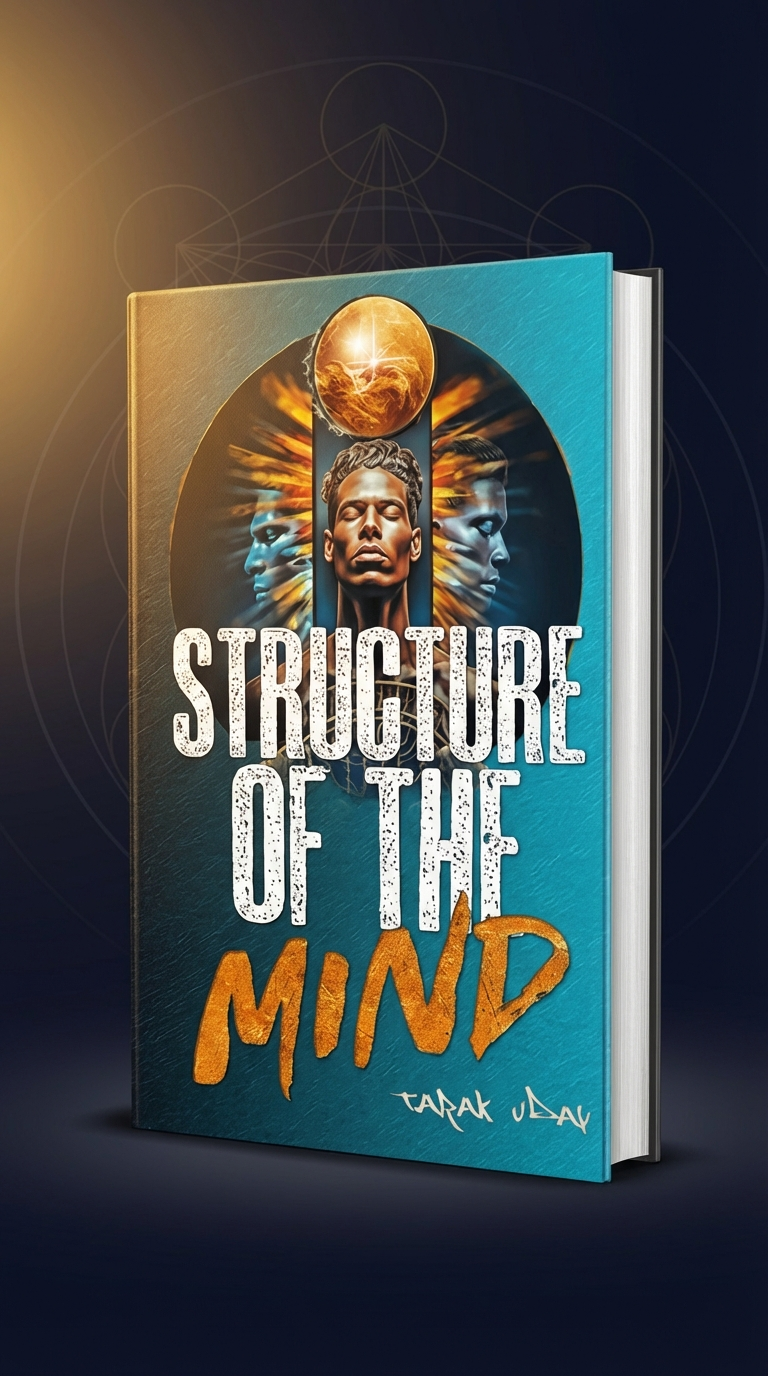
Understand Your Own Mind
"Structure of the Mind" reveals the three divisions of mind, seven levels of consciousness, and powers of mind that most people never learn to develop.

Learn The Language Your Dreams Speak
"Life Is But a Dream" teaches the Universal Language of the Mind — how to read any dream symbol by what it is and what it does, so every dream becomes a message you can act on.

LUCID
You've tried every lucid dreaming technique. Most miss the root cause. LUCID reveals what they all skip.