
Wake Back to Bed: The Three Ways to Re-Enter a Dream
The alarm isn't the technique. It only puts you at the door. What you carry back across the threshold decides which dream you walk into, and there are three different ways through.
The wake back to bed method is simple: you wake yourself in the last stretch of the night, stay awake just long enough to bring your conscious mind online, and go back to sleep holding a dream in your attention. The clock isn't the secret. What you carry back across the threshold is. You know the moment. You wake before dawn from something vivid, a hallway, a voice, a door you were about to open, and by the time you've rolled over it's thinning out like breath on a cold window. You tell yourself you'll remember it in the morning. You don't. But that dream you just lost isn't sealed off. It's the one you can walk straight back into.
What Is the Wake Back to Bed Method, Really?
Most guides teach wake back to bed as a sleep-timing hack. Set an alarm, stay up a fixed number of minutes, lie back down. The whole conversation is about the clock. So people tweak the numbers for weeks and wonder why nothing changes.
Here's the flip. The timing is the least important part of the method. The alarm only puts you near the door. What decides whether you walk through it, and where you land when you do, is what your attention is holding in the minutes before sleep takes you again.
To see why, you need the metaphysical mechanics underneath sleep. In LUCID, Tarak Uday describes what happens every night: your consciousness shifts from the physical body into the astral body, and your attention moves inward to the inner levels of the subconscious mind. He's precise about who's actually resting: "Only the physical body and conscious mind need to rest. The soul doesn’t need to rest." The dream doesn't stop because you woke up. The part of you having it never clocked out.
And this is the part most people miss. Ordinary dreaming, lucid dreaming and leaving the body consciously aren't three different events. In his words: "These are all the exact same experiences. The only thing that is different is the perspective we have on it and the level of awareness we maintain throughout it." So wake back to bed isn't a trick that manufactures lucid dreams. It's a way of re-entering the same nightly shift with a little more of you awake for it.
Why Does Waking Up in the Night Feel Like Losing the Dream?
LUCID uses a picture you'll recognize. A child falls asleep at a relative's house, gets carried to the car, and wakes up at home with no idea there was a car ride. Now imagine the child wakes halfway through the drive, looks out the window, then dozes off again. Next day they remember a few things they saw. That's what remembering a dream is.
Waking in the night is that moment in the back seat. The trouble is what you do with it. Your attention slams back into the physical body: the cold room, the glow of the phone, the meeting at nine. The dream, which was only ever held by attention, drops away. Most people believe they're just bad at remembering dreams. They aren't. Recall is a trainable skill, and the reason it fails at 5 a.m. is the same reason you forget your dreams at 7: attention left before memory caught the image.
In Life is But a Dream, Tarak describes learning at five years old to exit any dream by pulling his knees to his chest and dropping his head. Then he hit the problem every wake back to bed practitioner hits: "However, this would be in the middle of the night and I would have to go back to sleep." He didn't want to escape a nightmare only to fall straight back into it. So, in his words, "This new dilemma caused me to create the ability to control what dream I would move into."
What Are the Three Ways to Re-Enter a Dream?
So you're awake in the dark with a dream still warm. You have three doors, and they don't lead to the same place.
The first way is to re-enter the same dream. Don't move. Replay the last image you remember and say the whole dream to yourself in one sentence. Then let your body go heavy while you keep looking at that image. Tarak describes waking as a boy with no fear of missing out on a great dream, because "I knew I could always start the same dream right back up where it left off when I went to go to sleep the very next night." If a dream can be held across a whole day, it can be held across five quiet minutes. Holding the last image is how you pick up the thread instead of starting a new one.
The second way is to choose a different dream. This is the door Tarak built as a child, for when you wake from something you don't want to return to. LUCID teaches dream incubation through stream of consciousness writing: you write without letting the pen stop until your mind is empty, which clears the conscious mind and makes room to receive the subconscious mind. LUCID calls it a tool you can use at any time. Write, then write the one question you want the dream to answer, and go back to sleep with it as the last thing you see. If you're building this into a routine, the 30-day lucid dreaming path shows where incubation fits in the sequence.
The third way is to keep the mind awake while the body falls asleep. This is the steepest door. LUCID describes it plainly: if you can keep your mind awake as your body falls asleep, and stay conscious of the shift from one body to the other, that's what gets labelled astral projection. The wake back to bed window is the easiest time to try it, because the body is already deep in rest. For where that line sits, read the difference between lucid dreaming and astral projection.
Notice what all three doors have in common. None of them is about the clock. Every one of them is about what your attention is holding in the last moments before sleep.
What Decides Which Dream You Fall Back Into?
LUCID names three mental skills that every lucid dreamer needs: memory, so you recall the experience; concentration, so you can navigate inside it; and imagination, which determines what you manifest and experience there. On concentration, it doesn't soften it: "Lucid dreaming and astral projecting without any control over your attention is like driving down the highway with no steering wheel and standing on the gas pedal." That's why so many attempts end in a random dream or an hour of lying awake. Undisciplined attention is why the technique didn't work, not the technique. It's also why the candle concentration exercise, with its tic mark for every lapse, is the training that makes the threshold hold.
Imagination is the second lever, and it's simpler than it sounds. In the Universal Language of Mind, a thought is an image. The subconscious mind doesn't process your intentions as words; it processes pictures. So "I want to be lucid" lands as nothing. A clear picture of the hallway, the door, your own hand on the handle, lands as an instruction. Learning to send images on purpose is learning to speak the subconscious mind's language instead of only reading it.
So here's the bridge to the rest of your life. The same mechanism runs while you're awake. LUCID teaches that shifting your state of mind is a matter of what you give your attention to: "We merely have to change and transform the thoughts that we are entertaining." The 4 a.m. worry spiral that keeps you up is that mechanism running without a driver. You fall back into whatever thought is loudest, asleep or awake. Wake back to bed is practice at choosing the thought before it chooses you.
And there's one more layer no single night can show you. One dream is a sentence. A symbol that returns every time you re-enter, week after week, is a paragraph, and it's saying something no single interpretation can see.
How Does CHITTA Accelerate the Wake Back to Bed Method?
So now you know what to do with the threshold. Here's the gap: you'll wake at odd hours holding dreams, and by breakfast each one is a vague story. Without a record, you can't tell which re-entries worked or whether the dream you went back into continued or changed. LUCID is direct about this: "Conduct your own research, gather your own data, and be a scientist."
Tarak Uday takes this further in LUCID, his book on becoming aware inside the dream.
CHITTA is that instrument. The dream journal holds the dream you woke from with its date and time, so the 5 a.m. dream and the 7 a.m. dream sit side by side instead of blurring into one night. Decoding reads each entry in the Universal Language of Mind, not as a dictionary lookup but as the symbols in your dream, in sequence, beside the other symbols they appeared with. That's the difference between knowing what a door means in general and knowing what it means that you were reaching for one twice this week.
That's where the acceleration comes from. What was a feeling becomes a dated record. What was a hunch about which door works for you becomes a pattern you can see. And the dream you deliberately chose to re-enter can be read against the one you woke from, which is the only way to know whether you actually moved into it or simply dreamed something new. For the full method from the source, LUCID lays out the path the book itself teaches.
What Else Do People Ask About Wake Back to Bed?
Does wake back to bed work if I'm a heavy sleeper? Yes, but start by catching the dream before you try to re-enter it. If you can't recall anything when the alarm goes off, train dream recall first. LUCID's 5-day 5-step memory exercise, recalling five moments of your day in reverse order, is built for exactly that.
Should I do it every night? Do it on nights you can afford the interruption. One clear attempt teaches you more than five groggy ones.
What if I fall back into a nightmare? Use the second door. Write, set a question, and choose the dream you move into. That's exactly the ability Tarak built as a child for exactly this reason.
Tonight, set one alarm for the last sleep cycle and write down the dream you wake from. That tells you what you dreamed. It won't tell you why that dream was the one waiting for you at the door.

Frequently Asked Questions


Books by Tarak Uday

LUCID
You've tried every lucid dreaming technique. Most miss the root cause. LUCID reveals what they all skip.

Learn The Language Your Dreams Speak
"Life Is But a Dream" teaches the Universal Language of Mind — how to read any dream symbol by what it is and what it does, so every dream becomes a message you can act on.
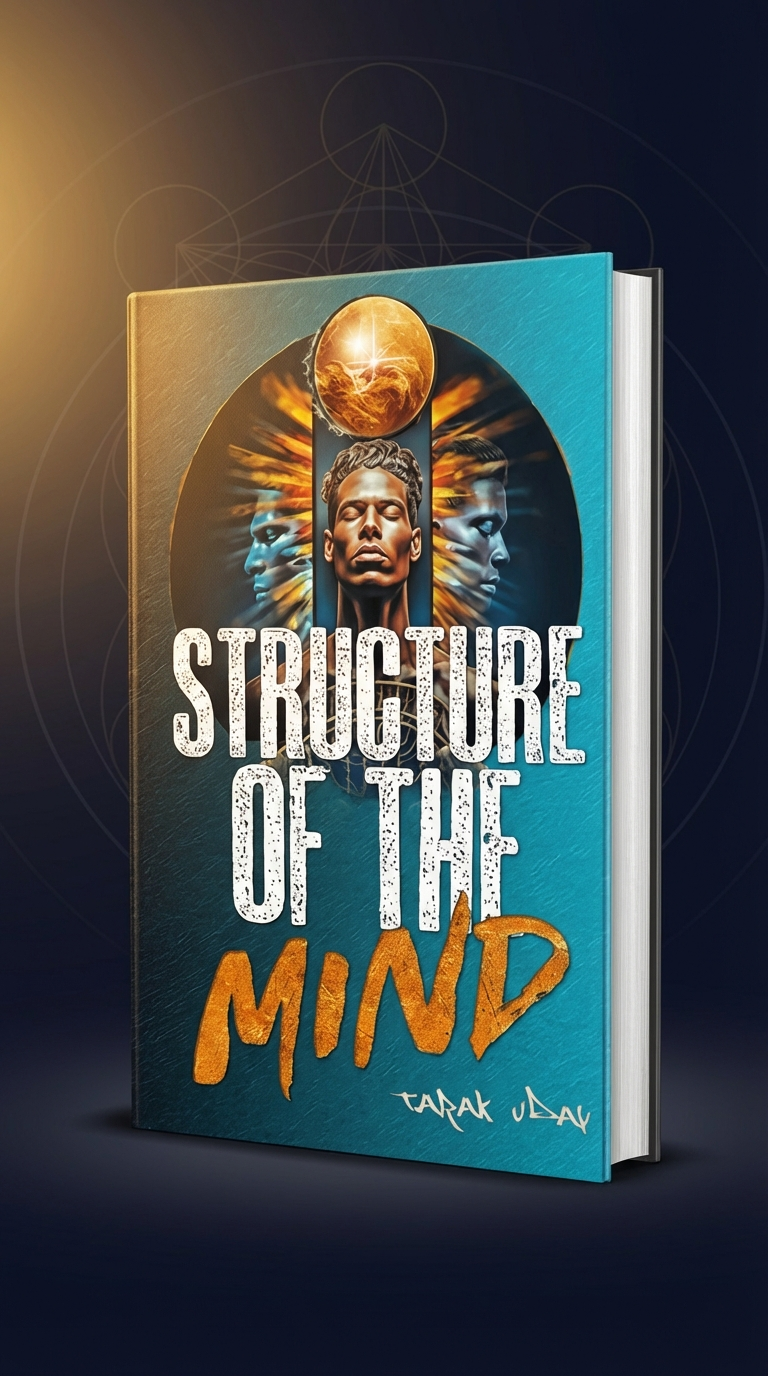
Understand Your Own Mind
"Structure of the Mind" reveals the three divisions of mind, seven levels of consciousness, and powers of mind that most people never learn to develop.