
Can You Change Yourself Inside a Lucid Dream? Spiritual Surgery in Five Steps
A lucid dream puts you inside the subconscious mind, where your patterns actually live. LUCID calls the change you can make there spiritual surgery, and it only holds if you live it when you wake.


Yes, you can change yourself inside a lucid dream. LUCID calls it spiritual surgery: the conscious, deliberate transformation of an aspect of your own consciousness from within the dream state, and it's done in five steps. You probably already know which part you'd change. The temper that fires before you can think. The flinch when someone raises their voice. The habit you've beaten with willpower a hundred times and watched come back. Willpower keeps losing because that pattern doesn't live in daylight. It lives in the subconscious mind, and you walk into the subconscious mind every single night. So think of the last dream where someone acted exactly the way you wish you didn't. That figure was you, and it's where the surgery would begin.
Can You Really Change Yourself Inside a Lucid Dream?
So most people treat a lucid dream as a ride. You realize you're dreaming, you fly, you walk through a wall, you wake up grinning. Tarak Uday calls that extraordinary, and then refuses to let it be the point.
Here's the mechanism underneath that line. In the Universal Language of the Mind, as Tarak Uday teaches it, a dream isn't a random firing of a sleeping brain. It's a real experience within the fourth dimension, inside the subconscious levels of your mind. The house you walk through is an actual state of mind. The people you meet are actual aspects of your own consciousness. The animals are actual habits.
Now look at how change normally travels. In waking life, a new thought has to move from the mental level down through the astral levels and the emotional level before it shows up in the physical. That takes days, weeks, sometimes years.
In a dream, you're already inside the levels where the pattern is held, and the distance between intention and result is far shorter. When you're lucid there and you choose to change something, you aren't receiving a message and responding to it later. You're intervening at the cause.
One plain line before going further. This is self-mastery practice, not therapy and not a treatment for anything. It isn't medical or psychological advice; if you have physical symptoms, see a doctor, and if you're struggling, reach a qualified professional.
Why Does LUCID Tell You Not to Change Anything at First?
Here's the part nobody expects. For most of the book, Tarak tells you NOT to change anything in a lucid dream. Observe before you act. Awareness before control. Every time a new lucid dreamer reaches for the steering wheel, the book pulls their hand back and says not yet.
That restriction is the stage covered in what to do inside a lucid dream: stay calm, read the environment, interact, record. This article is about the stage after it, and you don't earn it by wanting it. You earn it through what the observation stage builds: comfort being lucid, the concentration to hold awareness, fluency in the language, and experience moving through the inner environment without collapsing it.
Concentration is the one people underrate. Holding a dream steady long enough to make a calm, deliberate choice isn't luck. Undisciplined attention is why most lucid dreams fall apart the moment you reach for anything, and how to stay lucid without waking up works on exactly that.
The reason for all this caution is weight. If you end something carelessly in a dream, without understanding what it represents, LUCID says the consequences in waking life reflect that ignorance. You may find yourself confused by changes in your personality, your relationships, your emotional responses.
Tarak's picture for it is an operating room. Nobody walks in and starts cutting without knowing anatomy. The Universal Language of the Mind is the anatomy. The months of recording and decoding dreams are the surgical training. If you want the wider picture of what's safe and what isn't, is lucid dreaming safe covers it.
So the rule is simple. Transform only when you've clearly identified the aspect, you understand what it represents, you've made a deliberate decision about it while awake, and then you meet it in a lucid dream. If any of those is missing, observe, record and decode instead. The aspect will come back.
What Does Spiritual Surgery Look Like Inside a Real Dream?
LUCID doesn't leave this abstract. Tarak tells the dream he calls the most personally significant lucid dream he's had.
He's driving his red Ford F-150 to his grandmother's house. A man is chasing him in another vehicle, honking, hollering, tailgating, enraged. Tarak pulls into the driveway and walks into the backyard. The man jumps out and comes after him. A garden trowel appears in Tarak's hand from nowhere. The man is two feet away when the recognition lands: this is the part of himself that is very confrontational. Instant lucidity, and the whole dream freezes.
Read it in the language. The vehicle is the physical body and how he was moving through life, and red is passion and intensity. His grandmother's house is the state of mind tied to the superconscious mind, so even while chased by his own aggression he was driving in the right direction. The man is a male figure, a conscious-mind quality, and a stranger, which means it was a part of himself he didn't identify with. You can't see a quality you've lived inside your whole life. It's like asking a fish about the water. The trowel is a mental tool, handed over by the subconscious at the moment it was needed.
Standing in the frozen dream, he made the decision clearly, without impulse or emotion:
He ended that aspect with the trowel, and woke up.
A few days later his friend Brendan, mid-debate at work, shouted that he was an IDIOT. The old Tarak would have roasted him. Instead he said Brendan might be right, that he'd think on it, and let him know if he discovered he was being an idiot. What surprised him wasn't the choice. It was how easy and natural it was. No gritted teeth. The impulse simply wasn't there. And the irony: Brendan was the man who had first introduced him to lucid dreaming.
Notice one more thing. That story exists only because the dream was remembered in detail, the color of the truck included. Most people believe they barely dream. They dream every night and lose it within moments of waking. Recall is a trainable skill, not a gift, and how to lucid dream in 30 days starts there.
What Are the Five Steps of Spiritual Surgery?
LUCID gives the framework in exactly five steps, in this order.
1. Identify. What is the aspect? Who or what in the dream represents it, and what quality does it embody? Be certain. If there's any ambiguity, observe instead. There will be other chances, and there's no rush.
2. Decide. Is this a conscious decision made from understanding, or is it fear, anger, frustration or impulse? If you're ending a part of yourself because you're angry at yourself, the surgery is contaminated before it starts.
3. Act. Make the change inside the dream. It takes the form the intention needs. Ending a quality, as Tarak did. Healing a wounded part of yourself by approaching it with compassion and restoring it, which is what lucid dream healing actually means in this teaching: inner healing that shows up in how you feel, think and behave. Building something new, a structure, a door, a room. Or transforming one quality into another.
4. Understand. The moment you wake, record everything. Then identify, in the Universal Language of the Mind, exactly what you changed. What quality ended? What was healed? What was built? You can't align with a change you can't name.
Tarak Uday takes this further in LUCID, his book on becoming aware inside the dream.
5. Align. LUCID calls this the most critical step and the one most people overlook. The inner change is made. Now your outer behavior has to match it. Change the confrontational aspect and then pick a fight the next morning, and you've built a severe misalignment, like rebuilding a wall you just tore down.
How Does CHITTA Accelerate Spiritual Surgery?
The five steps rarely break in the dream. They break in the record around it. Step one asks you to be certain what a figure represents, and certainty doesn't come from one dream. Step four asks you to name precisely what you changed, at the edge of waking, when memory is draining fastest. Both steps run on a written record and a decoding you can trust.
LUCID itself points there. In the Understand step, the book says: "Use the CHITTA Dream Decoder at UseChitta.com to assist if needed."
CHITTA's dream journal dates every entry, so the stranger who chased you in March sits beside the one who cornered you last night. One dream is a sentence. The same figure returning for months is a paragraph, and it's how step one becomes certain instead of a guess. The interpretation engine decodes each entry in the Universal Language of the Mind, symbol by symbol and in sequence, and the symbol dictionary stays open while you read. After the surgery, that dated entry becomes your reference for step five. You can read back exactly what you changed, and watch whether the figure returns.
That's the acceleration. What was a vague feeling about yourself becomes a named aspect with a dated history, and what was a hope that something shifted becomes a record you can check against your waking week.
What Would You Change in Yourself, and Why?
Tonight's act takes one page, and you don't need to be lucid for it.
Before you sleep, write down the one part of yourself you would change inside a dream. Name it plainly: the quality, the reflex, the pattern. Then write why. The why is the real test, because it's the second step done in advance. If your why sounds like anger at yourself, or fear, sit with it longer. A clean why sounds like understanding: this quality no longer serves my growth, and here's how I know.
Keep the page by the bed. When a dream brings you a figure acting out that exact quality, you'll recognize it.
This article can give you the five steps. It can't tell you which figure in your dreams is already carrying the quality you just wrote down, or how long it's been following you. That's in your dreams. Your page is where you'll first see it.
Frequently Asked Questions



Books by Tarak Uday

LUCID
You've tried every lucid dreaming technique. Most miss the root cause. LUCID reveals what they all skip.

Learn The Language Your Dreams Speak
"Life Is But a Dream" teaches the Universal Language of the Mind — how to read any dream symbol by what it is and what it does, so every dream becomes a message you can act on.
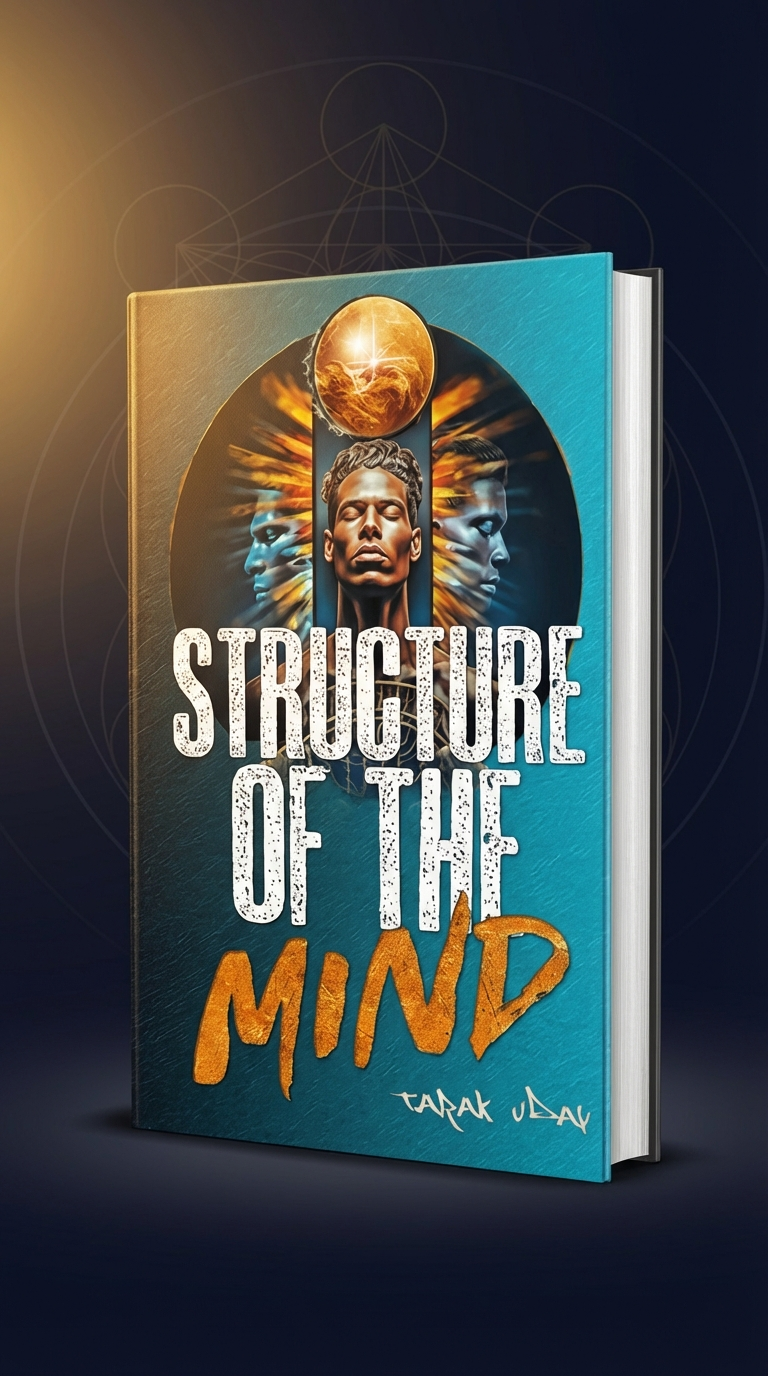
Understand Your Own Mind
"Structure of the Mind" reveals the three divisions of mind, seven levels of consciousness, and powers of mind that most people never learn to develop.