
Train Dream Meaning: Why You Keep Missing the Train
Everyone tells you a train dream means "your life is moving fast" or "you're missing an opportunity." The Universal Language of Mind says it's something far more specific — and your subconscious is pointing at a real organization in your life right now.
So you're standing on a platform. You can hear the train. Maybe you can already see it pulling away, or maybe you're sprinting along the platform and your legs feel heavy and the doors are closing as you reach them. Or you're sitting inside the train and it's accelerating and you suddenly realize you don't know where it's going. Or you're watching it from a distance, derailing in slow motion, and you can't move. You wake up and you type "what does it mean to dream about a train" into Google because something about it is sitting in your chest hours later.
Here's the answer most people don't get: in the Universal Language of Mind, a train doesn't represent your life moving fast or a missed opportunity in the vague way every dream site tells you. It represents an organization — a specific group of aspects of yourself, or a real organization in your waking life, moving together on a predetermined track with enormous momentum. The dream is naming that organization for you. Your job is to figure out which one.
So what's actually on the platform with you
look, before we even talk about what the train means, let me say what most people miss. The dream isn't abstract. It's pointing at something specific. Right now, in your waking life, there's an organization you're part of, leaving, joining, watching, or being run over by. The train is that organization rendered as an image.
It might be your workplace. It might be the family system you were raised inside of. It might be the friend group that's been on the same track since college. It might be a spiritual community, a political identity, a religion you inherited, a marriage with its own routines, even an organized set of mental habits you've been running for years. All of those are organizations — coordinated movements of aspects toward a common destination. Your subconscious doesn't care whether the organization is outer or inner. It picks the most accurate image, which is the train.
So before we even decode the variations, name the organization. Don't generalize. Don't say "my life." Say the specific one. "My company." "My marriage." "The way my family does Christmas." "The version of myself that wakes up at 6 a.m. and does the gym routine no matter what." Once it's named, the dream becomes surgical.
Why dream dictionaries miss the train
so this is the part that's actually wild. Almost every dream site treats a train dream like a vague life-direction symbol. "You're on the wrong path." "You're moving too fast." "You're feeling out of control." That's not interpretation — that's filler. It points you inward at your generic mood instead of outward at a specific structure your subconscious just named.
According to the Universal Language of Mind that Tarak Uday teaches, dreams are not vague. They are surgical. Every symbol your subconscious chooses is the most precise possible image for what it's trying to show you. If it wanted to show you "your life," it would have shown you a road. If it wanted to show your physical body, it would have shown you a car. It chose a train. Trains have specific properties that roads and cars don't. Those specifics are the point.
That's the whole point. Generic interpretations leave you spinning on your circumstances. ULM interpretations name a structure. And once a structure is named, it's actionable.
What a train actually is — form and function
In the waking world, a train has properties almost nothing else has. According to Tarak Uday's Dream Symbol Dictionary, the subconscious chooses a train when it needs to render those exact properties. It's worth walking through them, because each property maps cleanly onto how an organization actually functions in your life.
First, a train follows tracks. The tracks were laid down before the train started moving. The train can't deviate from them. Wherever the tracks go is where the train goes — that's it. This is the single most important property. An organization, in the same way, runs on predetermined structures — its systems, its policies, its culture, its established direction. Most people inside an organization act like the train is choosing its path. It isn't. The tracks chose it long ago. The train is just executing what's already laid down.
Second, a train has massive momentum. Once it's moving at full speed, it takes miles to stop. Organizations have the same property. A company in motion, a marriage in motion, a family pattern in motion — none of those stop because someone wakes up one morning and wants them to. They keep going. That momentum is power in the right direction and catastrophe in the wrong one.
Third, a train is many connected cars. Each car has its own passengers, its own cargo, its own purpose, but they all move together as one unit. Organizations function the same way — departments, factions, family roles, sub-groups of habits inside your own mind. Each carries its own content, but they're all coupled together by the engine pulling them.
Fourth, and this is the one almost nobody catches: a train runs on a schedule. It leaves at a specific time whether you're there or not. The platform doesn't wait. According to Life is But a Dream, this is why "missing the train" is such a high-frequency dream — the subconscious is naming the most distinctive temporal feature of an organization. Things organized by other people run on their schedule, not yours. The dream is showing you what's leaving the station while you're still tying your shoes.
Stop guessing what your dream means
CHITTA decodes your train dream — and every other dream — using the Universal Language of Mind your subconscious is actually speaking. No more generic dream-dictionary answers.
Decode Your Dream Now →Missing the train — the variation almost everyone has
This is the most common train dream by a long way, so it deserves its own section. Missing the train in a dream means an organization is moving forward and you are not on board. The platform is the moment of choice. The train pulling away is the organization continuing without you.
Now here's where it gets surgical. The way you missed it matters. Did you sleep through the alarm? Show up at the wrong platform? Get there on time but the doors closed in your face? Watch it leave from across the station with a strange calm? Each variation tells you something different about your relationship to the organization the train represents.
Sleeping through it / running late means a part of you is unconscious to the organization's momentum. You haven't been tracking what's happening, and now you're scrambling to catch up to something already in motion. The dream is a wake-up call in the literal sense — the subconscious is showing you that you've been operating with less awareness than the situation requires.
Wrong platform means you've been giving your effort to the wrong organization entirely. You showed up. You did the work. But the system you were trying to board wasn't the one you actually wanted. According to the Universal Language of Mind that Tarak Uday teaches, this dream often shows up at the edge of a career or relationship change — your subconscious noticing that the structure you've been investing in isn't going where you want to go.
Doors closing as you reach them means you almost made it. You saw the organization's direction, you moved toward it, but something in you — usually fear, usually delay, usually one more "I'll do it tomorrow" — kept you outside. This is one of the most actionable train dreams there is, because it's the subconscious telling you you're close. Move sooner next time.
Watching it leave with calm — not panicked at all means a part of you has already made peace with not being on that train. The dream is confirming a decision your conscious mind hasn't fully accepted yet. Sometimes the most important train dreams aren't the panicked ones. They're the quiet ones, where you stand on the platform and feel an unexpected relief as the organization moves on without you. Notice that feeling. That's information.
Train derailments, crashes, and tracks pulled apart
These are nightmare-cluster dreams. They show up loud and they show up vivid and they almost always carry a clear waking-life referent. According to Tarak Uday's Dream Symbol Dictionary, a derailed or crashing train means an organization with major momentum has come off its predetermined track. That's a structural diagnosis. Something that was supposed to follow the rails is no longer following them.
In waking life that might look like a company in crisis, a marriage that just broke a foundational agreement, a long-running personal habit that just collapsed, a religious or political identity you've held forever that's suddenly not holding. Whatever it is, the train wreck dream isn't predicting it. It's reflecting what's already happening at the level of inner perception. Your subconscious tracks structural integrity far ahead of your conscious mind.
Pay attention to where you are when the derailment happens. Inside the train? You're part of the organization losing its track and you're going to feel the impact directly. Watching from a distance? You see the wreck coming but you're not on board — observe it, learn from it, don't try to ride it out from the inside. Standing on the tracks? An organization is about to overrun you and you're not even aware you're in its path. That last one is the highest-priority variation. Get off the tracks.

Bindu says: "The train isn't your life. The train is a system you're inside of. Name the system. Then decide if you want to stay on it or step off the platform."
The tracks themselves — what your subconscious means when it shows them
Sometimes the dream isn't about the train at all. Sometimes it's about the tracks. Standing on them. Walking along them. Watching them stretch into the distance. A track without a train is the structure of the organization without the organization moving on it yet.
According to Tarak Uday's Dream Symbol Dictionary, railroad tracks specifically represent the predetermined path to success for an organization — the laid-down structure that determines where it can and cannot go. Dreaming about the tracks themselves means your subconscious is pointing you at the structural rules, not the operation. Look at the policies. Look at the unwritten norms. Look at the culture. Those are the tracks. The train will go wherever they lead, regardless of who's driving.
If the tracks in your dream are clean and straight, the organization's structure is sound. If they're rusted, overgrown, broken, or splitting in two directions, the structure itself is in question — and the train, no matter how strong its engine, can only go where the tracks allow. This is one of the dreams the Universal Language of Mind explains most cleanly. Form and function. The structure determines the destination. Change the destination by changing the structure, not by pushing harder on the throttle.
The train dream and the manifestation pipeline
Here's where it gets bigger than symbol decoding. According to Tarak Uday's Structure of the Mind, your inner life is itself organized into structures — the three divisions of mind, the seven levels of consciousness, the manifestation pipeline that moves thought from conscious mind through subconscious into outer experience. Each of those is an organization. Each one runs on its own tracks.
So when a train shows up in your dream, sometimes it's not pointing at an outer organization at all. It's pointing at one of your own inner organizations — a chain of habits, a belief system, an emotional pattern — that's been running on tracks you didn't lay down deliberately. Inherited tracks. Childhood tracks. Default-setting tracks. The dream is naming the inner organization so you can see whether you actually want it running.
Tarak Uday takes this further in Life Is But a Dream, his guide to reading every dream in the Universal Language of Mind.
I've decoded thousands of these and the pattern is consistent. The reader who dreams about a train often discovers, on examination, that they've been quietly riding an organization — outer or inner — they never actually consented to be on. The dream is the consent question being asked, finally, by the part of them that's been silently steering them all along.
How to use the train dream in waking life
This part is practical. Here's what to do with the dream once you've decoded it.
First, name the organization. Not "my life." Not "my path." The specific organization the train was rendering. Workplace, marriage, family, religion, identity, habit cluster — be specific. Out loud or on paper. If you can't name it, sit with the dream longer until the name surfaces. It will.
Second, identify your relationship to it in the dream. On board? Watching it pass? Running to catch it? Standing on the tracks? That position is the dream's diagnosis of your current relationship to the organization. Don't argue with it. The subconscious has better information than the conscious narrative.
Third, look at the condition of the train. Smooth and on schedule? Delayed? Derailed? Wrecked? The condition is the organization's structural health. This is one of the most valuable diagnostic data points you can get for free. Almost nobody asks their dreams for organizational health checks. Yours just gave you one.
Fourth, make a conscious decision. Stay on the train? Switch trains? Get off entirely? Build a new track? In Lucid, Tarak Uday teaches that the goal of dream work isn't analysis for its own sake — it's bringing subconscious knowing into conscious choice. The train dream is exactly that moment. Your subconscious named the organization. Now you decide what to do about it.
Your subconscious named the organization — now decide what to do
CHITTA helps you decode the train dream and translate it into a real waking-life decision. Built on Tarak Uday's full Universal Language of Mind framework.
Decode Your Train Dream →Why this read actually changes something
Generic dream interpretations tell you the train means "your life is moving fast" or "you're missing an opportunity." Useful as a mood check. Useless as direction. You close the tab, you go back to your day, and the train keeps going wherever its tracks were already heading.
The Universal Language of Mind read gives you something different. You walk away knowing exactly which organization your subconscious was pointing at. You know whether you wanted to be on board. You know the structural condition of the system you've been riding. You know whether to stay, switch, step off, or pull the brake. That's leverage. That's the dream actually doing its job — bringing the subconscious diagnosis into conscious access so you can act on it.
That's what dream interpretation is supposed to do. If your interpretation isn't producing leverage in waking life, it isn't right. The train dream, decoded through ULM, almost always produces leverage — because the entire point of the dream is to name an organization the conscious mind has been riding without ever auditing.
For more on how organizations of mind function as the architecture of your manifestation pipeline, the three divisions of mind and the seven levels they map across are detailed in Tarak Uday's Structure of the Mind. The train is one of several "organization" symbols — alongside airplane (an organization that can fly above the predetermined track), the bus, and the ship — and once you understand the principle that any large carrier of people is your subconscious naming an organization, every variation becomes immediately readable. The bridge dream tells you how you shift between states of mind. The train dream tells you which collective system you've been moving inside while you weren't looking.

Frequently Asked Questions


Books by Tarak Uday

Learn The Language Your Dreams Speak
"Life Is But a Dream" teaches the Universal Language of Mind — how to read any dream symbol by what it is and what it does, so every dream becomes a message you can act on.

LUCID
You've tried every lucid dreaming technique. Most miss the root cause. LUCID reveals what they all skip.
Understand Your Own Mind
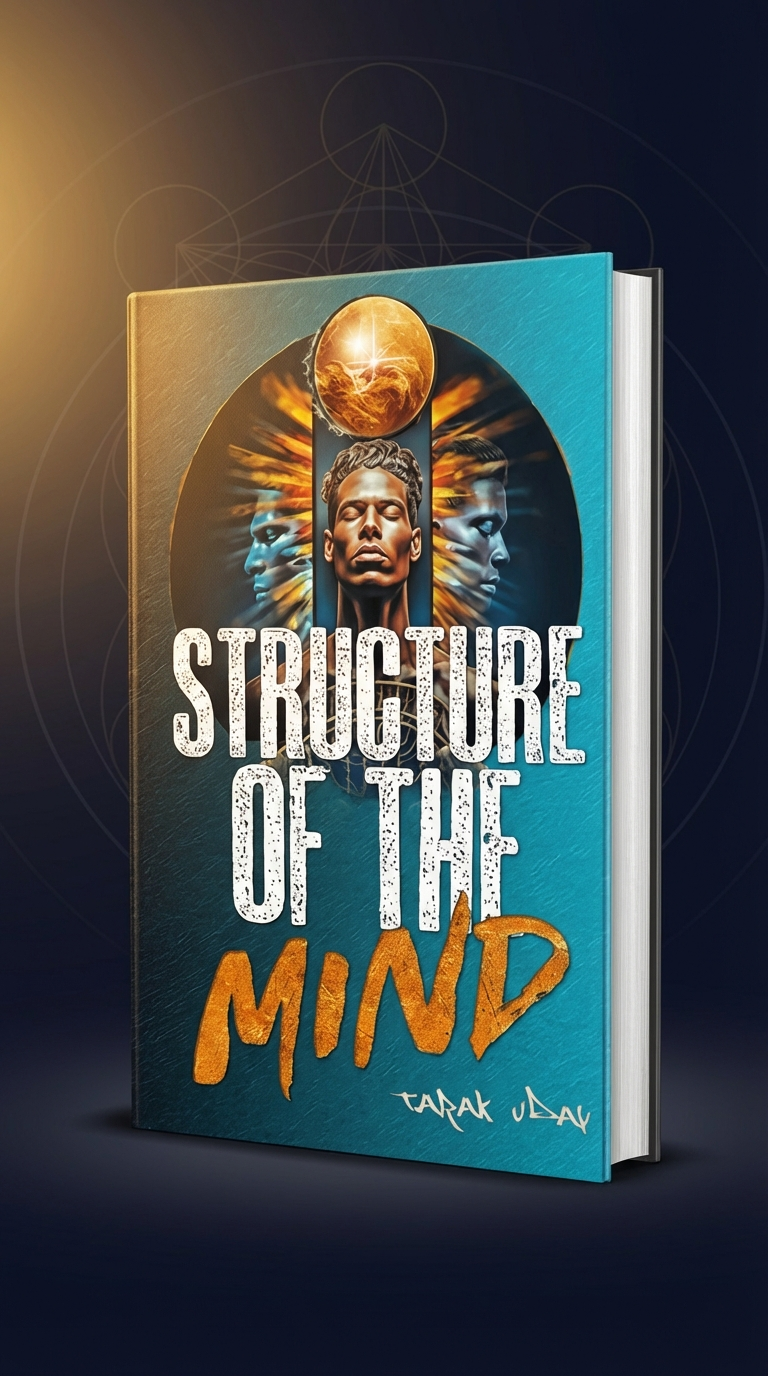
"Structure of the Mind" reveals the three divisions of mind, seven levels of consciousness, and powers of mind that most people never learn to develop.