
Why Can't I Focus Anymore? The Real Reason Why
It was never the phone. A dopamine detox empties the room — it doesn't train the faculty.
You can't focus because attention is an untrained faculty, not a broken one. Attention is one of the three keys of conscious mind reasoning — memory, attention, imagination — and like a muscle it grows with deliberate exercise and atrophies with neglect. A dopamine detox removes what's pulling on your attention. It never builds the ability to direct it.
So you've been told the problem is your phone.
Think about that for a second. You had a mind capable of holding a single thought for hours before you owned a device, and the best explanation on offer is that a rectangle broke it? That the fix is to delete apps, go grayscale, sit in a room for a weekend and let your receptors reset? People do the detox. They come back. Within four days they're on the same eleven-tab, three-notification, can't-read-a-paragraph loop.
Because the detox never touched the actual mechanism.
Why Can't You Focus Anymore?
Here's what's actually happening at the level of mind.
The power of the conscious mind is reasoning, and reasoning has three keys: memory, attention, and imagination. Memory draws on the past. Imagination constructs what doesn't yet exist. Attention is the one that operates in the present moment — it's the faculty that decides which thought is receiving your creative energy right now.
All three are mental muscles. They respond to exercise with growth and to neglect with atrophy. And almost nobody has ever deliberately exercised any of them, while using all three constantly.
So attention left untrained goes to whatever is loudest. It gets invaded by uninvited thoughts, pulled by noise, scattered across dozens of competing stimuli. That's not a modern disease. That's the default state of an unexercised faculty, and it was true long before anyone had a feed. The phone didn't break your attention. It found your attention already undefended and monetized it.
Why Won't a Dopamine Detox Fix It?
Because it's addressing the environment instead of the instrument.
Take everything out of the room and you'll experience calm. That's real. But calm isn't concentration. Concentration is the trained ability to hold your attention where you choose to place it — including when something else is pulling at it. A quiet room doesn't build that. It just removes the test.
And here's the part nobody mentions. The moment you re-enter normal life, every one of those pulls returns, and you've spent your effort on a condition you can't sustain. You strengthened nothing. You just took the weight off the bar and called it a workout.
There's also a subtler cost. Every detox frames your own mind as the adversary — something to protect yourself from, something that will betray you the second a notification arrives. That framing is exactly backwards, and it puts you in a permanently weaker position with the only instrument you've got.
What Is Your Attention Actually Doing to Your Life?
This is where it stops being a productivity question.
Attention is the fuel of manifestation. A thought given attention gains energy, and that energy drives it through the levels of the subconscious mind until it emerges as a circumstance in your physical life. A thought denied attention loses energy and stalls out. So energy flows where attention goes — that's not an inspirational line, it's the mechanism.
Which means an undisciplined mind isn't just inefficient. It's scattering creative energy across hundreds of thought images simultaneously, and none of them accumulates enough density to move powerfully through the pipeline.
So when someone says nothing in their life is really working out, look at where their attention has been living. Usually it's divided across so many competing images that nothing reaches the momentum required to manifest with any precision. Meanwhile the thoughts they dwell on without choosing — the worry, the replayed argument, the rehearsed worst case — are getting fed steadily, because dwelling is feeding.
According to Tarak Uday's Universal Language of Mind, this is also why your dreams get noisy when your waking attention is scattered. Dreams show you the thought images currently moving through your subconscious, so a mind pulled in twenty directions produces nights that feel exactly like that. If you keep waking from dreams of being chased, that's worth reading rather than dismissing.
Your dreams show you where your attention has been
The images moving through your subconscious tonight are the ones you fed today. CHITTA decodes them in the Universal Language of Mind so you can see what you've actually been giving energy to.
Decode Your Dream Now →How Do You Train Attention Instead of Removing Distractions?
With reps. Real ones, measured.
The candle exercise trains the faculty directly. Sit at a table with a candle at eye level and a timer set for ten minutes. Light it. Place your attention on the flame. That's the whole instruction.
Then the part that makes it an exercise rather than a mood: every single time you notice your attention has drifted — that you're thinking about anything other than the flame — make a tic mark on a piece of paper. Acknowledge the drift. Take a breath. Return to the flame. Repeat for the full ten minutes.
Most people are genuinely disturbed the first time. Forty tic marks. Fifty. Sixty. Their attention was pulled off a single point of light every ten to fifteen seconds by thoughts they didn't choose, sounds they weren't listening for, itches they never requested. And there's no phone in the room. That's the finding that lands: the device was never the cause.
But the exercise is also the cure. Every tic mark is a rep. Every moment of catching the drift and returning to the flame is the actual movement that builds the muscle. Over days and weeks the marks decline, the stretches of held attention get longer, and your capacity to direct creative energy toward a chosen thought — and keep it there — grows with them.
Pair it with five minutes of memory work and five of visualization and you're exercising all three keys. Fifteen minutes. The results feel disproportionate to the investment, and they are — because the muscles were starting from near zero.
How CHITTA Accelerates This — What Does the Tic-Mark Count Reveal?
So now you know what to do, and here's the gap that opens.
Concentration is trained by evidence, not by intention. The whole power of the candle exercise is the paper — a number that doesn't flatter you. But a loose page on a table gets lost by Thursday, and without a series of numbers you have no idea whether you're improving, plateauing, or quietly skipping days. You'd be doing reps with no log. That's the gap.
CHITTA's Academy carries the candle exercise with the tic-mark count recorded per session, so the number becomes a dated series instead of a memory. Sixty-one on Monday, fifty-four on Thursday, thirty-eight two weeks in — that's a trend line, and a trend line is the only thing that tells the truth about a muscle. It also runs the memory exercise and the Top 10 Most Wanted list, so all three keys get logged rather than merely attempted.
And then the dream journal closes the loop from the other side. Trained attention changes what your subconscious is being fed, and dreams are where you watch that change arrive — the recurring chase thins out, the images get more coherent. The interpretation engine reads them in the Universal Language of Mind and the symbol dictionary lets you check any image yourself.
So light the candle tonight and count honestly. Whatever the number is, that's your starting weight.
What Else Do People Ask About Concentration?
Two things worth closing on.
The first: how long this takes. Wrong frame. You're not waiting for a state to arrive — you're accumulating reps, and the count tells you where you are. Someone at sixty tic marks who does the drill daily will be somewhere else in three weeks. Someone waiting to feel focused before starting will be exactly where they are now.
The second: whether concentration is the same as meditation. It isn't, though they're neighbors. Concentration is holding attention on a chosen point. Meditation is creating space in the conscious mind so the subconscious can be received. Concentration is what makes meditation possible — you can't create silence with a faculty that can't stay put for fifteen seconds. Train the first and the second stops feeling impossible.
And this is why reading about it changes nothing on its own. Information doesn't transform anyone. Only experience does. So the article ends where the paper starts — with what you're actually able to look at, and what your dreams report back once you can hold your gaze.
Tarak Uday is the author of Structure of the Mind, Life is But a Dream, and Lucid, and the creator of CHITTA. His work translates the Universal Language of Mind into a practical instrument for self-mastery.

Frequently Asked Questions



LUCID
You've tried every lucid dreaming technique. Most miss the root cause. LUCID reveals what they all skip.
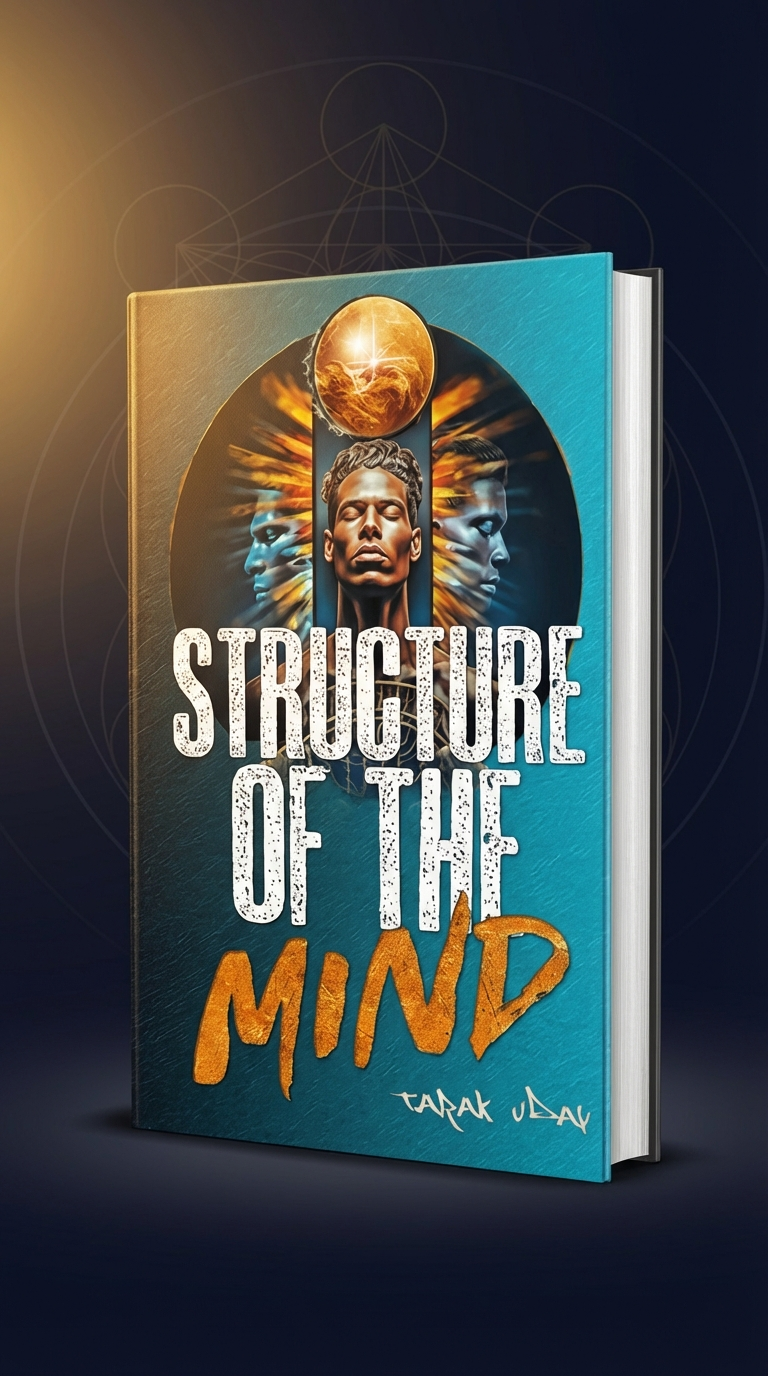
Understand Your Own Mind
"Structure of the Mind" reveals the three divisions of mind, seven levels of consciousness, and powers of mind that most people never learn to develop.