
Why Do I Self-Sabotage? It's an Exchange, Not Sabotage
Nothing inside you is working against you. Something inside you is being paid, and you have never once named the price of stopping.
Self-sabotage is not an enemy living inside you. It's an exchange you have not consciously made. Every outcome you want has a price that is paid in behaviour and identity, and until you name that price and agree to it, the arrangement you already have — the one quietly paying you something — will keep winning. Nothing is broken in you. Something is simply still being funded.
So consider the evening you know well. Three weeks in, everything going fine, and then you just don't. No drama, no decision you could point to. You just didn't feel like it, and something in you relaxed the moment you stopped.
What If the Thing Stopping You Isn't Trying to Stop You?
That relaxation is the clue everyone walks past.
The popular story says there's a saboteur in there — an inner critic, a wounded part, a gremlin with an agenda against your happiness. It's a satisfying story because it gives you someone to fight. It's also useless, because you cannot out-argue a part of yourself, and every attempt just spends more attention on the thing you're trying to leave.
The structural read is duller and far more actionable. Tarak Uday teaches through the Universal Language of Mind that the duty of the subconscious mind is to manifest the desires of the conscious mind, and its purpose is to store the permanent understandings you built through living. Those two jobs are not always pointed the same direction. The desire is new. The understanding is old, tested, and was built to keep you intact.
So when you move toward something that contradicts a stored understanding, the subconscious doesn't rebel. It executes what it already holds. The pull backward isn't hostility. It's fidelity — to an older instruction you never went back and cancelled.
What Are You Actually Being Paid Right Now?
Every pattern that survives is paying rent. Find the payment and the pattern stops looking irrational.
The payments are rarely glamorous and almost never things you'd put in writing. Staying unmeasured means never finding out where you actually rank. Staying busy means never sitting with the question underneath the busyness. Staying the person who almost did it protects a self-image that a finished attempt would have to submit for grading. Staying broke keeps you inside a group where nobody has to be explained to.
Read those again and notice that each one is genuinely valuable. That's the whole reason the arrangement holds. You are not being stupid; you're accepting a real benefit at a price you've stopped noticing, the way you stop noticing rent that comes out automatically.
Emotions make this findable. Emotions are road signs — the subconscious mind reporting to the conscious mind on what's currently manifesting. So the flinch that arrives right before you quit is not weakness and it is not noise. It's a signal firing at the exact moment the new image threatens the old payment. Catch what you feel in the ninety seconds before you abandon something and you have located the arrangement without needing years of excavation.
The arrangement shows up at night with its face uncovered
What you're still funding gets built into a scene while you sleep. Log last night's dream and decode it — the old arrangement is usually the house you keep walking back into.
Decode Your Dream Now →Why Does the Old Image Beat the New One Every Time?
Because it isn't a fair fight, and it never was.
Thousands of seed thoughts are cast from the conscious mind into the subconscious every day. Every worry, every passing vision, every rehearsed argument enters as an image looking to take root. The subconscious then has to decide which of those thousands gets creative energy, and it decides on two factors: the quality of the image and the frequency with which it's thought. How clear, how specific, how emotionally charged — and how often you return to it.
Now score your two competitors honestly. The new outcome gets a vague picture, held for twenty seconds, twice a week, mostly as words. The old arrangement gets a vivid, fully sensory, emotionally loaded rehearsal — the humiliation scene, the moment it falls apart, the face of the person who says they knew — ten times a day, unprompted, in high definition.
So the subconscious does exactly its job and delivers the better-specified request. That's not sabotage. That's one thought planted against a thousand, and the thousand were planted with more feeling.
What Does the Exchange Actually Cost?
More than a plan, less than a personality transplant. And it has to be named out loud.
Write down the outcome you say you want. Under it, write what the current arrangement gives you — the actual benefit, phrased generously, not as a confession. Under that, write what you'd have to hand back to take the new one. That third line is the exchange, and reading it is uncomfortable in a specific way that tells you you've found it.
The published work becomes gradeable, so you hand back the safety of potential. The body changes, so you hand back the evenings that were the only thing reliably yours. The relationship gets real, so you hand back the story where leaving was always available. None of that is a small ask. Pretending it's small is why the ambush keeps arriving at eleven at night, when you're tired and the older instruction is louder.
And notice the shape of every one of those lines. You aren't being asked to hand back something worthless. You're being asked to hand back something that works. So willpower keeps losing here, because willpower argues with the cost, and the cost is real.
An exchange you have agreed to in daylight behaves completely differently from one you keep refusing to look at. You still feel the pull. You just stop being surprised by it, and you stop reading it as evidence you're broken. That's also how a belief moves — not by removal but by demotion, one deliberate rehearsal at a time.
How Does CHITTA Accelerate This?
By making the two competing images visible at the same time, in writing, instead of leaving one of them to operate in the dark.
The gap this teaching leaves you with is evidence. You now know the arrangement is being funded, and you have no reliable way to watch it. Your daytime account of yourself is written by the same conscious mind that wants the new outcome, so it is the least trustworthy witness in the building. Your nights are not. Dreams are real experiences in the subconscious mind, delivered in the Universal Language of Mind, and they report on what's actually being fed.
So use both instruments. The CHITTA dream journal is where the pattern accumulates — and it will show up as a house you keep re-entering, a person you keep admitting, a road you keep turning off. The interpretation engine reads that as mechanism rather than omen, and the symbol dictionary is for the image that keeps coming back until you deal with it. On the daylight side, the Top 10 Most Wanted list is the instrument that fixes the other half: ten desires ranked, read morning and night, each one visualised as arrival rather than effort. That practice raises the quality and the frequency of the image you chose, which are the exact two factors the subconscious uses to decide.
Write the ten tonight. Log the dream in the morning. Within a fortnight you'll be able to see, dated and in your own handwriting, which of the two arrangements you are actually paying for.
What Does Making the Exchange Look Like This Week?
Smaller and more clerical than you'd expect.
Name one payment. Not all of them — one, the clearest, the one that made you wince as you read the section above. Write the sentence: this arrangement gives me ___, and I'm handing that back for ___. Keep it where you'll see it, because the whole point is that the old instruction is currently better rehearsed than the new one.
Then watch for the flinch instead of arguing with it. When the ninety seconds arrive — the strange fatigue, the sudden certainty that today isn't the day — you don't have to win. You just have to recognise the signal, and go back to the image you chose. Every one of those returns moves creative energy off an arrangement you inherited and onto one you selected. Do that enough times and there's nothing left to sabotage, because the funding has quietly changed hands.
Find out which arrangement your nights are reporting
Your recurring dream is naming the pattern in plain language. Log it, decode it, and read what it says about the exchange you have not yet made.
Start Your Dream Journal →
Frequently Asked Questions




LUCID
You've tried every lucid dreaming technique. Most miss the root cause. LUCID reveals what they all skip.
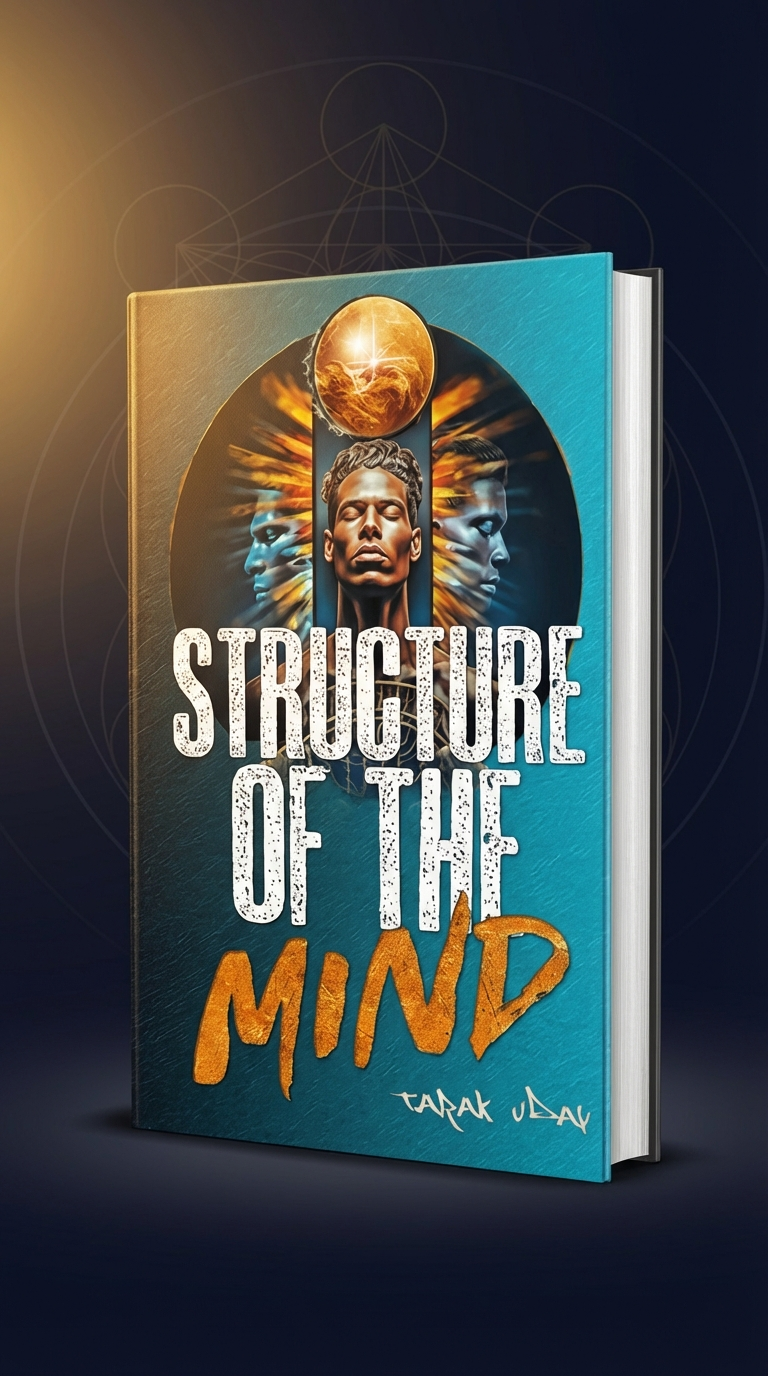
Understand Your Own Mind
"Structure of the Mind" reveals the three divisions of mind, seven levels of consciousness, and powers of mind that most people never learn to develop.