
How to Raise Your Vibration (What "Vibration" Actually Means in the Seven Levels)
Your vibration isn't a mood you pump up. It's the level of mind you're living from, and the feeling is only the last reading on the way down.


To raise your vibration, you move your attention deeper into your own mind and change the thought at the level where it's formed. You don't force a better mood. You've probably tried the other way. You played the music, said the affirmations, and carried the good feeling around like a full cup you were afraid to spill, and by mid-afternoon one email had tipped it over. Then you felt worse, because now you were "low vibe" on top of everything else. Here's what nobody told you: the feeling was never the dial. It's the reading. In the seven levels of mind, each level deeper into yourself carries a higher vibration than the one before it, and how you feel is only the densest inner level reporting what's about to arrive. You visit those levels every night. So before anything else: what did last night's dream look like, and was it in colour?
What Does "Vibration" Actually Mean in the Seven Levels of Mind?
So let's flip it. Vibration isn't a mood. It's an address.
In the Universal Language of the Mind, as Tarak Uday teaches it, the mind has three divisions and seven levels. The conscious mind has one level, the physical, which you experience through your body. The subconscious mind has four: the emotional level, the lower astral, the upper astral and the mental level. The superconscious mind has two: the causal level and cosmic consciousness. Seven in all, and they aren't arranged at random. In Life Is But a Dream, the diagram of the mind is drawn the way it is to show that "each level deeper into the Self has a HIGHER vibration than the previous level." LUCID says the same thing in one line:
That's the whole definition. Your vibration is the level of mind you're operating from. The physical is the densest. The further inward you go, the finer it gets, all the way to the superconscious mind, which the book describes as the source of the highest vibration within the mind.
You can feel the difference in density without taking anyone's word for it. LUCID puts it this way: "Our thoughts are less dense than our emotions or the energy of the astral, so they are less perceivable." A thought is like air. It's all around you, and you barely notice it unless you give it your full attention. An emotion is like the ground. You can't miss it. The books give each level of the subconscious mind an element for exactly this reason: the mental level is air, the upper astral is fire, the lower astral is water, and the emotional level is earth.
Notice what isn't in there. No numbers. No chart with a score for each feeling. The books don't supply one, so I won't either. What they supply is a map, and the seven levels of mind are worth knowing one by one, because the question changes once you're holding the map. It's no longer "how do I feel better?" It's "which level am I living from, and which one did this feeling come down from?"
Why Doesn't Forcing a Good Mood Raise Your Vibration?
Because the mood is the end of the line, not the start of it.
Here's the route every thought takes. The thoughts of your conscious mind are implanted into the mental level of the subconscious mind, and LUCID describes what happens next: "From there they gain density, move through the astral levels, until they are pushed out into the physical reality from the emotional level and made manifest."
Walk it slowly. At the mental level the thought is air, easy to mold and simple to alter. In the upper astral it's fire, expanding into every way it could possibly show up. In the lower astral it's water, contracting toward a smaller number of possibilities, though a new thought can still influence it. And at the emotional level it's earth. Stable. Fully developed, the book says, like a healthy baby just before birth, and ready to make its way into physical reality.
That's LUCID again, and it finishes the idea plainly. A positive emotion means something you desire is manifesting or has manifested. A negative feeling means something you weren't wanting is manifesting or has manifested. Emotions are road signs, and nobody reaches a different city by repainting the sign.
There's a catch, though. The sign tells you something is arriving. It doesn't tell you which thought is arriving. A heavy feeling on a Tuesday morning doesn't come labelled. Your dreams do carry the label, because what you look around at in a dream are the thoughts within your subconscious mind that are seeking to manifest. Even the look of the dream is information. The books teach that a dream within the emotional level is in black and white, the lower astral in regular colour, the upper astral in vibrant, striking colours, and the mental level in virtually no colour at all. There's a full walk-through of what your dream's colour says about the level you were in.
One plain note before the method. This isn't medical advice; if you have physical symptoms, see a doctor.
How Do You Actually Raise Your Vibration?
Two directions run along the same seven levels. Thoughts travel outward, gaining density until they land in your physical life. Your attention can travel the other way, inward, toward the levels where a thought is still light enough to change. Raising your vibration is that second trip, and it takes three moves.
First, read the feeling instead of fighting it. When a feeling shows up, name it and ask what it's a sign of. That's all. The moment you treat an emotion as a reading, you've stepped back from it, and the teaching is specific about what that buys you: freed from the grip of anger, sadness, jealousy, fear, worry or anxiety, it's easier to respond to life than to react to it. You can't steer from inside a reaction.
Second, go to where the thought is still air. A thought is an image. Your subconscious mind doesn't take dictation in words. It takes pictures. So the place to work is the mental level, where the mind substance is easily moldable, and the tool is a deliberate image. This is what the Top 10 Most Wanted list is for. You write down the ten desires you want most right now. You put them in order, one through ten. Then you read the list one desire at a time and visualize the end result in full detail, not as a still photo but as a moving scene: seeing it, hearing it, smelling it, tasting it, feeling it. At least once a day, ideally three times. You aren't trying to feel good while you do it. You're planting, on purpose, at the level where a new thought can still become anything.
Third, hold your attention where you put it. This is the move people skip. LUCID describes what happens in a dream when you're within the astral levels and you become too emotional: the shift in energy pulls you down into the emotional level, and from there, usually, on down into the physical, where you wake up. The reason given is exact. It happens "because we do not yet have enough control over our attention and not enough willpower to control our mind."
How Does CHITTA Accelerate Raising Your Vibration?
So the teaching leaves you with a gap. You need to see three things at once: what you planted at the top, what you felt at the bottom, and what was moving in between while you slept. In your head, those never line up. Monday's feeling is gone by Wednesday, and the list you wrote in a notebook is in a drawer.
Tarak Uday takes this further in Structure of the Mind, his map of the three divisions of mind and the powers of attention, memory and imagination.
CHITTA is built to hold those three in one place. The Top 10 Most Wanted list keeps your ten desires in the order you ranked them, ready to be read and visualized one at a time each day, so the image you plant at the mental level tomorrow is the same image, not a vaguer copy of it. The dream journal dates every dream you log, and the interpretation engine decodes it symbol by symbol, with the symbol dictionary behind it. That's the middle of the route made readable: the thoughts on their way through your subconscious mind, named in the language they're written in, the Universal Language of the Mind.
Here's why that compresses the time. What was a mood becomes a dated line. What was a single dream becomes one entry in a sequence. And once feelings, dreams and desires sit side by side, you can see which of your ten you're actually feeding and which old thought keeps arriving instead. None of that is visible from inside one day.
What Will You Feel Three Times Tomorrow?
The experiment is small. Tomorrow, check in with how you feel three times, and write each one down.
Pick your three moments now so you don't have to decide later: after you wake, in the middle of the day, and before bed. At each one, stop for a breath and write a line. The feeling, in one or two words. Then what your attention was on just before you checked. Don't fix anything. Don't upgrade "tired and irritated" to "grateful." A sign that's been repainted can't be read.
This article can tell you what vibration is: a level, and each one deeper is higher. It can tell you why the feeling comes last. It can't tell you which thought your three signs are pointing at, or which level you'll be standing in when tonight's dream opens around you. Only your own record can. Start it tomorrow morning, with one honest word.
Frequently Asked Questions



Books by Tarak Uday
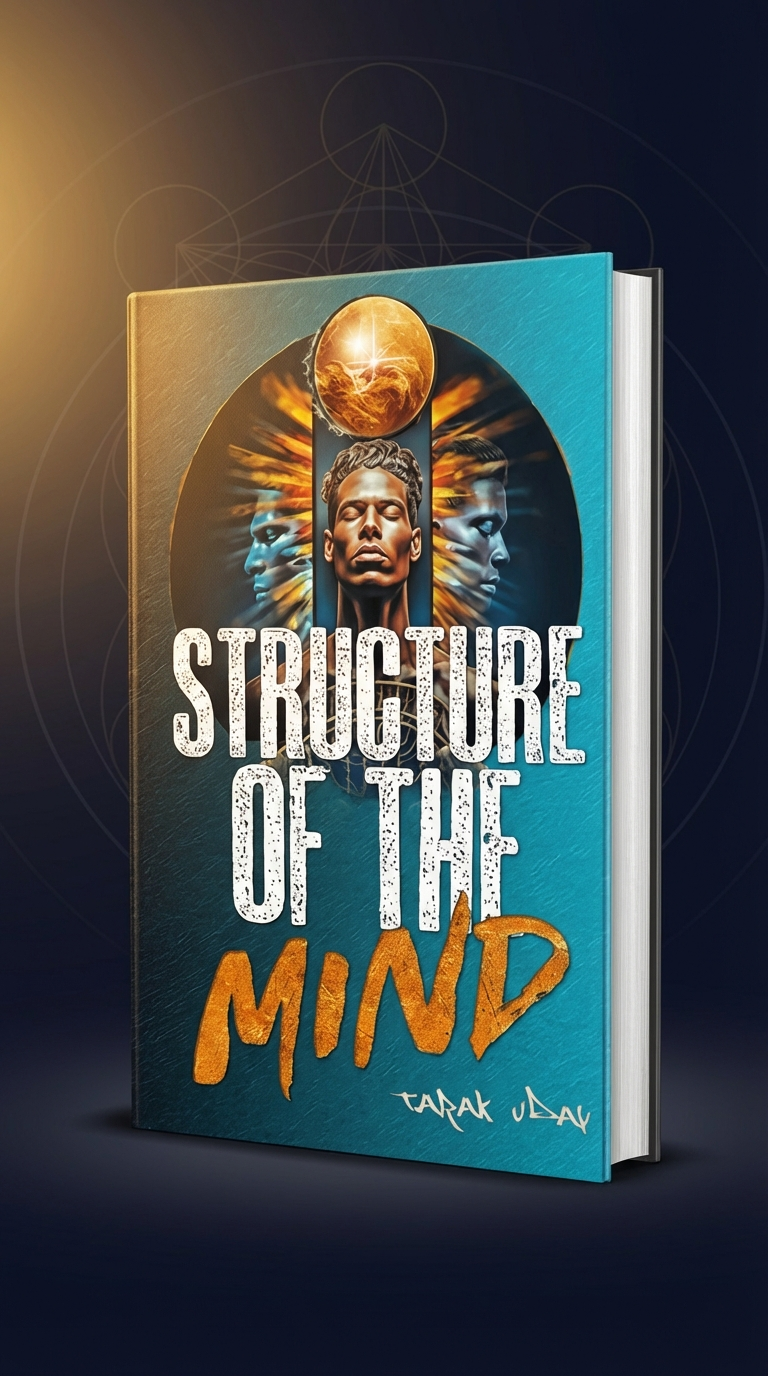
Understand Your Own Mind
"Structure of the Mind" reveals the three divisions of mind, seven levels of consciousness, and powers of mind that most people never learn to develop.

Learn The Language Your Dreams Speak
"Life Is But a Dream" teaches the Universal Language of the Mind — how to read any dream symbol by what it is and what it does, so every dream becomes a message you can act on.
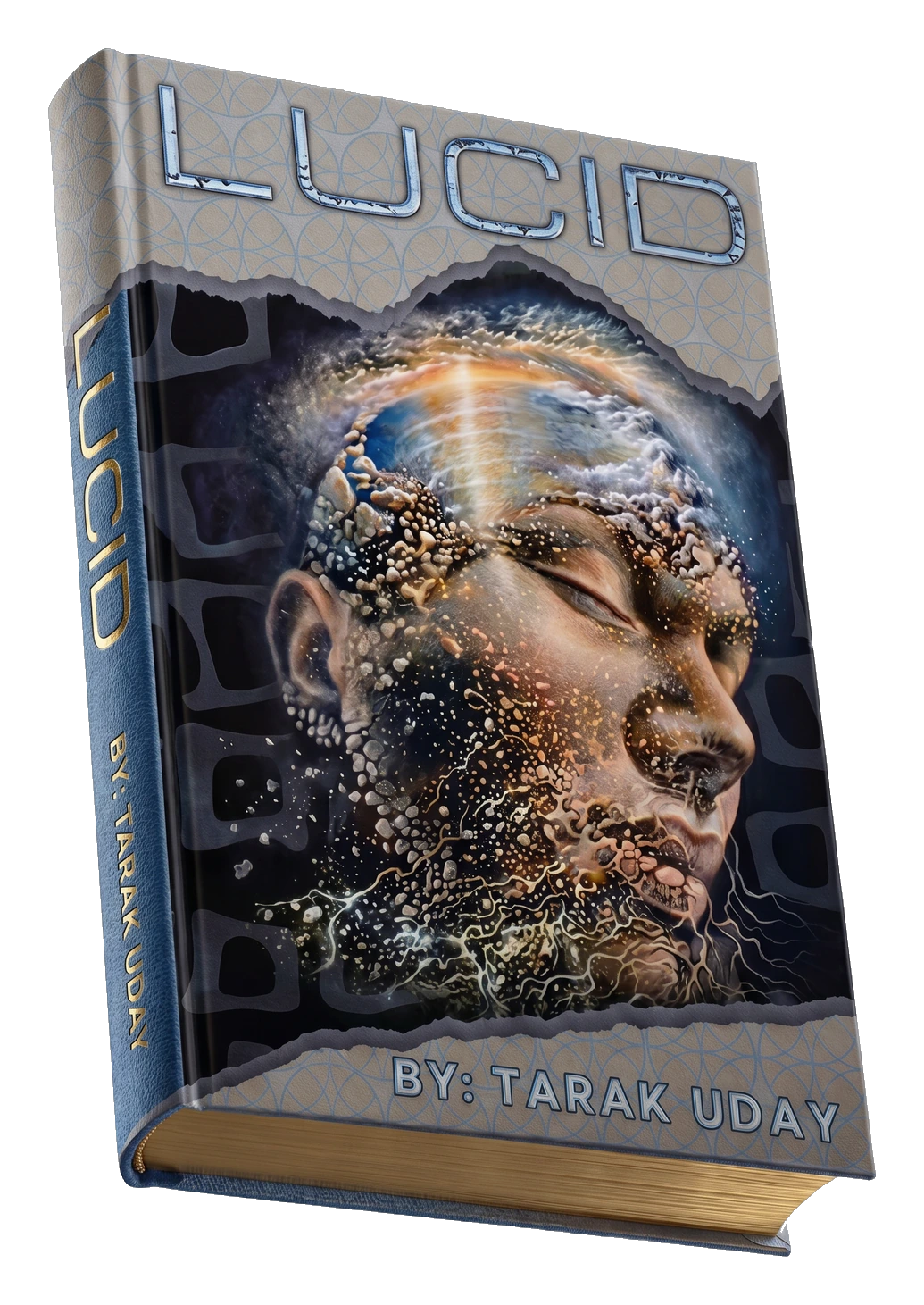
LUCID
You've tried every lucid dreaming technique. Most miss the root cause. LUCID reveals what they all skip.