
The 7 Levels of Mind (Not the 7 Levels of Consciousness)
You searched for seven levels of consciousness and found a staircase of better people with you near the bottom. The seven levels of mind are something else: the route every thought takes into your life, and your dreams show you where on that route a thought is right now.
The 7 levels of mind are the seven levels within the three divisions of mind: two in the superconscious mind (cosmic consciousness and the causal level), four in the subconscious mind (the mental, upper astral, lower astral and emotional levels), and one in the conscious mind, the physical level you are reading this from. You probably searched for the seven levels of consciousness and found a list that read like a staircase of better people, with you somewhere near the bottom. These levels are not rungs of virtue. They are the route every thought you have travels, from the place it is caused to the day it shows up in your life. And you visit four of them every night. The dream you woke up with this morning happened on one of them, and its colours already told you which.
What Are the 7 Levels of Mind, in Order?
So let's lay it out the way The Structure of the Mind gives it. The book counts from the inside out.
The first level of mind is cosmic consciousness, also known as Christ consciousness or Buddha consciousness. The second is the causal level. Together these two make up the superconscious mind, which works in the fifth dimension, where there is no limitation on space. That is why its quality is interconnectedness.
The third level is the mental level. The fourth is the upper astral level. The fifth is the lower astral level. The sixth is the emotional level. These four are the subconscious mind, the mind your soul uses to exist in the fourth dimension, where time is no longer a wall.
The seventh level is the one you know best. Tarak Uday describes it this way: "It is the physical level of mind experienced through the physical body within this 3 dimensional reality. It is the only level within the conscious mind."
Here is the belief to put down. Most lists of the seven levels of consciousness imply that you live on one rung and climb by becoming a better person. You don't. Every human being has all seven levels, operating right now. The real question is which level your attention is on, and which level a particular thought of yours has reached.
Why Does Every Thought Travel Down Through the Levels?
The Structure of the Mind puts it in three words: "Thought is cause." The blueprint for your existence, and the lifeforce energy it is charged with, is sent out from the causal level. From there, thoughts move toward the physical, and every level they pass through changes their density. And the drive behind the movement is just as plain:
Each of the four subconscious levels carries an elemental quality, and the element tells you how a thought behaves at that depth.
The mental level is air. "The mental level is where thoughts are formed." When a thought becomes strong enough in the conscious mind, it is imprinted here, and the mind substance of this level, what the book calls chitta, is easily moldable. Its energy is motion. A new seed thought placed here can shift into anything you want, and just as easily be shifted by the next thought.
The upper astral level is fire. Its energy is expansive. A thought that reaches this level spreads like a wildfire into a million possible ways it could manifest. This is the stage to keep imaging the end result you want and stop dictating HOW it has to arrive.
The lower astral level is water. Its energy is contraction. After the open field of the upper astral, the thought form begins to narrow into a finite number of possibilities. It can still be influenced, the way other liquids change water, but it is heavier now.
The emotional level is earth. Its energy is stability. Here the thought forms are fully developed, like a healthy baby just before birth, and ready to make their way into physical reality. It is also why we call emotions feelings: they are dense enough to feel.
Then the seventh level. The thought becomes your circumstance.
Read that order once more. A thought at the mental level is easy to change. A thought at the emotional level is almost here. The levels are not a hierarchy of worth. They are a timeline.
The oldest picture of this is a dream. Genesis 28:12, in the King James Version, describes Jacob's dream: "a ladder set up on the earth, and the top of it reached to heaven: and behold the angels of God ascending and descending on it." Read in the Universal Language of Mind, as symbolic language rather than religious instruction, LUCID is direct about it: "Jacob's Ladder IS the Structure of the Mind itself." Traffic runs both ways on that ladder. Thoughts descend into form. Awareness climbs back toward its source.
What no diagram can tell you is where one specific thought of yours sits tonight. For that you need a reading taken from the inside.
How Does the Colour of a Dream Tell You Which Level You Were On?
When the physical body sleeps, your consciousness moves into the astral body, and you dream within the subconscious mind. The book teaches that almost every dream happens on one of its four levels, and for most people the majority fall in the lower and upper astral. Each level leaves a signature you can see:
"Dreams within the emotional level will be in black and white. Dreams within the lower astral level will be in regular technicolor. Dreams within the upper astral will be vibrant, striking colors. Dreams within the mental level will have virtually no color, more of a heavenly feel."
That is your altimeter. Not the plot. Not the people. The colour.
Now put the two halves together. In LUCID, Tarak gives the example of a dream in vivid, striking colour whose message, once decoded, is that you are becoming more and more anxious. The colour places it in the upper astral, so the thought form "has not yet fully manifested." There is still plenty of time to change it. Then take the same message delivered in black and white. That places it at the emotional level, the densest level of the subconscious mind, where thought forms have gained stability. Changing it at that stage takes far greater work and effort.
Same message. Different altitude. Completely different urgency.
Most people have never noticed the colour of a dream, because they lose the dream itself within moments of waking. Recall is a trainable skill, not a gift, and it is the first instrument on the bench. Without the dream, there is no colour to read.
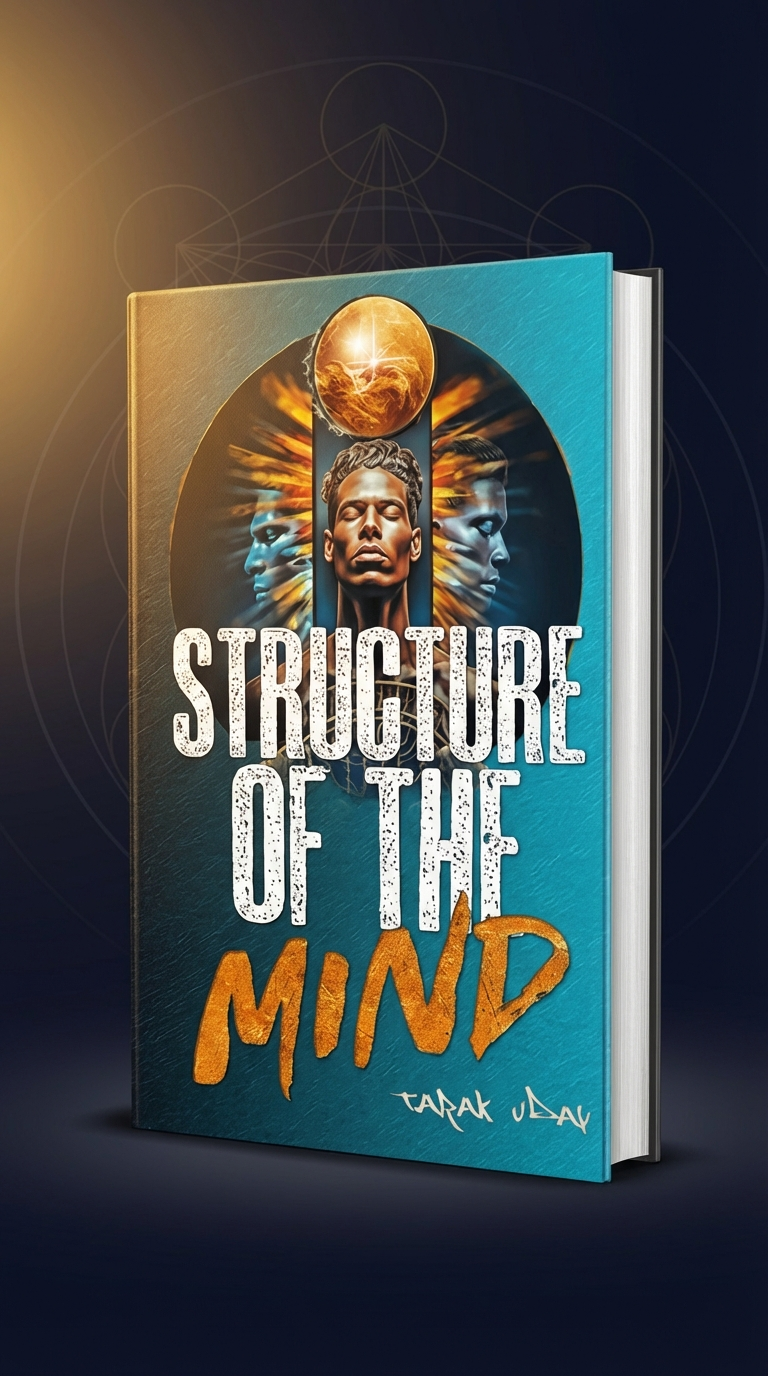
Tarak Uday takes this further in Structure of the Mind, his map of the three divisions of mind and the powers of attention, memory and imagination.
And colour only answers where. What the thought is, which symbols are carrying it and what they say together, comes from interpreting the dream itself, symbol by symbol and in sequence. A colour tells you a thought is close to the ground. Only the message tells you which thought.
How Does CHITTA Accelerate Reading the Levels of Your Mind?
An altimeter reading means nothing unless it is written down. One black and white dream is a single data point. The same theme sliding from vivid colour to black and white over three weeks is a thought descending toward your life, and memory alone will never show you that slide.
CHITTA is built to hold that record. The dream journal dates every dream the moment you log it, and you can write the colour and the setting into the entry while they're still fresh. The interpretation engine decodes the dream in the Universal Language of Mind, reading each symbol beside the others it appeared with, so you know what the thought is and not only where it is. Memory Lane lets you look back across weeks and months to see which themes keep returning, and at what colour.
Attention is the other half. The book is clear that the more control you have over your attention, the deeper the thoughts and beliefs you can observe. The candle exercise keeps your tic-mark count session by session, each mark a moment your attention drifted. As that count falls, your reach into the inner levels grows.
The acceleration is mechanical. A thought caught at the mental or upper astral level changes with little effort. A thought caught at the emotional level costs far more. A dated record moves the moment of catching earlier. A vague sense that something is building becomes a theme with a date and a colour beside it. The Structure of the Mind lessons, being turned on shortly, are where the seven levels become a sequenced curriculum rather than a diagram.
What Colour Will Tonight's Dream Be?
Here is the act. Tonight, put a pen and paper, or your phone, beside the bed. As you fall asleep, tell yourself you will remember.
When you wake, before you move and before you reach for anything else, record the dream. Then, on its own line, record the colour and the setting. Black and white, ordinary colour, vivid and striking, or nearly colourless with that heavenly feel. Where were you? Indoors or outside?
If you only catch a fragment, record the fragment and its colour; a single grey hallway is still a reading. If you catch nothing, write that down with the date. Recall returns to people who keep asking for it.
Do this for a week and you will notice something the lists of seven levels of consciousness never mention. You don't live on one level. You move between them every night, and the colours keep the log. What the colour can't tell you yet is which of your thoughts was riding that dream down toward your waking life. That part only the message holds.

Frequently Asked Questions



Books by Tarak Uday
Understand Your Own Mind
"Structure of the Mind" reveals the three divisions of mind, seven levels of consciousness, and powers of mind that most people never learn to develop.

Learn The Language Your Dreams Speak
"Life Is But a Dream" teaches the Universal Language of Mind — how to read any dream symbol by what it is and what it does, so every dream becomes a message you can act on.

LUCID
You've tried every lucid dreaming technique. Most miss the root cause. LUCID reveals what they all skip.