
Your Six Inner Senses: The Psychic Senses You Already Use Every Night
Nobody is missing them. Each inner sense is the astral counterpart of a physical one, and your dreams run on all six.


Your inner senses are the six senses of your astral body: sight, sound, touch, smell, taste and thought. They're what people mean by psychic senses, and you aren't missing a single one. You've thought of someone and watched your phone light up with their name. You've had a song in your head and then heard it on the radio. And last night, with your eyes shut in a dark room, you saw a whole world, heard voices in it and knew things nobody told you. Which senses did that? Not the ones on your face. So hold onto whatever is left of that dream, even if it's a single image.
What Are the Six Inner Senses?
Start with what they're for. In The Structure of the Mind, Tarak Uday gives each division of mind a power. Reasoning is the power of the conscious mind. Intuition is the power of the subconscious mind, and he defines intuition as your direct grasp of truth: your ability to perceive the truth without having any reason to be able to know.
Then he takes the mystery out of it. Intuition is also a byproduct of mental perception: perceiving something with your inner mind instead of with the outer senses of your physical body. LUCID puts it in one sentence:
So there are two sets. The book counts six senses of the physical body, not five: sight, sound, touch, smell, taste and thought. Each has an astral counterpart with its own name. Here they are, in the book's order.
Clairvoyance is your ability to perceive your astral sense of sight. It's the seeing you do with your eyes closed.
Clairaudience is your ability to perceive your astral sense of sound. The voice in the dream. The melody you can hear right now with no speaker in the room.
Clairsentience is your ability to perceive your astral sense of touch. Notice the definition. Touch. Texture, weight, heat, the cold of the water you were standing in.
Clairalience is your ability to perceive your astral sense of smell.
Clairgustance is your ability to perceive your astral sense of taste.
Claircognizance is your ability to perceive your astral sense of thought. It's the knowing that arrives whole, without steps.
Are the Inner Senses the Same as Psychic Senses?
They're the same senses. What changes is the story told about them.
"Psychic senses" usually comes wrapped in the idea of a gift. Some people have it, most don't. That story sends you looking for something dramatic, a vision or a voice from nowhere, and while you wait for it you overlook the ordinary perceiving you do all day long.
The teaching is plainer. You have an astral body, so you have its senses. Everyone does. What differs is how much of that perception reaches the conscious mind. As LUCID puts it, the greater our ability to perceive through these senses with awareness in our conscious mind, the greater our intuition is. The senses were never the missing part. The awareness was.
The book hands you a test you can run where you're sitting. Even though you may be in your living room, can you perceive within your mind the smell of the elephant house at the zoo? Can you recall the smell of soap? Of a skunk?
You can. And those scents are not coming through your physical nose. That is clairalience.
Now the fair objection: that's just memory. Here is the answer LUCID gives:
The book doesn't argue with the word "memory." It tells you what memory is: a perception made through an inner sense. If the idea that one part of your mind is free from time is new to you, the three divisions of mind is where that begins.
Let me be straight about the claim. I'm not handing you a laboratory result, and I'm not telling you psychic ability has been scientifically proven. This is the Universal Language of the Mind, an ancient teaching, and it's checked the way you just checked it: in your own mind, with a record kept.
And the phone that lit up with their name? The books file that under universal mind, the way in which all of our minds are interconnected. Why that person, on that afternoon, is a question no general teaching can answer for you.
Why Do Your Dreams Use Every Inner Sense?
Every night, your consciousness shifts from your physical body to your astral body. You close your eyes and close off your attention to the physical senses. Your attention moves inward. And then, as LUCID describes it, you experience your inner environment through the internal senses of the astral body.
That's why a dream feels real. You weren't watching a film. You were perceiving. Your eyes were shut, and you saw color, distance, faces. Somebody spoke to you. You ran, and you felt the ground.
What were they perceiving? Thoughts. A thought is an image, and the images you look around at in a dream are the thoughts within your subconscious mind, delivered in the Universal Language of the Mind. So the dream is two things at once: a message, and a full session of inner-sense use.
Now think about the sense of thought, because this is the one people miss.
In the dream you knew the stranger was your brother, though he looked nothing like him. You knew the house was yours. You knew you were late, and for what. Nobody said so. Nothing in the picture showed it. You simply knew, and you never once doubted it.
That is claircognizance, exactly as defined: your astral sense of thought. Awake, you argue with it. In the dream you trusted it completely.
So when you wake up and write, "I was in a house," you've recorded one sense out of six. The knowing never reached the page.
You dream every night. What survives the alarm is a skill you train, not a gift you wait on. How to remember your dreams covers the mechanics.
How Do You Strengthen Your Inner Senses?
By using them on purpose. The books are specific about where: these are the senses you activate, use and strengthen within the immersion of the visualization exercise.
The exercise is simple to state. Write down the ten desires you want most in life right now. Put them in order, from the most wanted to the tenth. Then read the list one at a time and visualize, in full detail, the manifestation of each desire. The end result. Do it at least once a day. Three times is the ideal.
"Full detail" is where the six senses come in. Most people visualize like they're glancing at a photograph: flat, silent, over in two seconds. Full immersion asks for the rest. What do you hear in that scene? What's under your hands? Is there a smell in the room, a taste in your mouth? And the one that's easy to skip: what do you know, standing there, that you don't know today?
If you've never checked whether your inner sight works at all, the balloon test will settle it in under a minute.
What does the practice build? Two things.
That's the first. The second is comfort. The more familiar you become with these senses, the more at home you are when you experience the inner levels of the subconscious mind through them, which is what a lucid dream is.
Tarak Uday takes this further in Structure of the Mind, his map of the three divisions of mind and the powers of attention, memory and imagination.
One honest warning. If your picture keeps dissolving, your visualization isn't broken. Your attention is undisciplined, and attention is a separate skill with its own drill. What this practice does to your intuition specifically is a longer conversation, and how to develop intuition takes it from here.
How Does CHITTA Accelerate Your Inner Senses?
Every night you get hours of inner-sense experience. Every morning nearly all of it is gone before your feet touch the floor. The gap between those two facts is where the work is.
Pencil and paper by the bed is where the books tell you to start, and that never stops being right. What paper can't easily do is hold the pattern.
CHITTA's dream journal dates every entry, so the dream you write sense by sense tonight sits beside the one from last month. The interpretation engine decodes what you recorded, symbol by symbol, in the Universal Language of the Mind as Tarak Uday teaches it, and the symbol dictionary is open while you read. A dream logged as "a house" gives the engine one image. The same dream logged with the voice you heard, the cold floor and the fact that you knew it was your grandmother's gives it four.
The Top 10 Most Wanted list covers the daytime half. It's the visualization exercise from the books, kept where you'll read it, so your inner senses get used on purpose as well as by accident at night.
Here's why that shortens the road. One dream is a sentence. Months of entries, written sense by sense, show which of your inner senses is wide awake and which one you've been leaving out.
What Did You See, Hear, Feel and Know Last Night?
Tonight's act takes four lines.
Before you sleep, put a pen and paper where your hand can reach them. When you wake, don't move yet. Let the dream come back, and then record it sense by sense.
What you saw. The places, the people, the colors, the objects. Every image.
What you heard. Words spoken, music, a noise, or a silence that seemed strange.
What you felt. Against your skin. Heat, cold, weight, wind, water, a hand on your arm.
What you knew. Everything you were certain of without being shown or told. Who someone was. Where you were going. What was about to happen.
If there was a smell or a taste, write that down too. Don't interpret anything yet. Tonight is only for perceiving and recording.
This article can tell you what the six inner senses are and what they're called. It can't tell you which one was loudest in your dream last night, or what you knew in there that you've been arguing with ever since you woke up. That part is on your page. Or it will be, tomorrow morning.
Frequently Asked Questions



Books by Tarak Uday
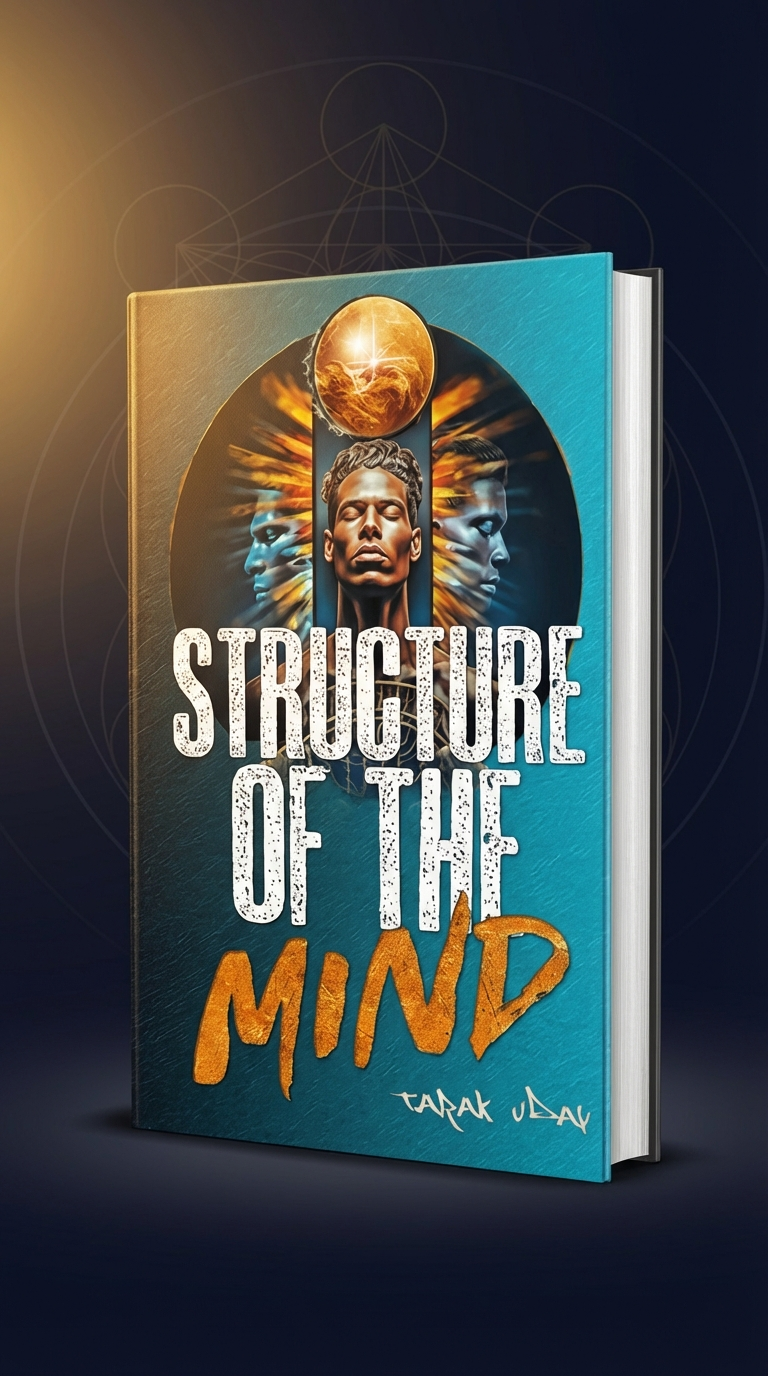
Understand Your Own Mind
"Structure of the Mind" reveals the three divisions of mind, seven levels of consciousness, and powers of mind that most people never learn to develop.

Learn The Language Your Dreams Speak
"Life Is But a Dream" teaches the Universal Language of the Mind — how to read any dream symbol by what it is and what it does, so every dream becomes a message you can act on.
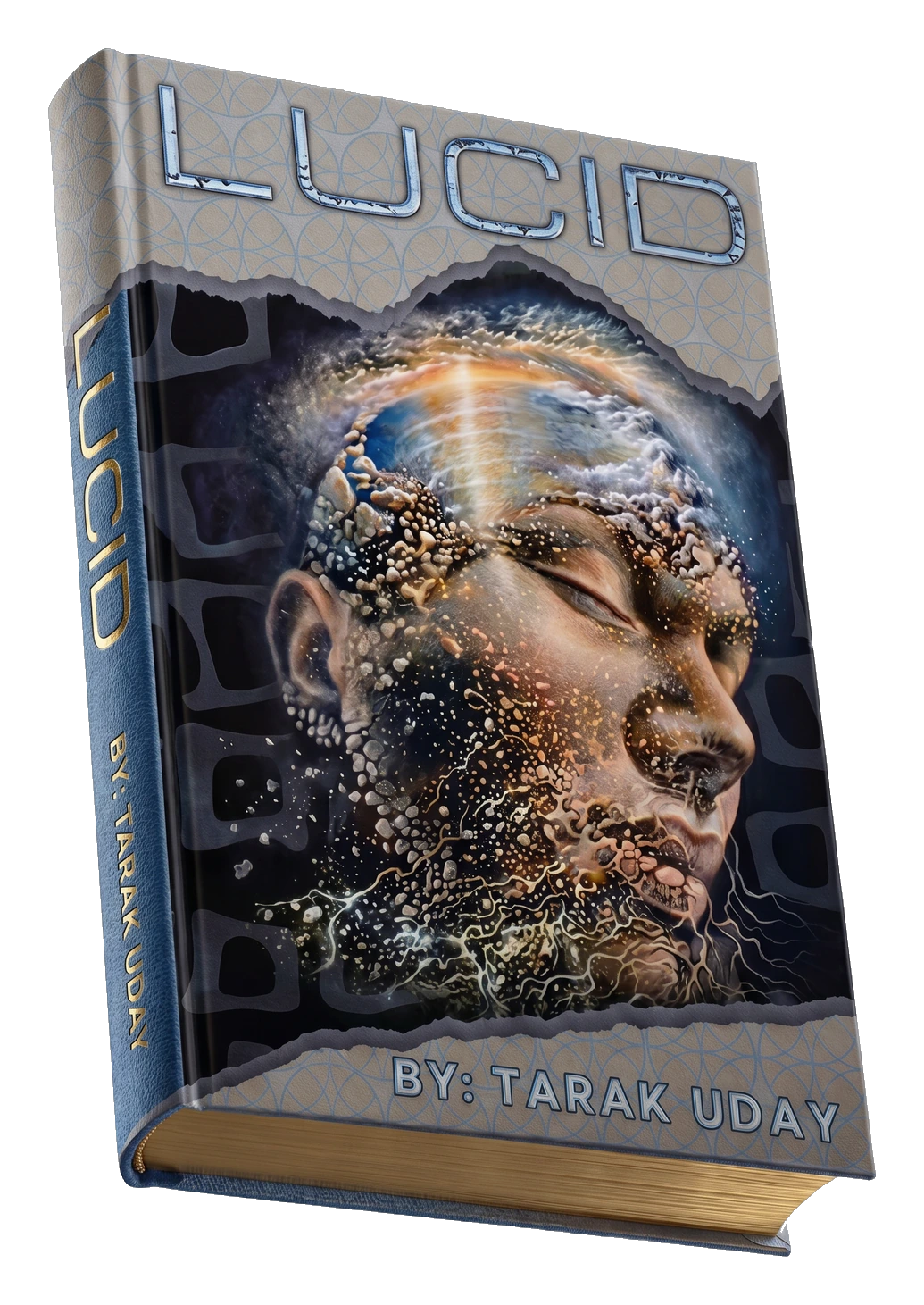
LUCID
You've tried every lucid dreaming technique. Most miss the root cause. LUCID reveals what they all skip.