
Faceless People in Dreams: What They Actually Mean
It isn't a horror element. It's a measurement, and it's measuring you.
Faceless people in dreams represent aspects of yourself you have very low awareness of. Every person in a dream is a quality within your own personality, and the face is what carries identity. When the face is missing or blurred, your subconscious mind is telling you plainly that you cannot yet identify the quality that figure is holding.
So here's the connection almost nobody makes, and it reframes the whole thing. A faceless figure isn't a horror element. It's a literacy score. It's your mind reporting, with total precision, how much of your own personality you can currently name.
Think about what that means. Most people would say they know themselves reasonably well. Your dreams are keeping a more honest ledger than that, and they publish it every night.
Why does a faceless figure feel so threatening?
Because a face is how you decide whether something is safe, and you've been running that check since you were a few days old. Remove the face and the check fails, so the body treats it as a threat by default.
But notice the fear is about the missing data, not about the figure. The figure usually isn't doing anything hostile. It stands there, or it speaks, or it follows you around, and the dread is entirely produced by the fact that you can't place it.
And that's already the mirror. In waking life, the thing that unsettles you most is rarely a quality you dislike in yourself. It's a quality you can't name. You know something is driving a decision and you can't say what. Same sensation. Same source.
So the horror-movie reading gets it exactly backwards. Films use blank faces to signal something inhuman arriving from outside. Your subconscious mind uses a blank face to signal something entirely human that hasn't been looked at from inside. Once you know which one you're dealing with, most of the dread drains out of the image and what's left is a question worth answering.
What do faceless people in dreams actually mean?
Let's do the mechanics properly, because this is where the meaning comes from and not from association.
According to Tarak Uday's Universal Language of Mind, the people in your dreams represent the different characteristics inside your personality. You're capable of being generous, rigid, patient, spiteful, decisive — and the cast of a dream is drawn from that inventory. Your subconscious mind picks whichever person carries the quality it wants to discuss.
The face carries identity. That's the form-and-function reasoning: a face is the thing by which a person is identified, so in the dream language a face is identity. Which means the degree of familiarity you have with a dream figure maps exactly onto how aware you are of that quality in yourself.
Family and friends show up when the quality is one you'd list if someone asked you to describe yourself. A friend is a familiar aspect. A grandmother is superconscious wisdom you already trust. And a faceless figure is the far end of that same scale — a quality active enough in your life to appear in the dream, but not recognised enough to be rendered.
How is a faceless person different from a stranger or a mask?
These get lumped together constantly and they're three different readings. The distinction is the useful part.
A stranger is an unknown aspect of yourself. You can still see them — height, clothing, manner, the way they move. So you have material. You can look at what they were doing and infer the quality even without recognising the person. Strangers are workable.
A faceless figure is one step further out. Not just unknown, but unrendered. The quality is influencing your behaviour with essentially no acknowledgement from you at all. That's why these dreams often feel like being watched by something you can't confront — you literally have nothing to confront it with yet.
A mask is the opposite problem. A mask means an identity is being assumed — something is being presented that isn't real. Where a faceless figure means "I don't know what this is," a mask means "I know, and I'm covering it." One is a gap in awareness. The other is a choice to conceal. Read them as different or you'll misdiagnose yourself.
Find out which part of you had no face
CHITTA decodes the dream through the Universal Language of Mind and names the quality your subconscious mind was pointing at.
Decode Your Dream Now →What does it tell you about the part of yourself you can't see?
Here's where it becomes practical, because a blank face still comes with plenty of information attached. You just have to stop staring at the face.
Look at what the figure was doing. The action is the quality in motion. A faceless person handing you something is an unrecognised part of you offering a resource. A faceless person blocking a door is an unnamed belief limiting your access to a state of mind — and doors are exactly that, transitions between states of mind, which you can run through the three questions.
Then look at where it happened. Places are states of mind. A faceless figure in your childhood home points to a quality formed early that you never identified. One at your workplace points to something operating in your productive life. The location narrows the search dramatically.
And look at how many there are. A single faceless figure is one specific blind spot. A crowd of them is broader — that usually shows up during periods of heavy change, when a lot of new qualities are forming faster than you can name them. That's not a warning. That's growth outpacing vocabulary.
Can a faceless figure ever get a face?
Yes, and honestly this is my favourite thing about this symbol, because it's one of the few places you get to watch your own progress render in real time.
Self-awareness isn't fixed. As you increase it, your dream imagery updates to match. People who record and interpret their dreams consistently start reporting the same thing after a couple of months: figures that used to be blank arrive with features. Sometimes it's gradual — a shape, then a build, then a face you half-recognise. Sometimes a figure that stalked you blankly for years shows up one night looking exactly like you.
That isn't a coincidence and it isn't your imagination filling gaps. It's the direct consequence of having identified the quality. Once you can name it, your subconscious mind has an identity to render, so it renders one.
I've decoded thousands of these and the sequence is always the same. Recognition first, rendering second. Never the other way around.
Which gives you a genuinely rare thing: a self-knowledge metric you can't fake. You can tell yourself you're becoming more self-aware. You can't tell your dreams that. If the figures are still blank, the work hasn't landed yet, and if they're filling in, it has. Nothing else in personal development gives you feedback that indifferent to your opinion of yourself.
What should you do the next time one shows up?
Write it down before you move, and record the details you'd normally skip because you were fixated on the missing face. Build, posture, clothing, what they were doing, where you were, and — this is the one people forget — how you felt toward them before the fear arrived.
Then ask the honest question and give it a real minute. What quality is running in my life right now that I haven't named? Not "what am I afraid of." What am I doing repeatedly that I've never actually described to myself? That's the blind spot, and it's almost always something you could see in a week of paying attention.
Then watch for the return visit. If the same figure comes back, treat it the way you'd treat any recurring dream — an unlearned lesson repeating itself, which stops repeating the moment it's learned. And if it comes back with slightly more detail than last time, you're already moving.
A faceless person in your dream is not something coming for you. It's a part of you that hasn't been introduced yet. Introduce yourself.
Give the figure a name
Log the dream in CHITTA and get the Universal Language of Mind reading — what the figure was carrying, and where it's showing up in your waking life.
Decode Your Dream Now →About the author. Tarak Uday is the founder of CHITTA and the author of Life is But a Dream and Lucid, where the Universal Language of Mind is laid out in full alongside the practices that expand self-awareness over time.

Frequently Asked Questions


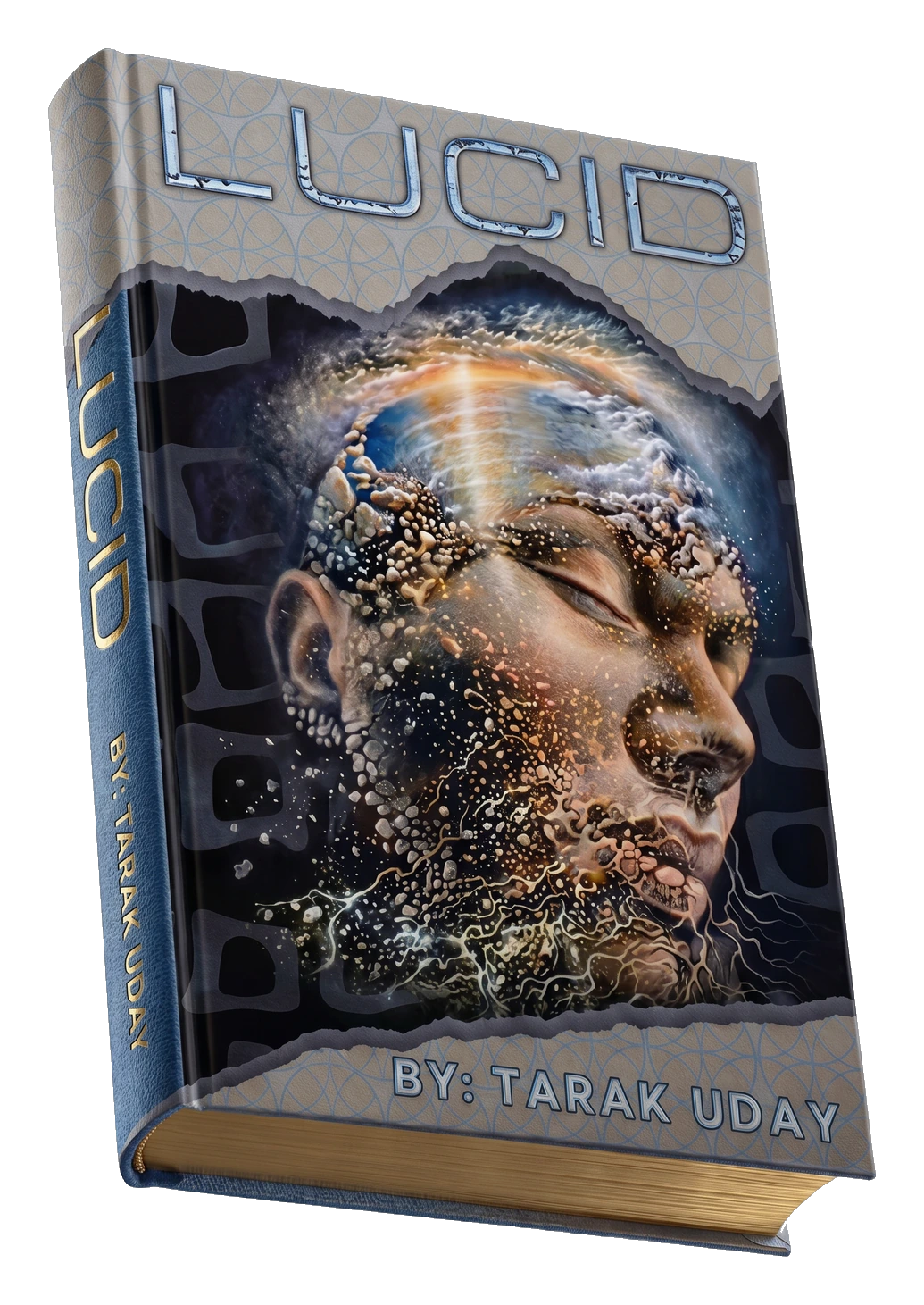
LUCID
You've tried every lucid dreaming technique. Most miss the root cause. LUCID reveals what they all skip.

Understand Your Own Mind
"Structure of the Mind" reveals the three divisions of mind, seven levels of consciousness, and powers of mind that most people never learn to develop.