
Fighting in Dreams: What Your Subconscious Is Really Telling You
A fight in a dream is not a prediction of conflict. It is a description of one you're already in, with yourself.
You woke up with your jaw clenched and your heart going. Somebody was coming at you, or you were coming at them, and for a few seconds after your eyes opened the fight was still more real than the room.
The first thing almost everyone does with that dream is look for the enemy. Who was it? Your boss, your brother, a faceless man, nobody you've ever met. Then comes the second move, which is to treat the dream as a warning: something bad is coming, or there's aggression in you that shouldn't be there.
Both moves are wrong, and they're wrong in the same way. They assume the fight is between you and something outside you. It never is. Your subconscious mind has no access to other people. It only has access to you, and everything it puts on the screen at night is built out of your own material.
In the Universal Language of Mind, fighting pictures an unresolved conflict between two aspects of your own mind. The opponent is not a person, a prediction, or a threat. It is the part of you that wants the opposite of what another part of you wants, and the dream is reporting that the disagreement has escalated past discussion.
Why does your subconscious mind stage a fight you never picked?
Every night your subconscious mind renders the state of your inner development as a moving picture. It doesn't use words, because words belong to the conscious mind and they're local. It uses images, and it picks each image by what that image does, not by what it makes you feel. Tarak Uday calls this the Universal Language of Mind, and the rule underneath it is that form follows function.
So take the rule to a fight. What does a fight do?
Two forces meet. Neither will yield. Both attempt to impose their will on the same space, and the space can only hold one outcome. That's the entire function, and it maps onto exactly one thing inside a mind: two attitudes that cannot both be acted on, refusing to resolve.
You want to leave the job and you want the security. You want to tell the truth and you want to be liked. You want to change and you want to be left alone. Both are yours. Both are live. Neither has been retired, so both keep spending your energy, and eventually the subconscious mind stops filing polite reports about it and shows you two bodies swinging at each other.
A fight in a dream is not a prediction of conflict. It is a description of one you're already in, with yourself.
What does fighting actually mean in the Universal Language of Mind?
Fighting sits in the relational family of symbols, which means it's telling you about how the parts of you are relating to each other. Argument means the parts are still using words. Fighting means they've stopped.
That escalation matters, because it dates the conflict. A physical fight in a dream almost never shows up at the beginning of a disagreement. It shows up after the disagreement has been ignored long enough that reasoning has failed. So when this dream arrives, it's telling you the division isn't new. You've been managing it, working around it, keeping both options alive rather than choosing, and the cost of that management has finally exceeded what your subconscious mind is willing to leave unmarked.
Notice that a fight also has a cost the argument doesn't. Both sides get hurt. That's the part people skip. When two aspects of one mind go to war, the damage isn't theoretical and it isn't distributed to someone else. Whatever energy is spent holding the line on both sides at once is energy that isn't building anything. That's why chronic indecision is exhausting in a way that hard work isn't. Hard work spends energy in one direction. Unresolved conflict spends it in two, against itself.
So who is the person you are fighting?
The identity of the opponent is the most useful detail in the dream, and it is never literal.
If you're fighting someone you know, your subconscious mind has cast them for a quality you associate with them. It isn't about them. Ask what one word you'd use to describe that person, and you'll have named the aspect of yourself that's on the other side of the fight. If you fight your father, and the word you'd use for your father is control, then the conflict is between you and your own controlling aspect. He was cast because he plays that part cleanly in your head, and the subconscious mind picks whoever renders fastest.
If you're fighting a stranger, the aspect is genuinely unfamiliar to you. It's something you've developed or repressed without ever consciously identifying it, which is why it shows up with no face. You can't name it yet, so the dream can't either.
If you're fighting someone who looks like you, or the fight happens in a mirror, the subconscious mind has removed the disguise entirely. It has decided the symbolic distance was letting you avoid the point.
The setting carries weight too, and it's usually ignored. A fight in your childhood home places the conflict in beliefs you formed early and never revisited. A fight at work places it in your sense of what you produce and what you're worth. A fight in an open street, with people watching, says the division is showing up in how you present yourself publicly. The subconscious mind doesn't choose backdrops for atmosphere. It chooses them because the location names the department of your life where the conflict is being paid for.
And notice whether you started it. If you attacked first, the aspect you identify with is the aggressor in this division, which usually means the change you're pushing for is yours and the resistance is defensive. If you were attacked, something you've been ignoring escalated on its own timeline. That distinction tells you where the initiative actually sits, and it's often the reverse of what you'd assume while awake.
Your dreams have been naming these divisions for years. CHITTA reads them in the Universal Language of Mind and shows you which two parts of you are actually in conflict, in plain language, from the dream you had last night. Start there.
What does it mean when you can't land a punch or can't move?
This is the most common version, and the most misread. You swing and there's no force in it. Your arms move through water. You try to run and your legs won't answer. People wake up from this feeling humiliated, as if the dream caught them being weak.
It didn't. The subconscious mind isn't scoring your courage. It's reporting a mechanical fact: you are attempting to apply force in a situation where force is not the operative tool, and the powerlessness in the dream is an accurate measurement of how much that approach is accomplishing.
So the paralysis is information, not judgement. It says the conflict cannot be won by overpowering one side. You can't out-argue yourself into wanting only one thing. The part you're trying to knock out is load-bearing — it exists because it's protecting something real, and force applied to it does nothing except tire you out. That's why the punch has no weight. Your subconscious mind is showing you the exact futility of the strategy you've been running while awake.
The same reading applies when you're being chased before the fight. Being chased means you're avoiding the confrontation entirely. When the chase turns and becomes a fight, something in you has decided avoidance has run out of road.
Does winning the fight mean the conflict is over?
Not by itself, and this is where the reading gets sharper than most people expect.
If you win decisively, one aspect has taken authority over the other. That's often progress — a decision has been made and the mind has stopped splitting its energy. But check what you won against. Suppressing a part of yourself also looks like winning, and the subconscious mind will show it as a win because from the perspective of the dominant aspect, it was one. The tell is what happens next. If the same opponent returns in later dreams, nothing was resolved. You knocked something down that got back up, which means it was never defeated, only postponed.
If you lose, an aspect you've been trying to override has more authority than you've been admitting. That isn't a failure. It's a correction to your own map. Something you've labelled as a weakness or a bad habit is actually stronger than your conscious position, and you'll keep losing to it until you find out what it's protecting.
And if the fight simply stops — you talk, you walk away together, one side yields without being destroyed — that's the outcome that actually closes the loop. Integration, not conquest. Both aspects still exist, but they've stopped spending you.
How do you use a fighting dream instead of just recovering from it?
Write it down before you get out of bed, while the details are still yours. The opponent, the setting, the weapon if there was one, who started it, and how it ended. The conscious mind begins overwriting a dream within seconds of waking, and it overwrites the specifics first.
Then name both sides. Take the opponent and reduce them to one quality. Take yourself in the dream and do the same — what were you defending, insisting on, refusing to give up? Those two words are the conflict. Written next to each other, most people recognise it immediately, because it's the same argument they've been having in their head for months without ever putting it in a sentence.
Next, find the waking-life version. Where are you spending energy in two directions at once? It's usually a decision you've been calling complicated. So test that word. Complicated often means you've already decided and haven't accepted the cost of the decision.
Then do the thing the dream is asking for, which is not to pick a winner. It's to find out what the losing side is protecting. Every aspect of you was built for a reason, and the ones that fight hardest are usually guarding something that was genuinely necessary at some point. When you know what that is, you can meet the need another way, and the conflict ends because the fight was never about dominance. It was about an unmet requirement neither side could say out loud.
Give it a week of attention. The subconscious mind repeats a symbol until the message lands, so a fighting dream that keeps returning is not a fresh warning each time. It is the same sentence being repeated because you have not answered it. Once you answer, the repetition stops, and that stopping is how you know you read it correctly.
Do that once and the dreams change. That's the confirmation. Your subconscious mind stops staging the fight when there's no longer a fight to report, and the energy you were spending on both sides comes back to you all at once.

Frequently Asked Questions




LUCID
You've tried every lucid dreaming technique. Most miss the root cause. LUCID reveals what they all skip.
Understand Your Own Mind
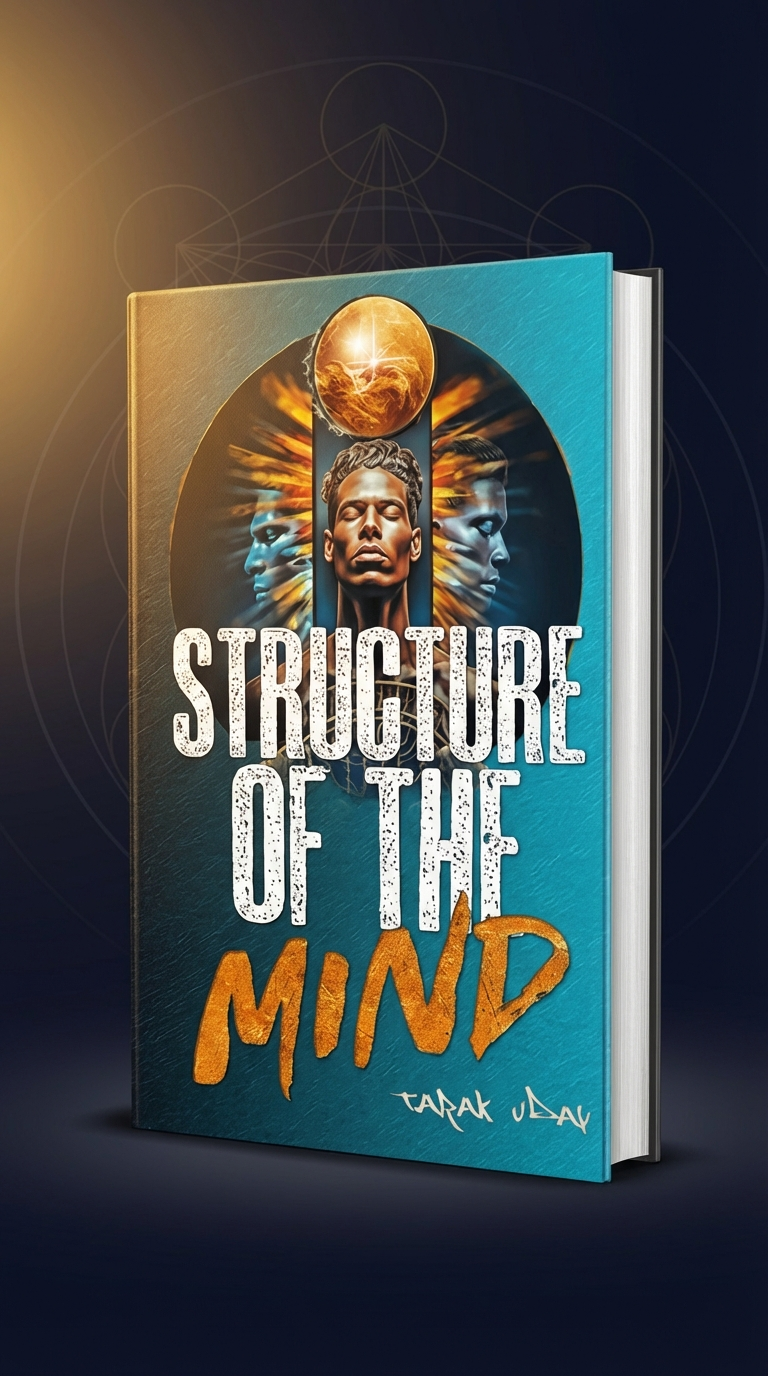
"Structure of the Mind" reveals the three divisions of mind, seven levels of consciousness, and powers of mind that most people never learn to develop.