
Law of Attraction vs Law of Cause and Effect: Which One Is Actually Running Your Life?
You did the vision board and the affirmations, and the same old situation walked back in. That wasn't a law failing. It was two laws working on a thought you never looked at.


The Law of Cause and Effect says thought is cause and the physical manifestation of that thought is the effect. The Law of Attraction says like attracts like: the vibration you resonate at is the vibration of what appears in your life. They aren't competitors, and you don't get to pick one. Both are running your life right now. Maybe you've made the vision board, said the affirmations, felt good for a week, and then watched the same old situation walk back in as if you'd never asked for anything else. That isn't one law failing you. It's two laws working, on a thought you never looked at. And the easiest place to see that thought is the place you visited last night, so hold on to whatever dream is still with you this morning.
What Is the Difference Between the Law of Attraction and the Law of Cause and Effect?
So let's clear the confusion first. In the Universal Language of the Mind, as Tarak Uday teaches it, there are thirteen Universal Laws, and these are two of them. Two separate laws. Not two names for one idea, and not an old version and a new version. If you want the whole set, the 13 Universal Laws lays them out in order.
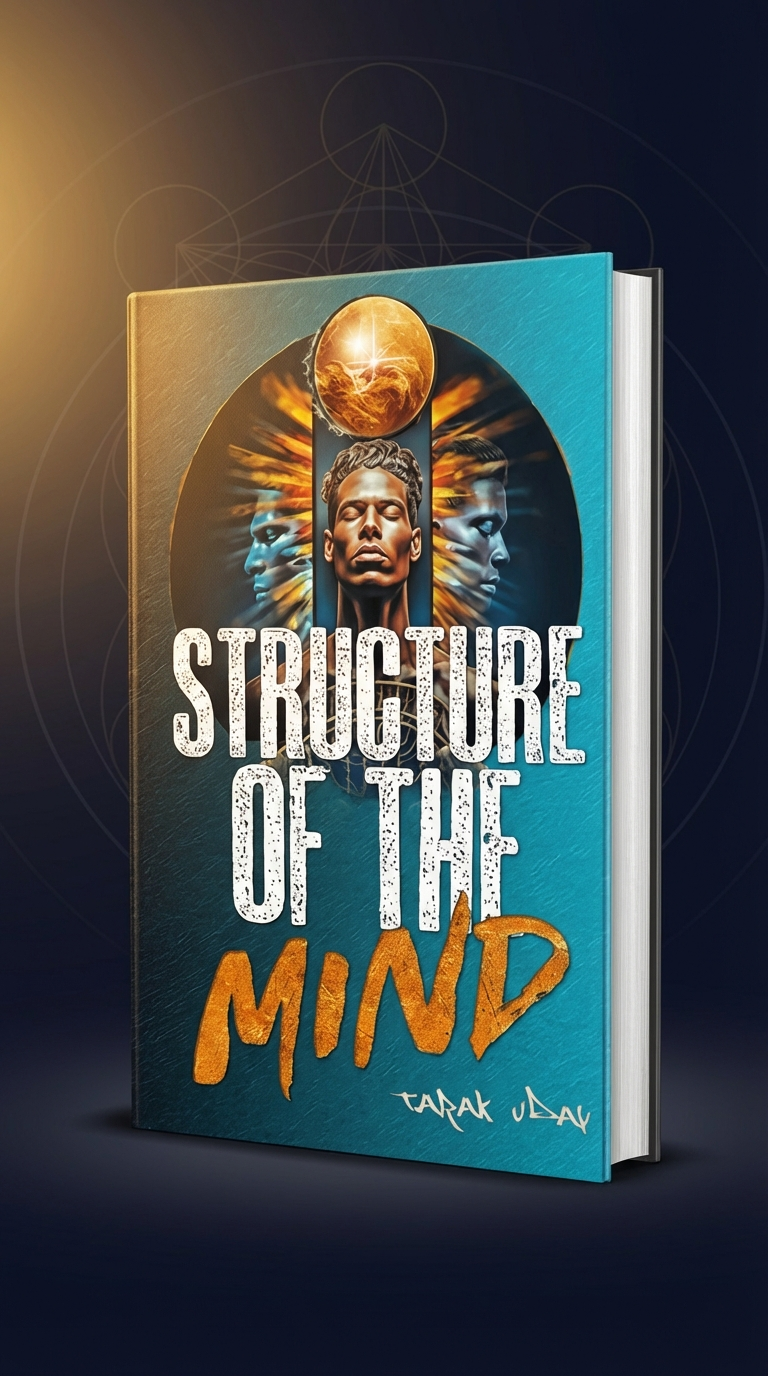
The Law of Cause and Effect is about where everything starts. Thought is cause. The physical manifestation of that thought is the effect. As you think, so you become. We create our own reality, and everything begins with, and is caused by, thought. Tarak calls it the most powerful of the laws, because it is the most transformative once you understand it. The mechanics are simple to say: every thought seeks to manifest, and the quality of the thought determines how well it imprints into the mental level of the subconscious mind. In Structure of the Mind, he puts the heart of it in five words: "A thought is an image." You develop that image the way film is developed, under the light of your attention. The full teaching is in the Law of Cause and Effect.
The Law of Attraction is about what gets matched. Like attracts like. The vibration you resonate at is the vibration of what magnetically appears in your reality. In this teaching everything is energy, frequencies of sound and light, and the universe seeks balance. So as the frequency and quality of your consciousness shift, your experience shifts to the same degree. Not more. Not less.
You can't run one without the other. You're already running both.
What Does "Like Attracts Like" Actually Attract?
The version of the Law of Attraction most people have heard goes something like this: think about what you want, feel good about it, and it comes. That isn't wrong. It's incomplete, and the missing piece is the reason it works for you one month and not the next.
Read the law again. It doesn't say what you want is what appears. It says the vibration you resonate at is what appears. Those are two very different things.
What you want is one thought. What you resonate at is the whole of your consciousness, all day long. In Structure of the Mind, Tarak teaches that thousands of thoughts are seeking to manifest at once, and that the subconscious mind gives its energy according to the quality and the quantity of each one: how clear the image is, and how often you think it. He also teaches that this holds for the thoughts and beliefs you're not aware of, exactly as it holds for the ones on the surface.
So do the math on an ordinary Tuesday. Ten minutes in the morning picturing the new job. Then nine hours rehearsing what your manager will say, replaying last year's rejection, and expecting the email to be bad news. Which one did you think more often? Which image was clearer?
Like attracted like. It just wasn't the like you were counting.
That's why the same situation keeps coming back wearing a different face. If that pattern is familiar, why you keep attracting the same thing goes deeper into it. And here's the part you can't solve by thinking harder: the thought that is setting your vibration is usually the one you can't see from the conscious side. Your subconscious mind shows it to you every night, in pictures.
Which One Is Actually Running Your Life?
Both. Always. And once you set the two side by side, you find the same sentence sitting inside each of them.
Tarak Uday, Structure of the Mind
That line belongs to the mechanics of the Law of Cause and Effect, and it belongs to the mechanics of the Law of Attraction. It's the hinge between them. In LUCID, Tarak writes, "The Universal Law of Cause and Effect does not take days off." Neither does the other one. There is no day when your thoughts stop being causes, and no day when your vibration stops being matched.
Now look at how each law is practiced, because this is where they meet. To harmonize with Cause and Effect, you examine your thoughts, replace the negative with the positive, and visualize. That law is all about the images you create. To harmonize with Attraction, you check in on how you feel throughout the day, you feel your vibration, and you remember that feelings are the most important part of visualization.
Do you see it? Both practices end in the same act. One brings the image. The other brings the feeling. In LUCID he says it plainly: "Visualization is far more than just creating a visual image." You see it, hear it, smell it, taste it and feel it. An image with no feeling is half a visualization. A good feeling with no clear image is the other half.
And the feeling does a second job. It reports.
Tarak Uday, LUCID
A road sign doesn't build the road. It tells you which road you're on. So when you try to force a better mood without finding the thought underneath it, you're repainting the sign and staying on the same road. The feeling is where you notice. The thought is where you change it.
This is the Mind Triangle at work. The conscious mind chooses the thought. The duty of the subconscious mind is to manifest it, and it doesn't work in words. It works in images. If you want to follow one thought all the way from attention to physical result, how thoughts create reality walks every step.
What Do the Ancient Texts Say About These Two Laws?
These laws aren't new, and nobody owns them. The Universal Language of the Mind is ancient, and it reads sacred texts the same way it reads a dream: as symbolic language about the mind. That is a lens for decoding, not religious instruction, and it takes nothing away from anyone's faith.
Open the Dhammapada to its first verses. In Max Müller's translation, Dhammapada 1 begins: "All that we are is the result of what we have thought: it is founded on our thoughts, it is made up of our thoughts." Thought is cause. What we are is the effect. Bhagavad Gita 8:5-6 and Tao Te Ching 16 and 23 point in the same direction.
Now Matthew 25:29, in the King James Version: "For unto every one that hath shall be given, and he shall have abundance: but from him that hath not shall be taken away even that which he hath." Read it as a statement about the mind. To "have" is a state of consciousness, and a consciousness that already holds a thing draws more of the same to itself. A consciousness resonating at lack draws more lack. Like attracts like. Dhammapada 121 and 122 and Tao Te Ching 8 are worth reading beside it.
Different centuries, different lands, the same two mechanics. But a verse can only tell you the law. It can't tell you which thought you're feeding today.
Tarak Uday takes this further in Structure of the Mind, his map of the three divisions of mind and the powers of attention, memory and imagination.
How Does CHITTA Accelerate Your Work With Both Laws?
Here is the gap this leaves you with. You now know what to do: hold a clear image, feel it fully, and check your feeling through the day to see what's really in motion. But a list of desires kept in your head changes every time your mood does, and a feeling you never wrote down is gone by dinner. You can't examine a thought you can't find.
The Top 10 Most Wanted visualization is the instrument for the first half. You write your ten desires, rank them from one to ten, and read the list every morning and every night, stopping at each one to visualize the end result with all the senses of your inner mind. That is the image and the feeling in one sitting, which is both laws practiced together. Because the ten are written and ranked, you can see the day the list changes, and the day a desire gets crossed off. If you want the method in full, read how to build your Top 10 Most Wanted list.
The dream journal and the interpretation engine are the instrument for the second half. A dream shows you the thoughts already moving toward manifestation, including the ones you'd never have listed. Every dream you log carries its date, and the engine decodes it in the Universal Language of the Mind, symbol beside symbol. What was a vague mood becomes a dated record. What was a story about bad luck becomes a thought you can name.
What Feeling Will You Trace Back Today?
Don't take any of this on belief. Test it.
Sometime today a feeling is going to rise that's stronger than the moment deserves. A drop in your stomach when a name lights up your phone. A flash of irritation in a slow line. A lift you can't explain on the walk home. Catch one. Only one.
Then ask what you were thinking just before it. Not the story you'd tell a friend. The actual image that was in your mind. It's usually quick, and usually older than today.
Write both down. The feeling on one line, the thought that caused it on the next. That's the whole practice: one road sign, read, and one cause, found.
Do it again tomorrow and you'll begin to notice how few thoughts are doing most of the causing.
This article can tell you how the two laws fit together. It can't tell you which thought has been setting your vibration, or what image your subconscious mind will use tonight to show it to you. Only the line you write today, and the dream you write down tomorrow morning, can do that.
Frequently Asked Questions



Books by Tarak Uday
Understand Your Own Mind
"Structure of the Mind" reveals the three divisions of mind, seven levels of consciousness, and powers of mind that most people never learn to develop.

Learn The Language Your Dreams Speak
"Life Is But a Dream" teaches the Universal Language of the Mind — how to read any dream symbol by what it is and what it does, so every dream becomes a message you can act on.
LUCID
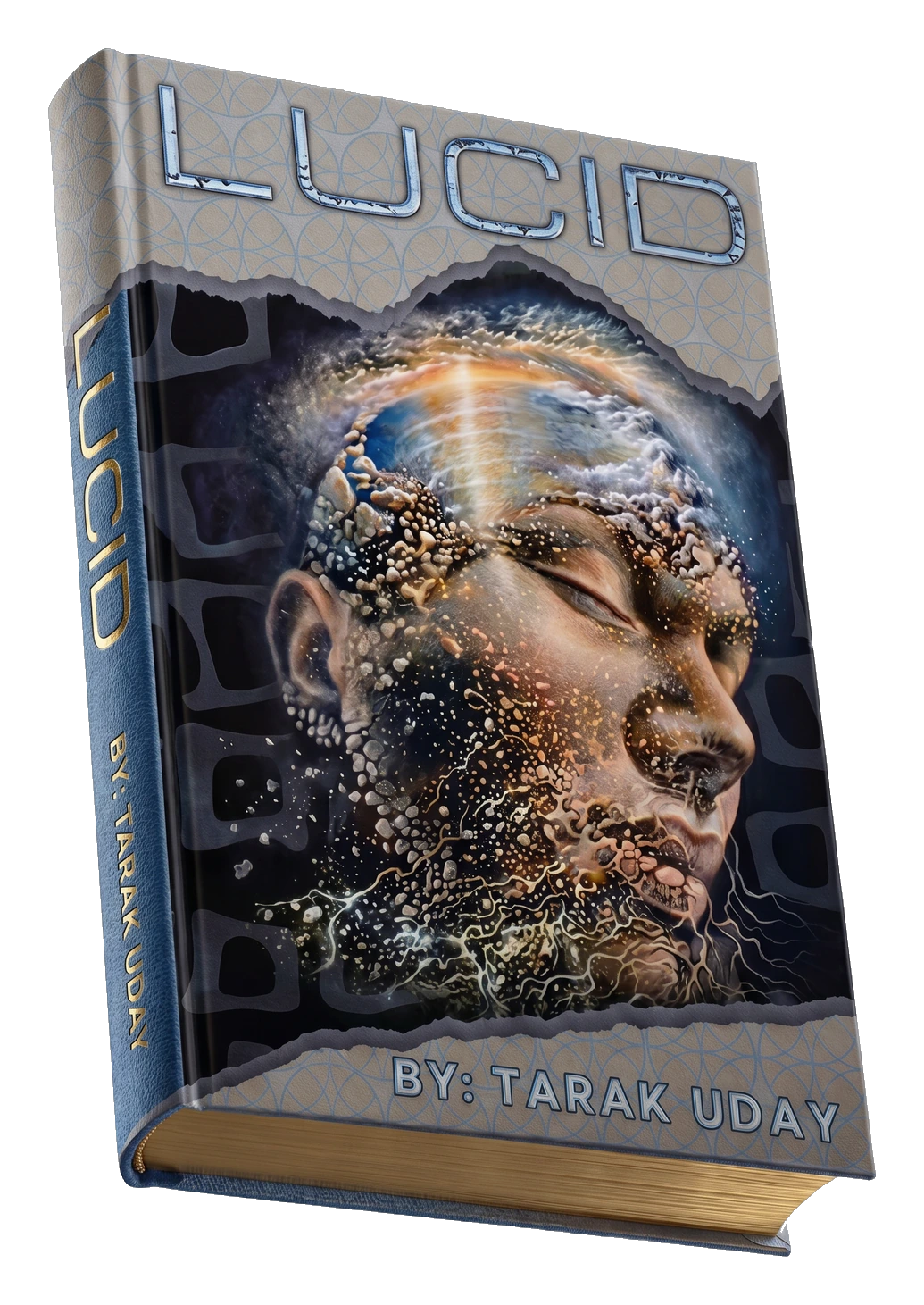
You've tried every lucid dreaming technique. Most miss the root cause. LUCID reveals what they all skip.