
Meditating to Find Your Purpose: What You're Consulting
You keep sitting down and asking. Nothing answers. That's not because the answer is missing — it's because you've been treating a filing cabinet like an oracle.
When you sit down to meditate on your purpose, you are not asking the universe for an assignment. You're consulting something already written. The superconscious mind holds the blueprint for your existence — the design you set out to fulfil in this lifetime — and meditation is not the oracle that produces it. Meditation is the change in altitude that lets you read it.
So the reason nothing answers isn't that the answer is missing. You've been sitting there interrogating a filing cabinet like it's a stranger who might know.
Why Doesn't the Answer Arrive When You Sit Down?
Because you brought the wrong faculty to the appointment.
Look at what you actually do in those sessions. You close your eyes and you ask — what am I here for, what should I do, is it this or is it that. Then you wait, and while you wait you think. You weigh options. You picture one path, then the other. You assess. That is the conscious mind doing precisely the job it was built for: reasoning through memory, attention and imagination.
And reasoning cannot reach this. Tarak Uday teaches through the Universal Language of Mind that the conscious mind operates in three dimensions and works by figuring things out, while the power of the subconscious mind is intuition — the direct grasp of truth with no rational basis for knowing. You've had it before. The person you knew instantly not to trust. The decision your gut refused before you could explain why. That faculty doesn't argue and it doesn't produce a case. It just knows, and it only speaks when the reasoning has gone quiet enough to be interrupted.
So an hour of vigorous asking produces nothing, and a walk two days later produces the whole answer in four seconds. Nothing malfunctioned. You simply stopped reasoning long enough for something else to get a word in.
What Is Actually Being Consulted?
A design that was complete before you started looking for it.
Every acorn holds the blueprint of an oak. Whether it takes root, whether it grows or rots where it fell, the design is there — whole, waiting, not dependent on the acorn's opinion of itself. The superconscious mind holds yours the same way: the lessons you set out to learn, the areas of understanding you came to expand, the relationships and experiences written into your design.
That reframes the whole search. You are not auditioning for a purpose, and you are not going to be assigned one if you meditate correctly enough. You are reading a document you wrote at a level you don't consciously remember writing at.
This is also why the blueprint isn't a script that removes your choice. It holds what you came to do, not when or how. You have free will over the route. But one way or another the design keeps getting fulfilled, because the superconscious mind is persistently feeding lifeforce energy toward its completion — which is exactly why the same pull keeps returning after every attempt to talk yourself out of it.
Why Does the Blueprint Feel Like Someone Else's Handwriting?
Because you're reading it from the wrong floor of the building.
The conscious mind sees the room it's standing in. That's not a flaw — it's the specification. It handles what's in front of it, in three dimensions, in sequence. The superconscious operates free of the limits of time and space, which means it holds the whole picture while the conscious mind can only survey the current room and the two doors out of it.
So when life stops making sense — the job that ended, the relationship that didn't hold, the intersection with no obvious turn — the confusion is usually a matter of altitude rather than information. Think of an electrician who stops mid-project because nothing lines up, and goes back to the original plans. The wiring didn't change. The vantage point did.
And the path to that vantage point is inner stillness. Meditation, breathwork and dream work are all doorways to the superconscious mind — which is also why every serious tradition starts you at the breath. The word spirit comes from the Latin spirare, to breathe. That's not a poetic coincidence. The duty of the superconscious mind is to supply lifeforce energy to the rest of the mind, and breath is the channel it comes through.
The other doorway opens every night
Dream work reaches the same place stillness reaches. Log last night's dream and decode it — the blueprint is often more legible there than in a seated session.
Decode Your Dream Now →What Does Consulting It Actually Look Like?
Short, specific, and much less dramatic than the version in your head.
Sit with the spine upright and take the breath long and slow for the first few minutes, because the breath is the channel and a shallow one keeps you at the level you're trying to leave. Then ask your question once. Once, clearly, in a single sentence — and phrase it as a request for direction rather than a demand for a verdict. What am I here to understand. What is the next step in what I came for.
Then stop asking. This is the part almost nobody does. Having placed the question, your only job for the remaining minutes is to be quiet enough for something to arrive. When the reasoning starts up again — and it will, within seconds — return to the breath. You are not trying to force an answer through. You're keeping the line clear.
What arrives rarely arrives as a sentence. It comes as a pull toward one thing, a sudden disinterest in another, an image that doesn't explain itself, a name you haven't thought about in years. Write it down immediately, before the conscious mind gets hold of it and starts improving it. Fragments that repeat across weeks are the blueprint being read a line at a time, and the log is the only way you'll notice the repetition.
How Does CHITTA Accelerate This?
By catching the fragments in a dated record and by working the doorway you're already walking through every night.
The gap the teaching leaves is retention. Intuition doesn't argue its case, so what it delivers is quiet, thin, and gone by lunch unless you write it down. And because the pieces arrive weeks apart, the meaning lives in the pattern rather than in any single fragment — which means an unrecorded consultation is functionally a consultation you didn't have.
The CHITTA dream journal is where that record accumulates, and dreams are the second doorway working while you sleep. They're real experiences in the subconscious mind, delivered in the Universal Language of Mind, so the interpretation engine reads them as mechanism rather than omen and the symbol dictionary handles the image that keeps returning. That's the one to watch. A path you keep walking, a building you keep entering, a person who keeps appearing — the repetition is the blueprint pressing the same line twice because you haven't read it yet. And when the dreams intensify after you start sitting, that isn't a side effect. It's the doorway widening.
So run both tonight. Ten minutes of breath and one question, then the dream logged and decoded in the morning.
What Do You Do With a Partial Answer?
Act on the part you have, and stop demanding the rest as a condition.
Most people receive a fragment, decide it's too small to be the answer, and throw it out. But the design is fulfilled in steps, and you're given the next one rather than the whole route, because the whole route would be read by the conscious mind and immediately negotiated down to something safer.
So take the fragment literally. If the pull is toward teaching, teach one person this month. If a subject keeps returning, spend an hour on it. If a name arrived, contact them. The next line of the blueprint tends to become legible only after the previous one has been acted on — which is the part that makes this a practice rather than a search. And if what you read contradicts the life you've built, that's information about direction, not an instruction to detonate anything by Friday. You hold free will over how and when. What you don't get is to stop hearing it, because the lifeforce keeps flowing toward the same design whether or not you've decided to look.
Give the fragments somewhere to accumulate
One clear line rarely arrives whole. Log tonight's dream and this morning's fragment in the same place, and let the pattern do the work.
Start Your Dream Journal →
Frequently Asked Questions




LUCID
You've tried every lucid dreaming technique. Most miss the root cause. LUCID reveals what they all skip.
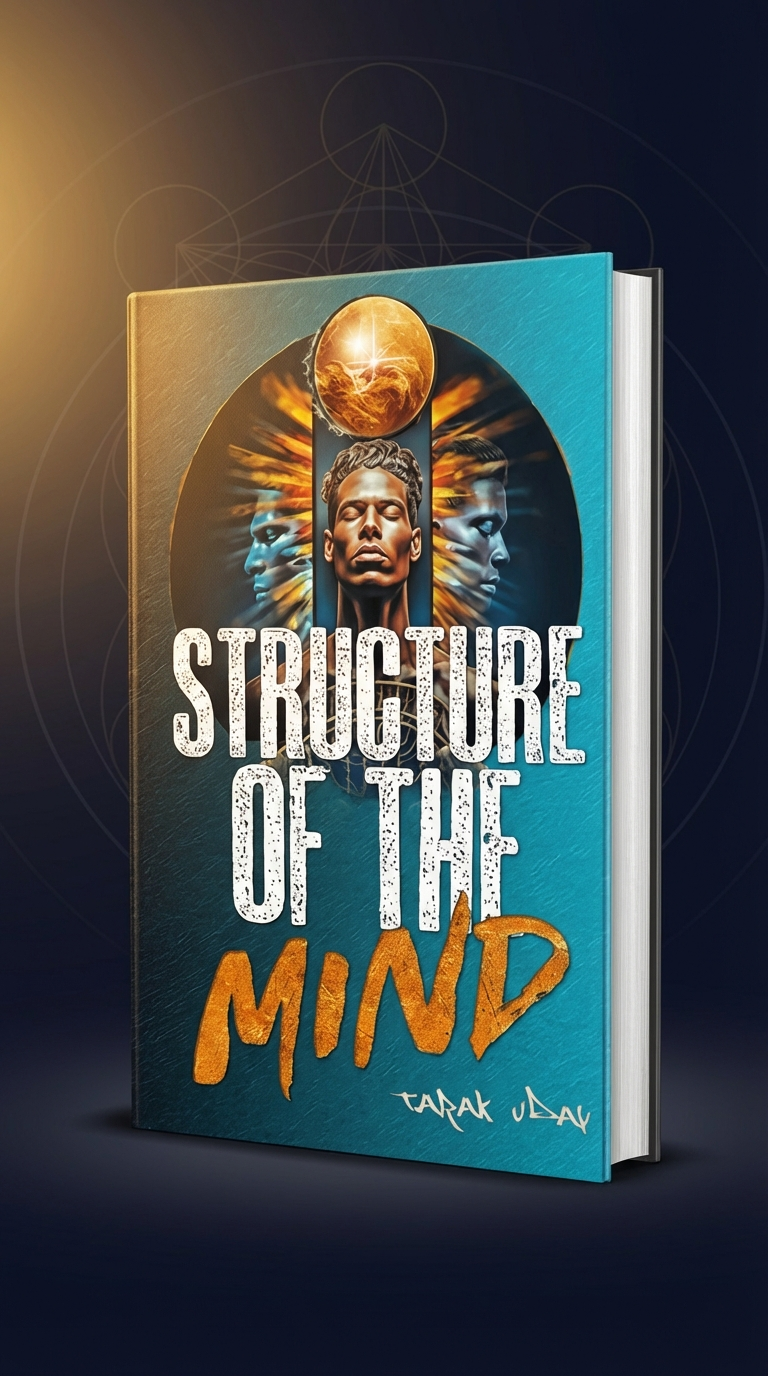
Understand Your Own Mind
"Structure of the Mind" reveals the three divisions of mind, seven levels of consciousness, and powers of mind that most people never learn to develop.