
Conscious, Subconscious, Superconscious: 3 Divisions
You've used this instrument every second of your life. Nobody ever handed you the diagram.
The mind has three divisions — conscious, subconscious, and superconscious. The conscious mind operates in the third dimension through the physical body, and its power is reasoning. The subconscious operates in the fourth dimension through the soul, and its duty is to manifest what the conscious mind plants. The superconscious operates in the fifth dimension through the spirit, and it holds the blueprint for your existence.
So here's the question almost nobody asks, and it's the one that unlocks everything: if you have a mind, what is it made of?
Not the brain — we'll get to that in a second. The mind. The thing doing the thinking, the wanting, the dreaming. Most people use this instrument every second of every day and have never once been handed a diagram of it. You wouldn't accept that with a car. This is the diagram.
What Are the Three Divisions of Mind?
The mind has three divisions — not metaphorically, structurally. Each operates in a different dimension, uses a different vehicle, carries a different power, and does a specific job.
The first is the conscious mind. The one reading this sentence, evaluating it, deciding whether you agree. It operates in the third dimension — the physical world — through the physical body. Its power is reasoning, and reasoning has three keys: memory, attention, and imagination.
The second is the subconscious mind, the mind your soul uses within the fourth dimension. It holds the storehouse of understandings you've built across every experience you've ever had, and it works continuously to manifest the dominant desires of the conscious mind. Its power is intuition — direct knowing, with no rational basis for the knowing.
The third is the superconscious mind, the mind your spirit uses within the fifth dimension. It holds the blueprint for your existence and continuously feeds lifeforce energy into the rest of the mind so that blueprint can be fulfilled.
That last line does the heavy lifting. You're not your conscious mind. You're not your soul. You're the awareness operating the equipment.
Why Isn't the Mind Just the Brain?
Look, this has to be settled first, because if the mind is a byproduct of neural tissue then everything above is poetry.
The brain is a physical organ — the hardware. It processes signals from your five senses, runs your nervous system, coordinates motor function. Extraordinary machinery. But the brain doesn't think. It processes. The mind is the intelligence directing it.
And here's the proof, which you already own. You've had vivid dreams — you saw things, heard things, felt physical sensations, inhabited a reality that felt completely real. In those dreams your eyes were closed. Your ears were on a pillow. Your body was motionless. Your brain's sensory inputs were offline. And you still experienced.
So the mind isn't located in the brain and isn't produced by it. It's the instrument consciousness uses to know itself. That reframe is why the three questions you ask of a dream return real information rather than entertainment.
Why Is the Conscious Mind Aggressive and the Subconscious Receptive?
This is the pair that actually runs your life, and they run on opposite laws.
The conscious mind is aggressive. Its thoughts invade whether you choose them or not. Right now, reading this, your conscious mind is generating other thoughts — about what you just read, about something unrelated, about what you're doing after this. You didn't invite any of them. They arrived. That's not a malfunction. That's the active, masculine principle: always reaching outward, always generating.
The subconscious runs on the opposite law. It's receptive — the feminine, receiving principle. It waits. To receive what it has for you — the intuitive hit, the deep knowing, the guidance of your inner authority — you have to first create space in the conscious mind. Quiet the aggressive generation. In the space that opens, the subconscious speaks.
Which explains every "eureka" you've ever had. The shower. The drive. The moment right before sleep. The conscious mind briefly stopped generating, and what was already inside was able to surface. The insight wasn't created there. It was received.
So the relationship is seed and soil. The conscious mind plants. The subconscious grows what's planted, without editing and without judging. It doesn't evaluate whether the seed thought is good for you. It receives, and it grows. Which is why the quality and consistency of your thought life isn't a soft self-help concern — it's the mechanical input to the only manufacturing process you have.
Your subconscious talks every single night
Dreams are the contents of the subconscious made visible — the thought images currently moving toward your waking reality. CHITTA decodes them in the Universal Language of Mind so you can read what's actually growing in the soil.
Decode Your Dream Now →What Does the Superconscious Mind Actually Do?
Two very concrete functions.
Its purpose is to hold the blueprint. Every acorn holds the design of a full oak inside it — whether that acorn takes root or rots, the blueprint is complete and waiting. Same with you: your soul's purpose, the lessons you set out to learn, the areas of consciousness you came to expand. Not a rigid script. You have complete free will over how and when you engage any part of it. But one way or another the blueprint keeps being fulfilled, because the superconscious persistently feeds lifeforce toward its completion.
Its duty is to supply that lifeforce — through breath. The word "spirit" comes from the Greek spiritus and the Latin spirare, both meaning breath. That's the root of "inspiration." To be inspired is literally to be in-spirited. Which is why nearly every meditation tradition on earth begins at the breath — not because breathing is interesting, but because it's the contact point between the physical body and the deepest division of mind.
You've felt this. Late at night, exhausted, and an idea lands, and suddenly you're not tired. The fatigue was real. The idea came with energy attached and overrode your physical state.
According to Tarak Uday's Universal Language of Mind, this division has a signature in your dreams: authority figures. Parents, teachers, doctors, judges, bosses — any authority figure in a dream reflects your current relationship with your own superconscious mind. A teacher means you're in learning mode with your inner authority. A judge means there's a reckoning with how you're aligning to universal law. And whether you're approaching that figure, hiding, or running tells you the condition of that relationship — a different read entirely from being chased by something unidentified.
How CHITTA Accelerates This — What Does the Instrument Actually Record?
So the teaching lands, and it creates a very specific problem.
You now know the subconscious is growing whatever the conscious mind has been planting, and that its contents are visible nightly in dreams. Which means the most useful data source about your own life is a set of experiences you forget within ninety seconds of waking. You have the map. You have no instrument to read it with. That's the gap.
The CHITTA dream journal closes it by making the record dated and permanent. You log the dream on waking — the images, the figures, the colors, the setting. What was vapor is now a row with a date on it. The interpretation engine reads that row in the Universal Language of Mind and tells you what each image means as a piece of your own mind: the house as your mind, the water as your conscious experience of life, the animals as your habitual thoughts, the authority figure as your superconscious. The symbol dictionary sits behind it, so you can look up any image and check the reading yourself.
Here's why that compresses time. One dream decoded is a data point. Thirty dreams decoded is a trend line — the same figure recurring, the same room, the same water condition month over month. The three divisions stop being a diagram you read once and become a record of your own interior you can audit. What was a vague sense that "something's off" becomes a specific, repeating, dated image, and you can name which division it's coming from.
So log tonight's dream. Decode it. Then do it again tomorrow, and watch which figure keeps showing up.
What Do People Still Ask About the Three Divisions of Mind?
Two things worth closing on.
The first: the seven levels. Inside the three divisions sit seven levels of mind. The physical level is the only one in the conscious mind. The subconscious holds four — emotional, lower astral, upper astral, mental — and the superconscious holds two. Each produces a distinct dream signature: black and white at the emotional level, ordinary color at the lower astral, impossibly vivid color at the upper astral. Track the color of your dreams and you're tracking your own depth.
The second: what carries forward. The subconscious doesn't store facts or possessions. It stores understandings — the wisdom you actually extracted from an experience, not the information you collected about it. Understandings become part of the soul and go with you. Information doesn't. Which is why this framework insists on practice over reading: information does not transform anyone. Only experience does.
So go get the experience. Your dreams about eyes, your flashes of extrasensory perception, the tree that keeps appearing — every symbol is a division of mind reporting in.
Tarak Uday is the author of Structure of the Mind, Life is But a Dream, and Lucid, and the creator of CHITTA. His work translates the Universal Language of Mind into a practical instrument for self-mastery.

Frequently Asked Questions



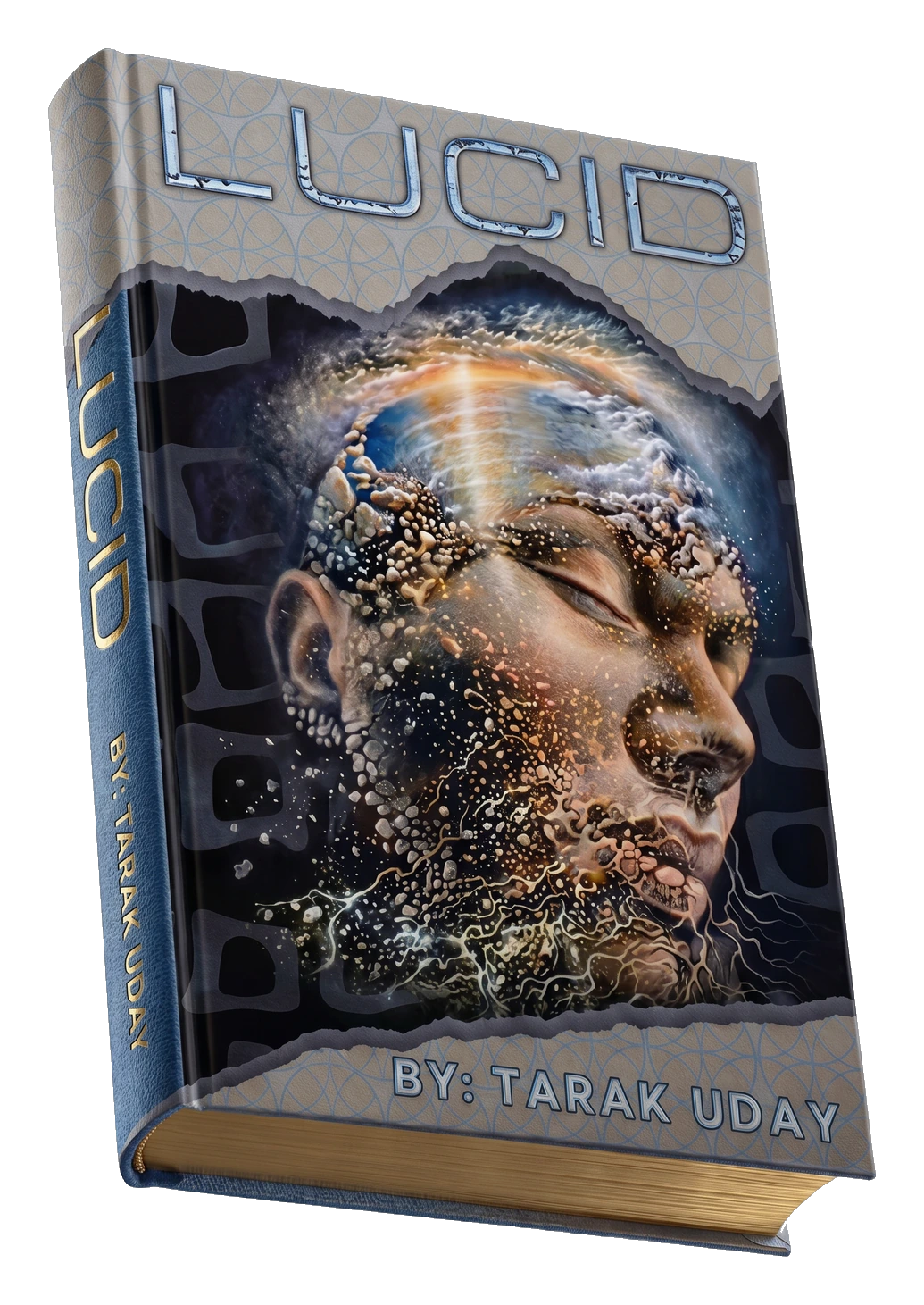
LUCID
You've tried every lucid dreaming technique. Most miss the root cause. LUCID reveals what they all skip.
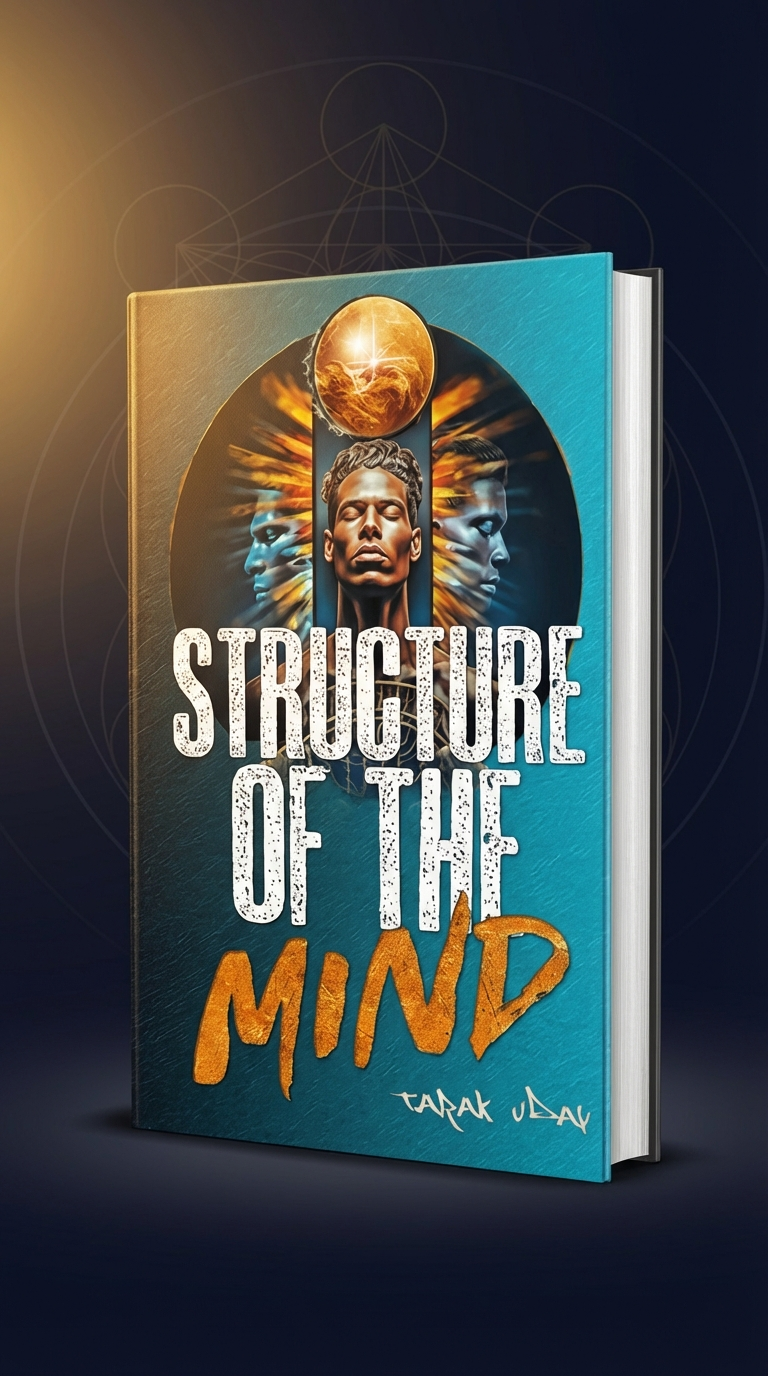
Understand Your Own Mind
"Structure of the Mind" reveals the three divisions of mind, seven levels of consciousness, and powers of mind that most people never learn to develop.