
Subconscious or Unconscious? The Word Changes Your Reach
One prefix denies access by definition. The other locates a floor below this one and leaves the staircase in the picture. Everything you can practise sits downstream of that syllable.
The word you use for the division below waking awareness decides what you believe you can do with it. One word describes a place you cannot enter and can only be excavated by an expert. The other describes a floor beneath this one, reachable by a staircase you already own. CHITTA calls it the subconscious mind, and that is a structural claim, not a preference in vocabulary.
So most people use both words as if they were synonyms, and never notice which one they reached for. But you have been handed two different maps of the same territory, and only one of them has a route drawn on it. Which map you're holding determines whether tonight's dream is data you can read or noise you need a professional to translate.
What Does Each Word Actually Claim?
Take the prefixes seriously, because they're doing all the work.
Un- is a negation. It means not — absent, unavailable, cut off. Applied to a division of mind, the term unconscious mind asserts that the region is definitionally outside awareness. Not currently unlit. Structurally unreachable. That claim came out of a specific early-twentieth-century model in which the material down there is repressed, hidden from you by your own defences, and recoverable mainly through years of interpretation by someone else.
Sub- is a position. It means below — under this floor, on a level of its own. It makes no claim about accessibility at all. It says only that the region sits beneath the level you are standing on right now, which immediately raises the practical question the other word forecloses: what are the stairs?
Why Does Calling It "Sub" Change What You Can Do?
Because it converts an impossibility into a logistics problem, and logistics problems have solutions.
If the region is unreachable by nature, then dream recall is a curiosity, a dream journal is a diary, and the only serious route inward runs through an expert with a framework. You are, structurally, a patient. If the region is simply a level below this one, then everything changes shape: recall is a skill, imagery is a language, and the question stops being can I get in and becomes what is the access method and how do I practise it.
And there's a mechanical reason CHITTA holds the second position, which has nothing to do with optimism. The conscious mind is aggressive — it generates thoughts whether you invite them or not. The subconscious operates by opposite laws: it is receptive, it waits, it does not push. So it isn't hidden from you. It's quiet, and you've been standing in a loud room.
Which is why insight arrives in the shower, in the car, in the minute before sleep. In those transitional states the conscious mind briefly stops shouting, and material from below becomes audible. Nothing was excavated. Something was received, because a gap finally opened. According to Tarak Uday's Universal Language of Mind, that experience is not a quirk of relaxation — it is the access method, demonstrating itself by accident.
What Is Actually Down There, Structurally?
Four levels, and they are not a metaphor.
The division below waking life contains the emotional level, the lower astral, the upper astral, and the mental level — running from the one closest to physical life inward toward the deepest. Each produces dreams with a distinguishable quality. The emotional level gives black and white. The lower astral, where most dreaming happens, gives ordinary colour. The upper astral gives those saturated, impossible colours that feel more real than waking life. The mental level, deepest of the four, gives a nearly colourless heavenly brightness.
Notice what that structure implies. If the region were definitionally out of reach, the visual quality of your dreams would be trivia. Because it is a set of levels you move through, that quality is a location reading — it tells you how deep in you were operating on a given night.
And the contents are not repressed secrets. The images you meet down there are the thought images currently moving through the levels toward manifestation in your waking life. It isn't a vault of what you hid. It's a workshop of what is forming.
If it's a floor below, there are stairs. Use them tonight.
Log the dream before you stand up and decode it through the Universal Language of Mind — that is the access method, practised.
Decode Your Dream Now →How Do You Reach It Tonight?
You create the gap, then you record what comes through it. Both halves are required and people usually do only the first.
Creating the gap is any deliberate reduction of the conscious mind's noise — attention on the breath, a fixed point held for ten minutes, the ordinary stillness before sleep. You aren't forcing anything open. You're lowering the volume in the room so the quiet division becomes audible.
Recording is the half that gets skipped, and it's the half that makes the first half count. A dream is gone within about ninety seconds of standing up. Insight received in that gap and not written down converts, within a day, into a vague sense that something good happened — which is indistinguishable from nothing having happened at all.
Then decoding, which is where the word choice pays out in full. A house is your state of mind. Animals are habitual thoughts. Stairs are access between levels. Read that way, an ordinary night becomes a status report on the division you were told you couldn't visit — and you didn't need anyone's permission to read it.

Bindu says: "You were taught that the deep part of you is sealed. You have been walking through it every night for your whole life and calling it nonsense in the morning."
How CHITTA Accelerates This — Where Does Reaching Become Reading?
Here's the gap this article opened. You now know the region below is a set of levels with an access method rather than a sealed vault. Reaching it is the easy half — you did it last night. Reading it is where almost everyone stalls, because the material arrives in images and nobody handed you the grammar.
The dream journal closes the ninety-second window. Dated entries that don't get revised, so the record survives the morning and survives your memory's habit of editing toward the story you already believe about yourself.
The interpretation engine supplies the grammar, reading each entry through the Universal Language of Mind rather than an internet symbol list — the house as your state of mind, the animal as a habitual thought, the colour quality as a depth reading. And the symbol dictionary is where you check the form and function yourself, which matters more than it sounds: after a few months you stop needing the lookup. You're reading your own images, which is the whole point of insisting the floor is reachable.
The acceleration is that the levels stop being a diagram in an article and become a place you have dated evidence of visiting. That is a very different relationship with your own mind than the one the other word was ever going to allow.
So log tonight's dream and decode it. The stairs were always there.
What Else Do People Ask About Subconscious vs Unconscious?
Is there a real difference between subconscious and unconscious?
Yes, and it is structural rather than stylistic. One prefix negates access as a matter of definition; the other simply locates a level below waking awareness and leaves the route open. The second describes what the mind actually does, so CHITTA uses it.
Why does CHITTA never call it the deeper mind by the other name?
Because that term carries a model in which the material is repressed and recoverable only through expert interpretation. The division is receptive rather than hidden, and it is reachable by ordinary practice, so the negating term describes something CHITTA does not find there.
What are the levels of the subconscious mind?
Four, from the outermost inward: the emotional level, the lower astral, the upper astral, and the mental level. Each produces dreams of a distinguishable visual quality, which is what makes the colour and clarity of a dream a usable reading of how deep you were.
How does the Universal Language of Mind define the subconscious mind?
As the division the soul uses in the fourth dimension — receptive rather than aggressive, holding permanent understandings built across lifetimes, and working continuously to manifest the dominant desires of the conscious mind.
Tarak Uday is the founder of CHITTA and the author of Structure of the Mind and Life is But a Dream, which lay out the Universal Language of Mind used throughout this article. For the related mechanics, see how this reading differs from Freud and Jung and why the mind is not the brain.

Frequently Asked Questions




LUCID
You've tried every lucid dreaming technique. Most miss the root cause. LUCID reveals what they all skip.
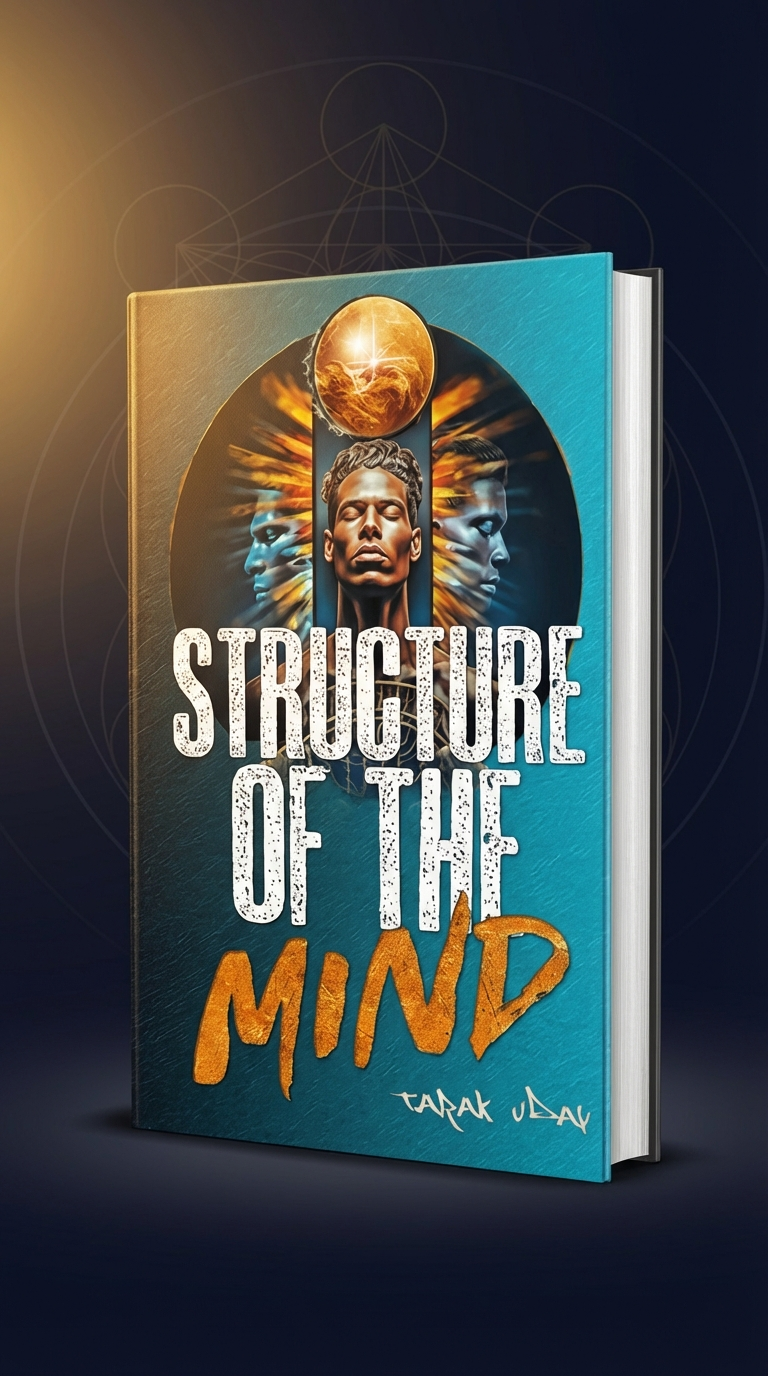
Understand Your Own Mind
"Structure of the Mind" reveals the three divisions of mind, seven levels of consciousness, and powers of mind that most people never learn to develop.