
The Law of Infinity: Why Anything Is Possible
A big desire rose in you, and within seconds your mind had found the one road it could picture, seen it was closed, and called the desire unrealistic. That was the size of the picture, not the size of the desire.


The Law of Infinity says that anything is possible, because everything is infinite. It is the eleventh of the thirteen Universal Laws, and it describes how much room a thought has to move in before it becomes a thing. You have met its opposite many times. A big desire rose in you, and within a few seconds your mind had done the arithmetic, found the one road it could picture, seen that the road was closed, and filed the desire under unrealistic. You called that being sensible. In the Universal Language of the Mind, as Tarak Uday teaches it, that wasn't the size of the desire talking. It was the size of the picture. Your subconscious mind works in a far wider field than that every night, so before going further, bring back the last dream you remember.
What Is the Law of Infinity?
Its definition is three words long. Anything is possible.
The concept underneath it is just as short. Everything is infinite. Not a few special things. Everything.
If you want to see where it sits among the others, the 13 Universal Laws lays out the full set.
Two plain observations carry the mechanics. The first is about matter. Atoms are mostly space, so within every atom there is an entire universe. The table under your hand, the situation you've decided is solid and settled: mostly room.
The second is about counting. Between every number lies infinity. Between one and two sits one and a half. Between one and one and a half sits one and a quarter. You could keep dividing for the rest of your life and never leave the gap between one and two.
So the infinite isn't far away, out at the edge of the sky. It is inside the smallest thing you can point at and the smallest step you can count.
Notice what the law doesn't say. It doesn't say everything will happen, and it doesn't say when. “Anything is possible” is a statement about how much room there is. It is not a promise about results.
Where Does a Thought Meet Infinity in Your Mind?
A thought doesn't go straight from your head into your life. It moves down through the levels of the mind, and each level has its own quality. In LUCID, Tarak Uday gives each one an element. The mental level, where a thought is first formed, is air: hard to perceive, easy to reshape.
The next level is the upper astral, and its element is fire. Fire expands. This is the exact place where the eleventh law lives.
At this level your desire isn't one plan. The single route you pictured at the kitchen table is one spark in that fire.
Then the thought moves on. The lower astral is water, and the energy of water is contraction. In Tarak's words, the thought form “begins to contract into a more finite number of possibilities.” Below that is the emotional level, which is earth. Its energy is stability, and the thought form there is fully developed and ready to make its way into physical reality.
Expansion first, then contraction, then form. That order isn't yours to rearrange.
What is yours is how you behave while the fire is burning. Structure of the Mind is direct about it. As your seed thought reaches this level, you go on imaging the end result you desire and, in the book's words, “not limit the universe in HOW you are wanting it to manifest.” Hold the what. Loosen your grip on the how.
Most of us do the reverse. We're vague about what we want and rigid about how it's allowed to arrive. And the same passage notes that a thought form can still be influenced by new thoughts on its way down. Every “that's the only way it could happen” is a new thought.
Which of your desires never reached the fire at all, because you had already decided how it had to come?
Why Does “Anything Is Possible” Feel Untrue?
Because you're checking it against the only thing your conscious mind has on file, which is what has already happened.
Here in the physical you have one present moment. One bank balance, one body, one address. From inside that single moment a huge desire looks like a wall, and the mind's quick arithmetic feels like honesty.
The inner levels of the mind don't work under that limit. In Structure of the Mind, Tarak describes the inner levels of the subconscious mind as no longer limited by time, free to move through “the infinite possibilities within the future.” Then he brings it back to the one moment you're standing in: “Through working with the subconscious mind one has the possibility of transforming this present moment into an infinite number of possibilities.”
So the feeling of impossible is a reading taken from the wrong instrument. It measures the one way you can currently picture. It says nothing about the desire.
Try it on something you ruled out long ago. Say it plainly: I want this. Then listen for the sentence that arrives next. It nearly always begins with “but the only way that could happen is.” There's the limit. It was never in the desire. It was in the word only.
None of this turns the law into a wish machine. Possibility isn't arrival. The Law of Infinity tells you how wide the field is. What grows in it still depends on the thoughts you plant and keep planting.
And the law is the same for everyone. The exact desire where you hear the word only is yours alone, and it tends to show up in your dreams before you'll admit it awake.
What Do the Scriptures Say About Infinity?
The world's sacred texts keep pointing at the same thing once you read them as symbolic language. What follows is a reading through the lens of the Universal Language of the Mind, a way of decoding images. It isn't religious instruction, and it takes nothing away from how any tradition holds its own scripture.
Psalm 82:6, in the King James Version, reads: “I have said, Ye are gods; and all of you are children of the most High.” Read through this lens, the verse speaks to the one who does the thinking, and it doesn't describe a small thing.
The Tao Te Ching returns to the theme three times. Chapter 4 pictures the Tao as the emptiness of a vessel, deep and unfathomable. Chapter 6 speaks of the valley spirit that does not die. Chapter 34 says the great Tao is all-pervading, and that it can be named in the smallest things and in the greatest. That is the atom and the gap between two numbers, in older words.
Dhammapada 410-411 describes one who is unshackled and has reached the depth of the Immortal, and verses 422-423 describe the awakened one who knows his former abodes. Both are portraits of a mind no longer fenced into one stretch of time.
Bhagavad Gita 7:24-26 says the undiscerning think of the unmanifest as having become manifest, not knowing its higher, inexhaustible nature. The mistake it names is the one from the kitchen table: taking what has already shown up for all there is.
Quran 18:109 says that if the sea were ink for the words of the Lord, the sea would fail before the words did. Quran 31:27 widens the image: every tree on earth a pen, the sea with seven more seas behind it for ink, and still the words would not be spent.
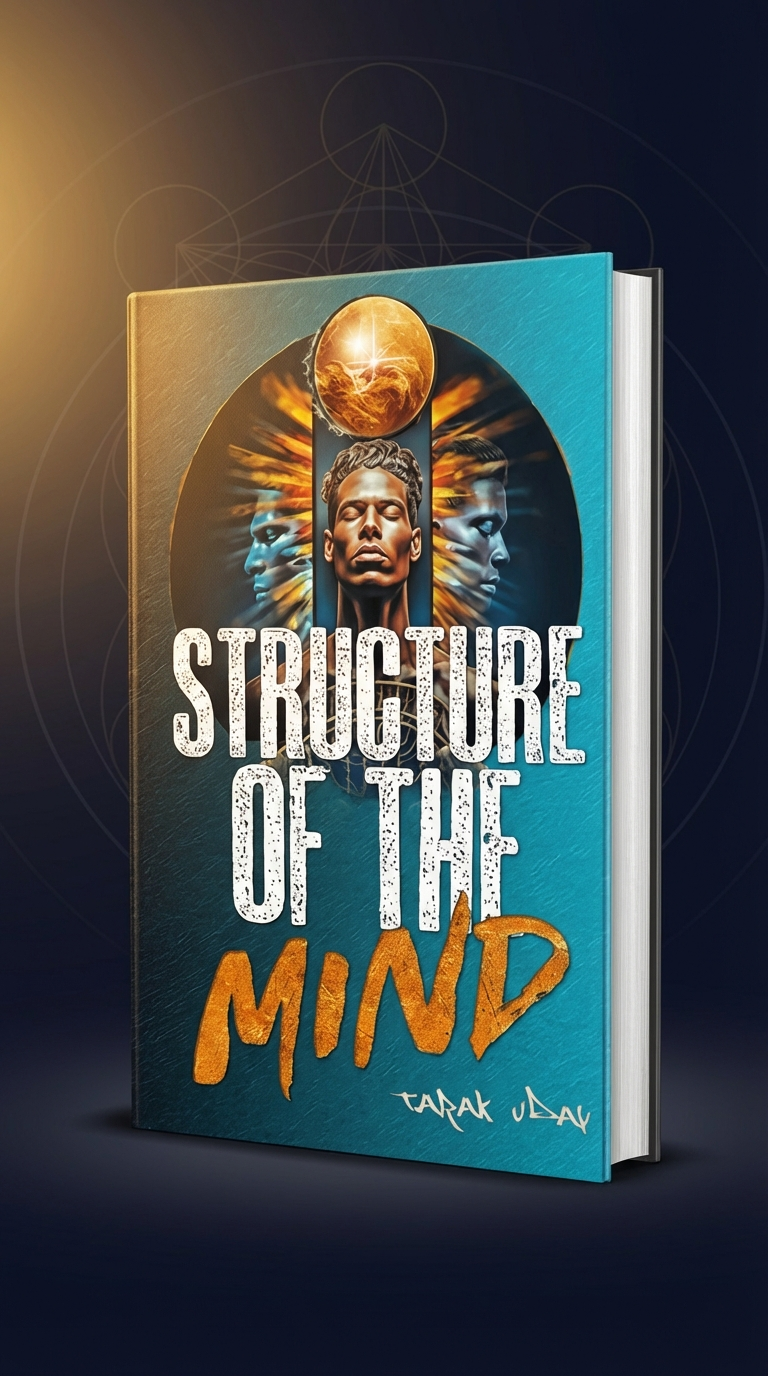
Tarak Uday takes this further in Structure of the Mind, his map of the three divisions of mind and the powers of attention, memory and imagination.
How Does CHITTA Help You Work With the Law of Infinity?
The harmonizing practice for this law is a single instruction: write at least ten HUGE desires, with two or three ways to make each one real. It takes a pen and twenty minutes. Keeping it alive past the weekend is the hard part, because a list left in a drawer goes back to being a wish.
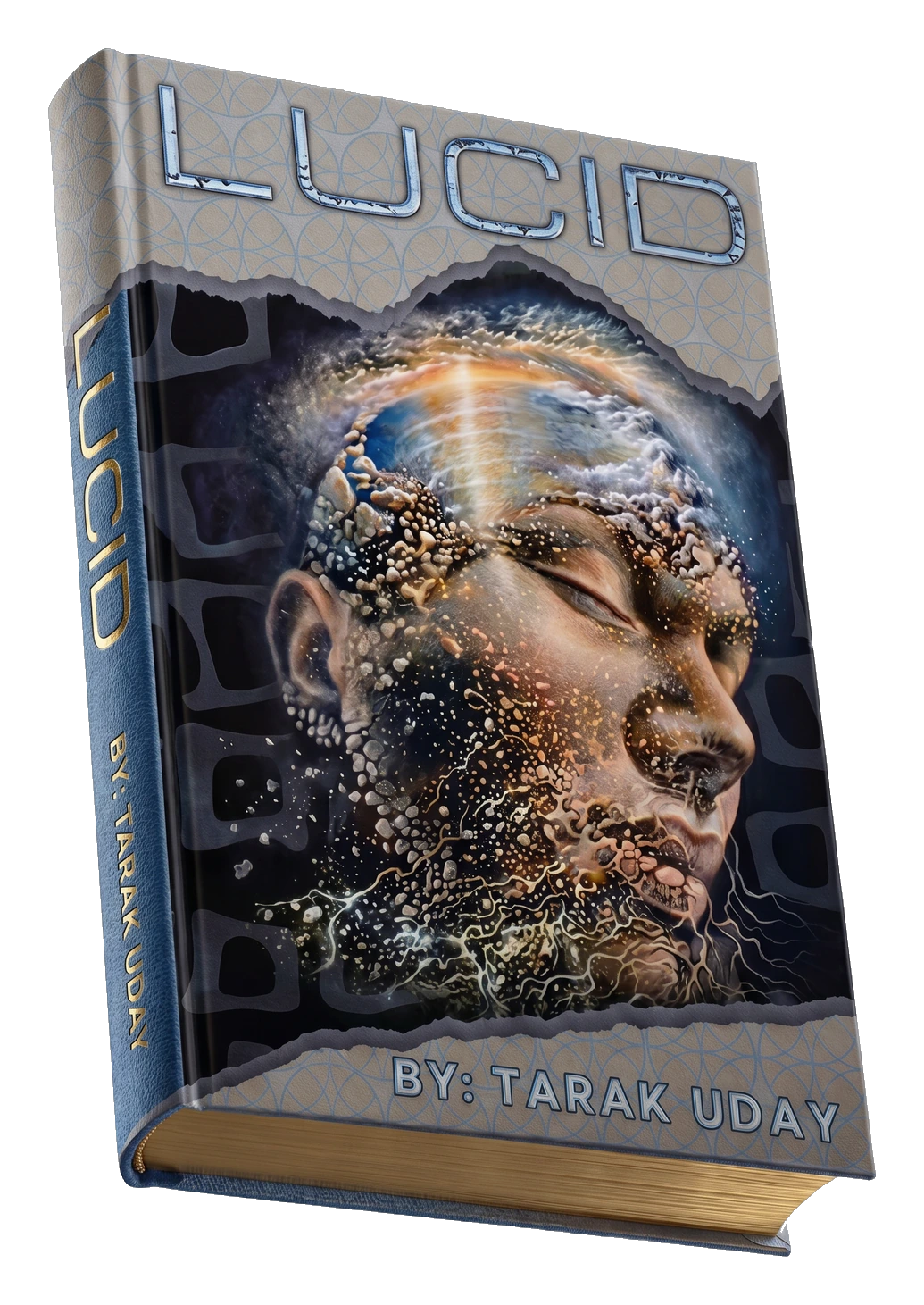
The Top 10 Most Wanted visualization is where the list stays awake. In LUCID, Tarak teaches it as the ten desires you currently want the most, a mix of possessions, goals, experiences and qualities, read every morning and every night. And you don't only read them. You close your eyes and step into each one with every inner sense: see it, hear it, feel it, be there. If you'd like the list walked through step by step, the Top 10 Most Wanted list has its own guide.
That matters here for a specific reason. The subconscious mind doesn't process words. It processes images. Holding the end result as a full image twice a day is the very thing the upper astral asks of you, and it leaves the how open.
The book adds a detail that keeps huge desires from floating away. The large ones get broken down into a first step you can cross off before writing the next. That is Tarak's teaching about how the practice works. It is not a promise about what you will get, or when.
In CHITTA the list lives beside the dream journal and the interpretation engine. Your list is what you're choosing to hold. Your dreams, decoded in the Universal Language of the Mind, show what your subconscious mind is working with, including the places where a desire has been quietly made smaller. One dream is a sentence. The same symbol returning for weeks is a pattern.
Which Ten Huge Desires Will You Write Tonight?
Tonight, before you sleep, take a pen and paper and write ten HUGE desires. Not reasonable ones. Not the edited versions you'd say out loud at dinner. The ones that make you a little uncomfortable to see in your own handwriting.
You'll feel the arithmetic start up around the third or fourth. Let it run, and keep writing. If a desire feels sensible, write the one standing behind it.
Then go back to the top, and under each desire write two or three ways it could become real. Not one. One way is the single road you've been staring at. Two or three is enough to show your own mind that the road was never the only one. You aren't choosing among them. You're loosening the word only.
One or two desires will sit there with a blank space underneath, and you won't be able to think of a single way. Don't force it. Leave the gap and look at it. That blank is the most useful line on the page.
Then put the pen down and go to sleep.
The Law of Infinity can tell you that anything is possible, and why. It can't tell you which of your ten you wrote small out of habit, or which one you left without a single way under it, or what your subconscious mind does with the list once you're asleep. The page will show you the first two. The dream that follows is where you find the third.
Frequently Asked Questions



Books by Tarak Uday
Understand Your Own Mind
"Structure of the Mind" reveals the three divisions of mind, seven levels of consciousness, and powers of mind that most people never learn to develop.

Learn The Language Your Dreams Speak
"Life Is But a Dream" teaches the Universal Language of the Mind — how to read any dream symbol by what it is and what it does, so every dream becomes a message you can act on.
LUCID
You've tried every lucid dreaming technique. Most miss the root cause. LUCID reveals what they all skip.