
Why Do I Forget My Dreams? The Spiritual Reason and the Seven-Night Fix
You are not a person who doesn't dream. You are a person whose memory was never trained to reach that far.
You forget your dreams because recall is a memory skill, not a dreaming ability. You dream every single night. What fails is not the dreaming; it is the reach of your memory across the line between sleeping and waking, and that reach is trainable the way a muscle is trainable. Something happened last night. You woke up holding the shape of it and lost the shape before your feet hit the floor.
So let's start by taking something off you. You have probably said the sentence out loud at some point, maybe half joking: I just don't dream. Or you have listened to somebody describe a dream in full colour and felt quietly locked out of something everyone else gets. That feeling is real, and the conclusion under it is wrong.
Do I Actually Dream Every Night, Even When I Remember Nothing?
Yes, and the mechanism is not mysterious once you see where you go at night. When you go to sleep, your consciousness shifts from the physical body to the astral body. You close your eyes, your attention closes off from the physical senses, and it turns inward, where you experience your inner environment through inner senses instead.
This happens whether you remember it or not. Only the physical body and the conscious mind need rest. The soul doesn't rest. The spirit doesn't rest. The subconscious mind doesn't rest. Your consciousness doesn't rest. While the body sleeps, consciousness keeps creating experiences in the inner levels of mind, and when you wake up with the memories of those experiences still reverberating in you, you call that a dream.
Read that definition again, because it moves the whole problem. A dream is not the experience. A dream is the memory of the experience. The experience happened regardless. So the question was never whether you dream. It was whether the memory made it back across.
Why Does the Dream Vanish the Second I Open My Eyes?
Because of one law that runs everything else in your inner life: you are where your attention is.
All night your attention has been pointed inward. Then the alarm goes, or the light changes, or your partner moves, and your attention swings hard onto the physical senses. Bladder. Phone. The first worry of the day. The moment attention leaves the dream, you are no longer in the dream, and the memory has nothing holding it open. It doesn't get deleted. It gets dropped.
This is why the people who remember the most are rarely the most gifted. They are the ones who do not move. They keep their eyes closed, they stay in the position they woke up in, and they let attention stay where it already was for one more minute before the day grabs it. The practical sequence for that belongs to its own article, and it is already written for you in how to remember your dreams rather than repeated here.
Notice what this also tells you about your waking day. If an untrained attention cannot hold an image for sixty seconds on waking, it is not holding much at noon either. Concentration is the faculty every other practice runs on, which is why people conclude a technique failed when what actually failed was their grip on it.
What Is My Subconscious Mind Saying When I Keep Forgetting?
Here is where most search results will hand you something ominous, and this is where they are wrong. Forgetting is not the subconscious mind withholding, punishing, or protecting you. It is not a blocked chakra or a closed channel. Your subconscious mind sends the message every night, in full, in the Universal Language of Mind. What is failing is on the receiving end.
In the Universal Language of Mind, as Tarak Uday teaches it, the conscious mind's power is reasoning, and reasoning has three keys: memory, attention, and imagination. Memory lets you understand what you experienced in the past. Attention lets you understand the present. Imagination lets you understand what you could experience next. Every one of those is a mental muscle. Train them and they strengthen. Leave them and they weaken by the day, quietly, without announcing it.
So the spiritual reading of forgetting your dreams is almost disappointingly clean. It says your memory currently reaches back across the waking day but not across the threshold. That is a report on a muscle, not a verdict on your access.
And there is a cost to leaving it unread that nobody mentions. One dream is a sentence. The same symbol coming back for months is a paragraph, and the paragraph is saying something that no single night's interpretation can see. People who don't record lose the paragraph entirely, because you cannot notice a pattern you never wrote down.
How Long Does It Take Before the Dreams Come Back?
Faster than you expect, and the first result is usually not a dream at all. It is a feeling on waking that there was something there. That feeling is the muscle firing. Most people catch fragments inside a week of writing every morning and start getting whole dreams in the second or third.
In LUCID, Tarak Uday writes that recall tends to return within seven to ten days of consistent practice. Hold that as the teacher's expectation from years of watching people do it, not as a promise about your particular nervous system. Some people are quicker. Some take a month. The variable is almost never talent; it is whether you wrote on the mornings you had nothing.
Which is the part everybody skips. On a blank morning you write the word nothing, and you date it. That looks pointless and it is the single most load-bearing thing in the practice, because you are not recording a dream. You are telling your subconscious mind, every morning without exception, that this channel is being monitored now. A channel that gets monitored starts getting used.
The record is the practice
Dream recall is the one skill where the instrument and the exercise are the same object. You do not need to believe it works. You need seven dated entries.
Start your dream journalSomething else shifts around the second week, and it surprises people. The dreams don't only come back. They come back longer, with more colour and more sequence, because the subconscious mind gives more to a mind that is actually receiving. And the state you fall asleep in decides the state you dream in, which is why breath is the one lever that reaches the whole thing directly.
How Does CHITTA Accelerate This?
Here is the gap the last four sections just opened. You now know forgetting is a memory problem, you know what to do about it tonight, and you have nowhere to put any of it. A notebook by the bed catches last night. It cannot show you that a house appeared in eleven entries since March, and the house is the whole message.
That is the specific thing the dream journal in CHITTA is for. Every entry is dated and kept, so what was a vague sense that you keep dreaming about the same thing becomes a record you can actually look at. The interpretation engine then decodes the entry in the Universal Language of Mind rather than a generic dream dictionary, so a house reads as your mind, water reads as your conscious experience of life, and the symbol dictionary is there when you want to work the form and function out yourself instead of being told.
Tarak Uday takes this further in LUCID, his book on becoming aware inside the dream.
What that compresses is time. Working alone, you might sense a recurring theme after a year of half-remembered mornings. Working from a dated record, the pattern shows up as soon as there are enough entries to show one, because you stopped relying on memory to do a job that writing does better. And the Sanctum is there if you want to read your own dream beside people doing the same work, which is a different order of information than reading it alone and costs nothing.
So tonight, before any of that: put a notebook by the bed and write something the moment you wake, even if the something is the word nothing. That is the whole first move.
The mechanism above tells you why the dream faded. It does not tell you what last night's dream was saying, and it never will. That part is not public knowledge. It is yours, it was sent specifically to you, and it is waiting on the only thing that has ever unlocked it, which is you writing it down before it goes.
What Else Do People Ask About Forgetting Their Dreams?
Does everyone dream every night? Yes. Your body and conscious mind rest at night, but your consciousness does not. It keeps creating experiences in the inner levels of the subconscious mind whether you wake with a memory of them or not. What people call not dreaming is really not recalling, and the two are completely different problems with completely different fixes.
Why do I forget my dreams so fast? The moment you open your eyes, your attention snaps back to the physical senses, and you are where your attention is. The memory is still reverberating for a moment, but nothing is holding it open. Most of it is gone inside ninety seconds, which is why the first minute after waking decides the whole day's recall.
Is forgetting my dreams a spiritual sign? It is a sign about your memory, not about your worth or your access. In the Universal Language of Mind, as Tarak Uday teaches it, memory is one of the three keys of reasoning, and an untrained key reaches across the waking day only. Nothing is being withheld from you by anything.
Can I get dream recall back if I have not remembered a dream since childhood? Yes, and long gaps are common. The faculty was never lost, only unused, and unused is the easiest state to reverse. Start with a dated entry every morning including the blank ones, and read why dreams feel so real while you wait, because understanding where you actually go at night tends to sharpen what comes back.
Tarak Uday teaches the Universal Language of Mind, the ancient picture language the subconscious mind speaks in. His books LUCID and Life is But a Dream cover dream recall, incubation and the metaphysical mechanics underneath both.

Frequently Asked Questions


Books by Tarak Uday

LUCID
You've tried every lucid dreaming technique. Most miss the root cause. LUCID reveals what they all skip.

Learn The Language Your Dreams Speak
"Life Is But a Dream" teaches the Universal Language of Mind — how to read any dream symbol by what it is and what it does, so every dream becomes a message you can act on.
Understand Your Own Mind
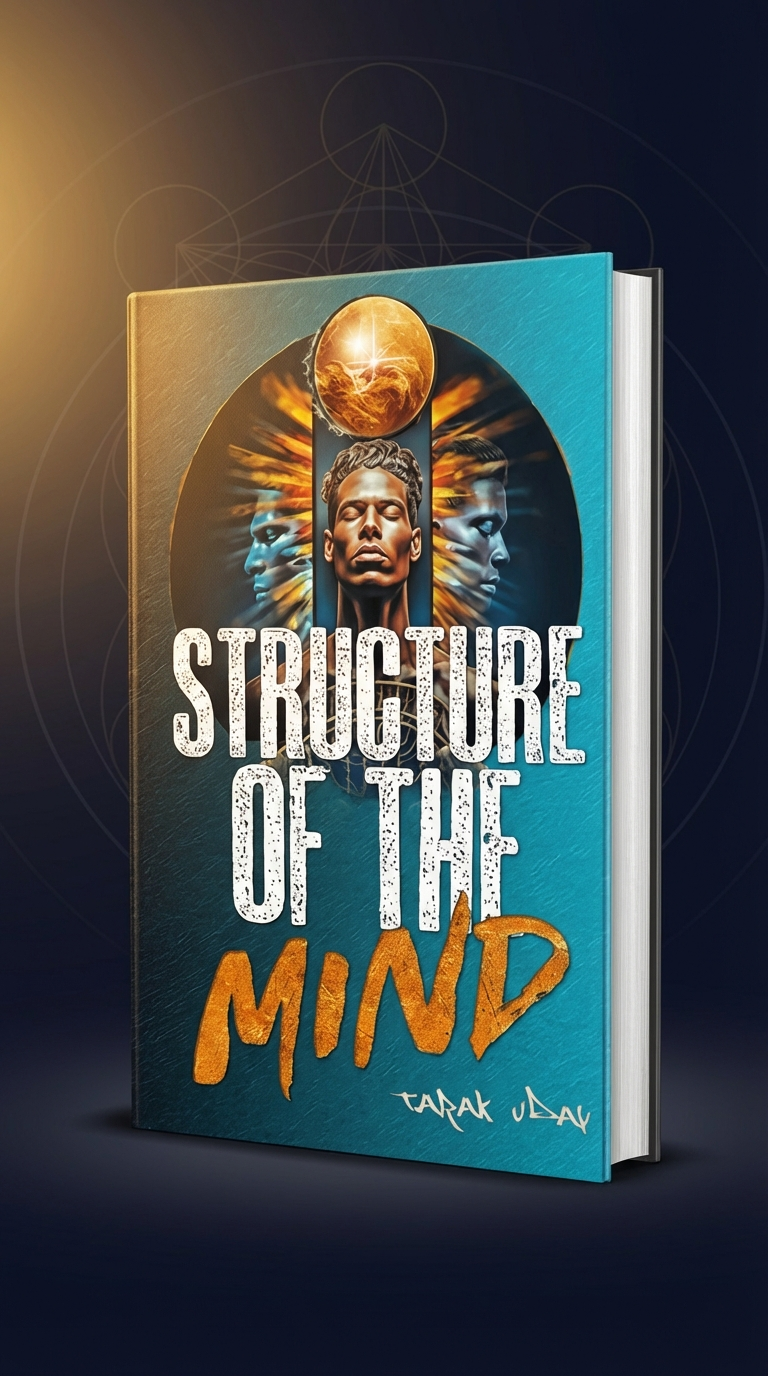
"Structure of the Mind" reveals the three divisions of mind, seven levels of consciousness, and powers of mind that most people never learn to develop.