
Does Your Soul Leave Your Body When You Sleep?
Not the way the ghost stories tell it. The soul isn't what slips out of you at night. It's the vehicle you slip into, and you've done it every night of your life.
Every night, your consciousness shifts out of your physical body and into your astral body, and that astral body is your soul. So the soul isn't something that drifts out of you while you sleep. It's the vehicle you move into, and a dream is what you experience while you're in it. You know the moment I mean. You wake up and for one second you're still somewhere else, a kitchen that wasn't yours, a road you could've drawn from memory, and then it's gone before your feet touch the floor. That somewhere was real to the body you were using. It was the first page of your own dream.
Does the Soul Really Leave the Body During Sleep?
Most people picture it like a scene from a film. The body lies still, something pale lifts off the mattress and hangs by a thread until the alarm goes off. It's a picture built on fear, and it makes the soul sound like a passenger that could wander off and not come back.
That picture has the direction backwards. In the Universal Language of Mind, as Tarak Uday teaches it, you aren't your physical body, and you aren't your soul either. Your true essence is your I AM consciousness, and it uses three vehicles to move through three planes of existence. The physical body is the vehicle for this three-dimensional reality, and it works through the conscious mind. The soul, also called the astral body, is the vehicle for the 4th dimension, and it works through the subconscious mind. The spirit is the vehicle for the 5th dimension, and it works through the superconscious mind. If the soul and the spirit have always blurred together for you, read the difference between the body, soul, spirit and mind next.
So the soul isn't the thing that leaves. The soul is the vehicle you shift into. When you fall asleep, your consciousness moves from being primarily in the physical body to being primarily in the astral body. The body stays in bed. You don't.
Only the physical body and the conscious mind need rest. The soul, the spirit, the subconscious and superconscious minds and your consciousness itself don't. Sleep isn't a switch that turns you off for eight hours. It's the tired vehicle parking itself so another one can take over.
So Where Are You While Your Body Is Asleep?
Think about the strangest dream you can remember. You were somewhere your body has never been, and none of it felt odd while it was happening. Where was that taking place? And who was having it, if your body was in bed the whole time?
The answer is the inner levels of the subconscious mind. Physical reality has three dimensions: length, width and height. Here you're locked into the present moment and into one spot. In the 4th dimension, time is the added dimension, and it's unlocked. That's why a dream can put your childhood home next to your current job without any explanation. If that still sounds abstract, what the 4th dimension is, spiritually walks through it from the ground up.
The astral body also has its own senses. You aren't seeing your dreams with your physical eyes or hearing them with your physical ears. Those are the inner senses of the astral body. You can test this right now. Recall the smell of soap. You aren't smelling it through your nose. That's your astral sense of smell, moving through time to bring it back. You use the soul's senses every day. You just don't notice.
And the place you dream in has layers. The subconscious mind holds four levels of existence, and each one produces a different quality of dream. The emotional level, closest to the physical, gives dreams in black and white. The lower astral level gives dreams in ordinary colour, and that's where most people's dreams happen. The upper astral level shows up in vibrant, radiating colour that feels more real than waking life. Your dream's colour tells you which level you were in, and most people never check, because by the time they think to, the colour's gone.
Why Doesn't It Feel Like You Went Anywhere?
Here's the honest objection: if I travel every night, why don't I remember going? Tarak Uday answers it with a car ride. Picture a small child who falls asleep at a relative's house, gets carried to the car, sleeps the whole drive and wakes up in their own bed. They know time passed. They've no idea they took a trip.
Now picture the same child waking halfway, looking out the window for a minute, then dozing off again. Next morning they remember a few moments of the ride. That's someone who remembers a dream. Someone who wakes in the back seat and climbs behind the wheel for a few miles is having a lucid dream. Someone who walks out, starts the car, drives the whole trip and parks is astral projecting.
It's the same ride every time. Only the awareness changes. That's why lucid dreaming and astral projection aren't two different destinations; they're two levels of awareness on one journey. And the person who says "I don't dream" made the trip too. They slept through the ride.
So why does it vanish so fast? Because the moment you wake, your attention swings straight back to the physical body. You check the time, reach for the phone, plan the day, and the outer senses crowd out the inner ones. Forgetting isn't proof you went nowhere. It's proof your attention came home faster than your memory did. Why you forget your dreams covers the recall side in full.
That's why the first thing to catch is where you were. In the Universal Language of Mind, everything in a dream is an aspect of you, and the setting is the stage the message plays out on. A house is your mind. A car is your physical body, the vehicle your consciousness uses to reach its goals. Every setting has its own form and function. Catch the place and you've caught the frame the rest of the dream hangs on.
How Does CHITTA Accelerate Your Awareness of the Nightly Shift?
So now you know you make this trip every night. Here's the gap: you're holding no record of it. A dream you remember for ten seconds and never write down is a trip you took and can't read. One night is a sentence. Without a record, you never see the paragraph.
That's what the dream journal in CHITTA is for. Each entry is dated and kept, so the place you woke up in on Tuesday sits next to the one from last month. The interpretation engine reads that setting the way the Universal Language of Mind does: in sequence, beside every other symbol that appeared with it. The symbol dictionary gives you the form and function of the place itself, so a kitchen or a highway stops being random scenery. And Memory Lane lays your entries out over time, which is where a setting that keeps returning finally shows itself. One dream of your old school is a dream. The same school for three months is the subconscious mind pointing at the same lesson again and again.
Here's the acceleration. Without a record, the nightly shift stays a feeling you half-remember. With one, it becomes a dated pattern you can read. The colours show you which level you've been reaching. The settings show you where your attention has been living. The Structure of the Mind lessons are being turned on shortly, and they're the natural next step once the journal is part of your mornings.
Tarak Uday takes this further in Structure of the Mind, his map of the three divisions of mind and the powers of attention, memory and imagination.
None of this does the travelling for you. You already do that. It just stops the trip from disappearing. So here's tonight's act: write down where you were in tonight's dream the moment you wake, before you move. Then log it in the dream journal and decode it.
That's where you go when you sleep. It doesn't tell you why you went to that particular place last night. The line you write before you move will.
What Else Do People Ask About the Soul During Sleep?
Where does the soul go when we sleep?
In the Universal Language of Mind, the soul doesn't go anywhere; it's the vehicle you go in. When the physical body sleeps, your consciousness shifts into the astral body, the soul, and moves through the inner levels of the subconscious mind. Your dreams are what you experience there, through the astral body's inner senses.
Is dreaming the same as astral projection?
It's the same shift seen with different awareness. Every night your consciousness moves from the physical body into the astral body. Remembering part of it is a dream. Becoming aware inside it is a lucid dream. Staying aware from the moment the body falls asleep to the return is astral projection.
Why do some dreams feel more real than waking life?
Because of the level they happen on. Emotional-level dreams come in black and white, lower astral dreams in ordinary colour, and upper astral dreams in vibrant, radiating colour that feels more real than waking life. A dream that felt realer than real tells you which level of the subconscious mind you reached.
Tarak Uday teaches the Universal Language of Mind and the Structure of the Mind, the framework behind CHITTA's practices. His books, including LUCID and Life is But a Dream, are on the CHITTA books page.

Frequently Asked Questions


Books by Tarak Uday
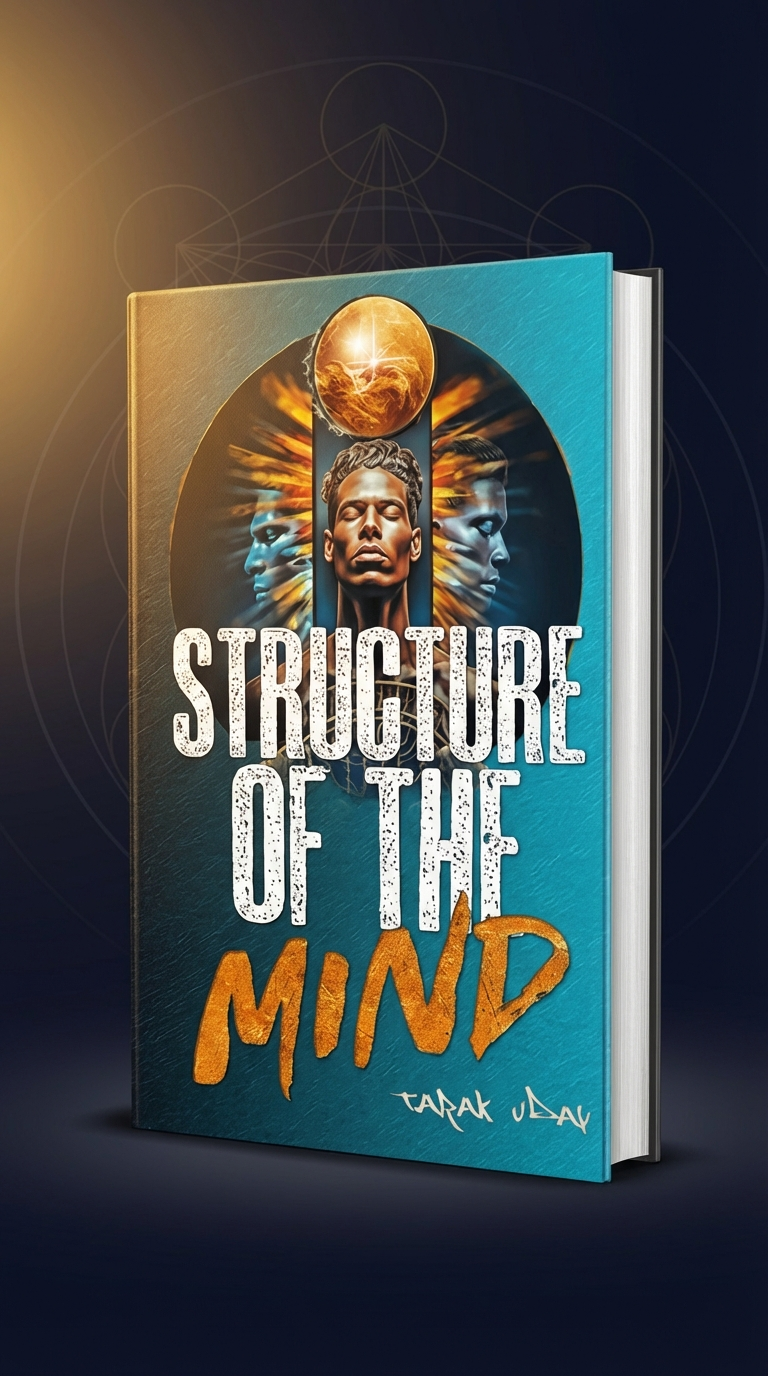
Understand Your Own Mind
"Structure of the Mind" reveals the three divisions of mind, seven levels of consciousness, and powers of mind that most people never learn to develop.

Learn The Language Your Dreams Speak
"Life Is But a Dream" teaches the Universal Language of Mind — how to read any dream symbol by what it is and what it does, so every dream becomes a message you can act on.

LUCID
You've tried every lucid dreaming technique. Most miss the root cause. LUCID reveals what they all skip.