
The Law of Divine Birthright: Who Are You to Have This?
You let yourself want it for about four seconds. Then a quiet voice asked who you thought you were, and you made the desire smaller. The law has an answer for that voice.


The Law of Divine Birthright says that we all have the right to exist, and we each deserve whatever we create. No one hands that right out, and no one can take it back. You already know the moment this law is for. You let yourself want something large, a different life, real money, a love that stays, and before the picture has finished forming a quiet voice asks: who are you to have this? So you trim the desire down to a size you think you've earned. In the Universal Language of the Mind, as Tarak Uday teaches it, that voice is a thought and not a verdict, and your subconscious mind shows you at night how much room you've been giving it. Keep hold of the most recent dream you woke up with. It belongs in this conversation.
What Is the Law of Divine Birthright?
It is the sixth of the thirteen Universal Laws, and it has two halves.
The first half is existence. We all have the right to exist. Not once we've proven something or paid back a debt we can't quite name. You are here. That is the whole qualification.
The second half is free will. We each deserve whatever we create. It doesn't say you deserve whatever you want. The deserving is attached to the creating, and the creating is yours to do.
In Structure of the Mind, Tarak Uday closes the book on this law. Two short sentences, and then he names them as the Law of Divine Birthright:
Under those sentences sits a larger idea. Every individual has the right to live from their own image, the picture of a life they hold in their own mind, and to experience fulfillment on every level by aligning with the divinity within. The divinity isn't somewhere else, waiting to approve your application. It is within.
The other twelve are set out in the 13 Universal Laws.
Who Are You to Have This?
This is the question the law exists to answer, so look at what the question assumes. It assumes a ledger somewhere, with some people entered as the kind who get a full life, and that you'd better check for your name before you reach.
The law doesn't describe a ledger. It describes a right. Who are you to have this? You are someone who exists, and someone who creates.
Most of us treat worthiness as a feeling we have to reach before we're allowed to begin. The law runs the other way. Deserving comes through the creating, not ahead of it. Nobody is going to stamp the form first.
There is an edge to this. If we each deserve whatever we create, that includes what we have created so far. The life you're standing in is the effect of causes you set in motion. That isn't blame. It is the most useful news in the law, because whatever you created, you can create differently.
Nor is it a promise that wanting something delivers it. The law states a right. It doesn't do the creating for you.
So the real question changes. Not “am I worthy of this?” but “what am I creating?” Every time the old voice wins, you create the smaller thing, receive the smaller thing, and the voice says, see, that's about your size. Which desire did you shrink most recently? You probably know. What you may not know is how early that voice learned its lines.
How Does the Mind Triangle Explain Your Birthright?
The law has mechanics, and they live in the diagram Tarak Uday calls the Mind Triangle. Its order runs: Light, I AM, superconscious mind, subconscious mind, conscious mind.
Start at the top. Before any division of mind there is Light, and then there is I AM, your individual consciousness. In LUCID, Tarak writes: “Our true essence is our I AM consciousness.” That is the Real Self, the one who has the mind rather than the one who is the mind. Your birthright belongs to that one, not to your history.
Then come the three divisions. The superconscious mind is whole in itself. It is the mind your spirit uses. The conscious mind and the subconscious mind are two halves of a whole.
Here is the instruction the law gives: align the conscious and subconscious minds to attune with the superconscious. That is what alignment with the divinity within means in practice.
Now put the worthiness voice back into the picture. Your conscious mind forms a desire. Your subconscious mind is holding an older image, something like people like me don't get that. The two halves point in different directions. From the inside, that split feels like a fact about you. It is a fact about alignment.
This is why arguing with yourself doesn't settle it. The conscious half can say anything it likes. What the subconscious half is holding shows up in the dream you had last night, read symbol by symbol. One dream gives you a sentence. The same theme returning for months gives you the whole image you've been living from.
What Do the Scriptures Say About Divine Birthright?
Both halves of this law appear in scripture from several traditions when the text is read as symbol. What follows decodes those texts as symbols, with the Universal Language of the Mind as the lens. It is not religious instruction, and it leaves each tradition's own way of holding its scripture untouched.
Begin with existence. Proverbs 14:14, in the King James Version, ends with these words: “a good man shall be satisfied from himself.” Fulfillment is drawn from within, exactly where the law places it. Tao Te Ching 25 speaks of something formless and complete that was there before heaven and earth, and then counts the human being, in the figure of the king, among the great things of existence. Dhammapada 166 teaches that no one should neglect their own task for the sake of another's, however great, which is the right to live from your own image. And in Bhagavad Gita 2:12-13, the teaching is that there was never a time when you did not exist and there will never be a time when you cease to.
Then free will. Tao Te Ching 5 says that heaven and earth do not play favorites. Nobody was selected in advance as the worthy one. Dhammapada 182-183 gives the choice plainly: turn from harm, do good, purify your own mind. Bhagavad Gita 6:35-36 admits that the mind is restless and hard to hold, and then says it can be held, through practice.
Three further references are worth reading beside these. Proverbs 16:9, in the King James Version: “A man's heart deviseth his way: but the LORD directeth his steps.” Proverbs 16:3, in the same translation: “Commit thy works unto the LORD, and thy thoughts shall be established.” In LUCID, Tarak Uday teaches that when the Bible says “the Lord,” it is pointing to your I AM, your Real Self. Read that way, both verses describe the Mind Triangle: you devise the way, and you align it with what is highest in you. Quran 13:11, in E. H. Palmer's translation, teaches that what a people has is not changed until they change what is in themselves. The creating starts inside.
How Does CHITTA Help You Live From Your Birthright?
Between knowing you have a right and living from it lies alignment. The law names its own practice for that: the breath, meditation, and concentration, which here means holding your attention within.
Tarak Uday takes this further in Structure of the Mind, his map of the three divisions of mind and the powers of attention, memory and imagination.
The breath comes first for a reason. The word spirit traces back to spiritus, breath, and the spirit is the vehicle of the superconscious mind. In LUCID, Tarak Uday writes: “The breath ties the soul to the body and is what allows our conscious mind to unite with the superconscious mind.” The breath is the doorway to the higher levels of mind, which is why so many traditions begin there.
The practice he teaches for this is the Long Breath. In his words: “The Long Breath is exactly what it sounds like: you are going to practice breathing longer, slower, and deeper.” You sit comfortably and close your eyes. You breathe in through your nose and out through your mouth. Each breath goes a little longer, a little slower and a little deeper than the one before. You don't force it. Your whole awareness stays on the breath, which is why the book calls it concentration training as well. Five minutes, every day. The full Long Breath walkthrough is here.
In CHITTA, the Long Breath is one of the daily practices, and each session goes into a session log. LUCID asks you to be a scientist and keep a record of how long you practiced. A feeling of being more aligned fades by Friday. A column of sessions doesn't.
Beside the log sits the dream journal and the interpretation engine. The breath works on the alignment. The dreams, decoded in the Universal Language of the Mind, show you what the subconscious half is still holding. Between them, the worthiness question becomes something you can watch change.
What Will You Do Before You Name One Desire Tonight?
Not an affirmation. An order of operations.
Tonight, before you let yourself want anything, sit down for five minutes of the Long Breath. Eyes closed. In through the nose, out through the mouth, each breath slightly longer, slower and deeper than the last. Hold your attention within. When it wanders, bring it back to the air moving in and out.
Then, and only then, name one desire. One. Say it at its full size, the size it was before you trimmed it.
Notice what happens in the second after you say it. If the old voice shows up, who are you to have this, don't argue. It is the older image in the subconscious mind, still pointing the other way. The other half follows practice, not argument.
Write the desire down, and write down that you did the five minutes.
What the law says fits in one line: you have the right to exist, and you deserve whatever you create. What no page can show you is which image your subconscious mind is holding against the desire you just named, or how long it has held it. That part is in the dream you have after tonight's breath, and nobody else can dream it for you.
Frequently Asked Questions



Books by Tarak Uday
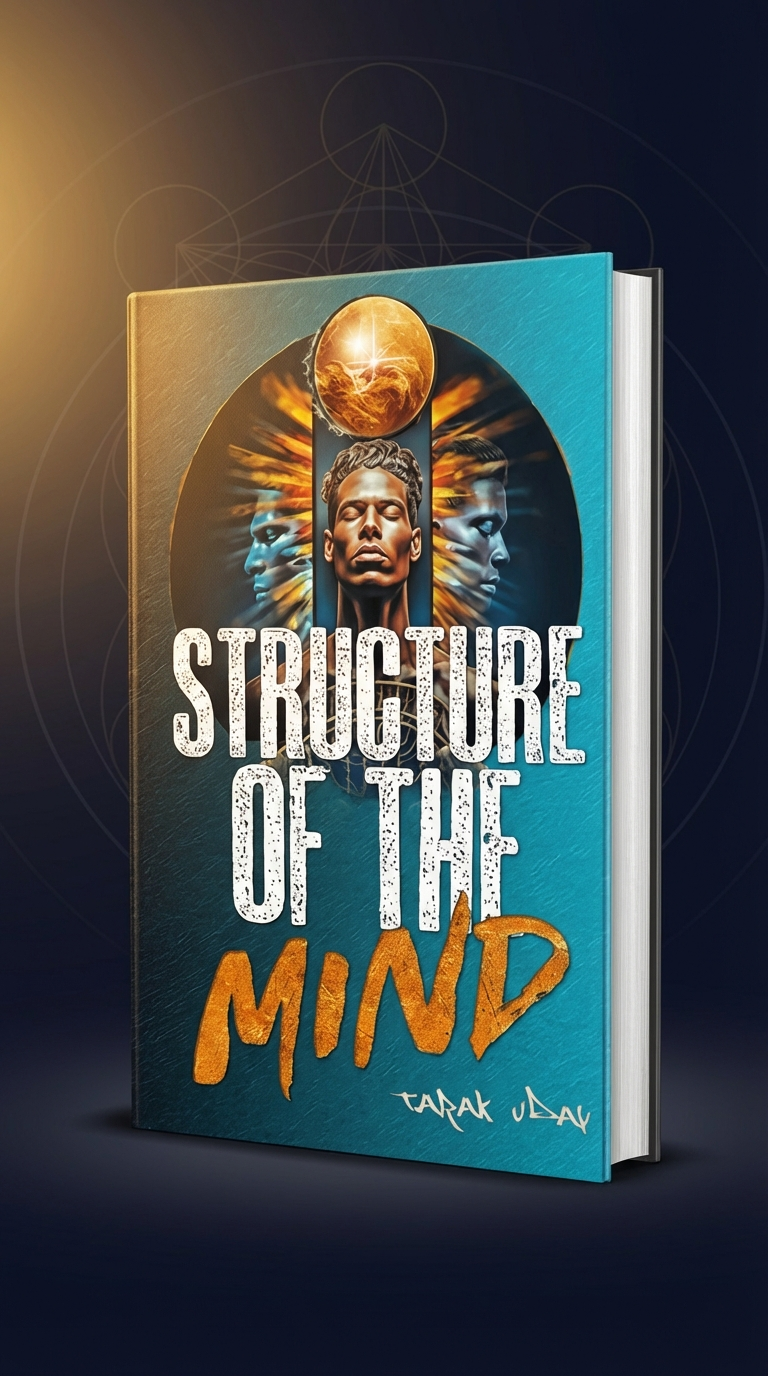
Understand Your Own Mind
"Structure of the Mind" reveals the three divisions of mind, seven levels of consciousness, and powers of mind that most people never learn to develop.

Learn The Language Your Dreams Speak
"Life Is But a Dream" teaches the Universal Language of the Mind — how to read any dream symbol by what it is and what it does, so every dream becomes a message you can act on.
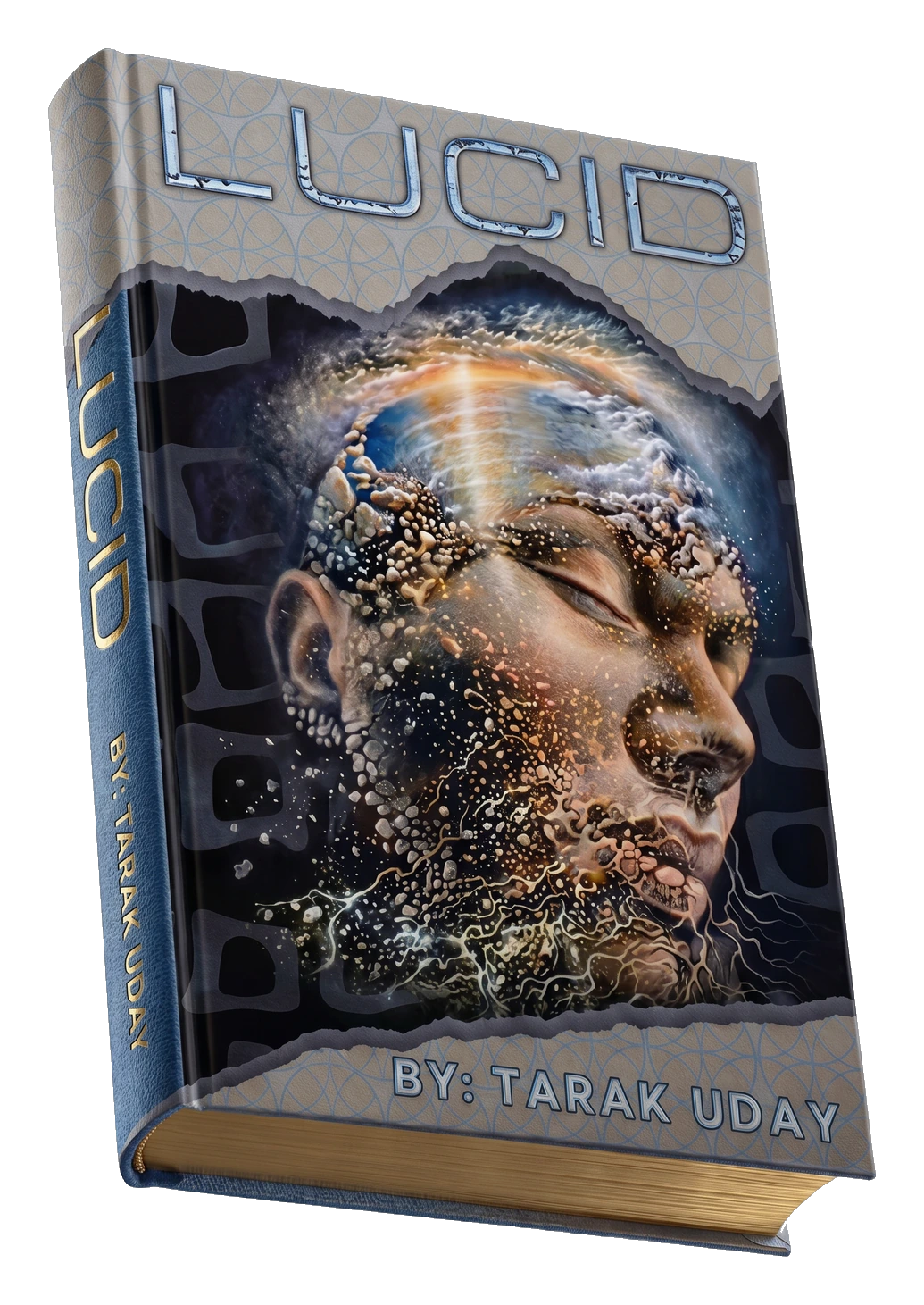
LUCID
You've tried every lucid dreaming technique. Most miss the root cause. LUCID reveals what they all skip.